The Labour Party has reportedly suspended the four members of the executive of the Constituency Labour Party (CLP) in Wavertree who criticised their local MP for expressing regret that her predecessor, Luciana Berger, felt she had to leave the Party.

The CLP chair, Nina Houghton, CLP secretary, Kevin Bean, CLP women’s officer Helen Dickson, and CLP BAME officer Hazuan Hashim, have apparently been suspended from Labour pending an investigation. They criticised new MP Paula Barker for an article in the Jewish Telegraph in which she tried to reach out to the Jewish community.

They were in turn criticised by other CLP members for acting without authority, but there are suggestions that the entire CLP may be suspended from the Party.

Other CLPs are also reportedly being investigated, including Hampstead and Kilburn, a constituency with a sizable Jewish community and about which a 98-page report on antisemitism and bullying was submitted to the Labour Party. Dame Louise Ellman’s former constituency of Liverpool Riverside is also apparently being investigated, as is Hastings and Rye and also High Peak, where there have been claims of antisemitism.

The announcements come shortly after the selection of David Evans as Labour’s new General Secretary.

While Campaign Against Antisemitism welcomes the belated investigations, there is concern that these suspensions are haphazard and still leave other cases outstanding. Moreover, suspension is not in itself a sanction, and an independent disciplinary process must be established immediately to ensure that these cases are dealt with swiftly, fairly and transparently.

On 28th May 2019, the EHRC launched a full statutory investigation into antisemitism in the Labour Party following a formal referral and detailed legal representations from Campaign Against Antisemitism, which is the complainant.

In the first release of its Antisemitism in Political Parties research, Campaign Against Antisemitism showed that Labour Party candidates for Parliament in the 2019 general election accounted for 82 percent of all incidents of antisemitic discourse by parliamentary candidates.

Campaign Against Antisemitism’s Antisemitism Barometer 2019 showed that antisemitism on the far-left of British politics has surpassed that of the far-right.

Campaign Against Antisemitism advocates for zero tolerance of antisemitism in public life. To that end we monitor all political parties and strive to ensure that any cases of concern are properly addressed.

Tom Watson has revealed that antisemitism was one of the reasons he did not seek re-election to Parliament last year, but he did not mention it at the time he stood down, instead saying his move was “personal, not political”.

Labour’s former deputy leader, whose differences with Jeremy Corbyn, who was then the Leader of the Party, were well known, stood down at the beginning of the 2019 General Election campaign, having spoken out against antisemitism in his Party in recent years.

Speaking to the ‘Last Call With Sweeney and Weiss’ podcast, he has now disclosed that “vicious and uncompromising antisemitism” in the Labour Party “contributed to my decision to leave politics”. He explained that the Party was “being infested with anti-Jewish racism” but that “people just blindly denied antisemitism in our ranks.”

He observed that too many people who “could not distinguish between the State of Israel and Jewish people and just didn’t like Jewish people. The language they used was racist.” Asked whether he believes Mr Corbyn is an antisemite, Mr Watson said: “It doesn’t matter – these people joined while he was Leader,” and they could have been removed from office and the Party “very easily”.

Labour antisemitism, he said, “had not been near the mainstream of politics for many decades” but that ‘’friends in the Jewish community say it’s always been there – it’s just never been articulated.’’

Mr Watson noted that “there were too many very close friends of mine who were genuinely frightened of Labour coming to power at the last election for me to feel comfortable in the role I was doing.”

To his credit – and in contrast to the hundreds of other Labour parliamentary candidates – Mr Watson did not feel that he could campaign for an antisemite. However, Mr Watson, who has been due to receive a peerage from Mr Corbyn that is now in doubt, did not denounce Labour antisemitism when he retired from politics, which was disappointing to the Jewish community.

Mr Watson said that the investigation by the Equality and Human Rights Commission (EHRC) into Labour antisemitism is a “great stain on a century-old institution that is going to be very hard to recover from.”

On 28th May 2019, the EHRC launched a full statutory investigation into antisemitism in the Labour Party following a formal referral and detailed legal representations from Campaign Against Antisemitism, which is the complainant.

In the first release of its Antisemitism in Political Parties research, Campaign Against Antisemitism showed that Labour Party candidates for Parliament in the 2019 general election accounted for 82 percent of all incidents of antisemitic discourse by parliamentary candidates.

Campaign Against Antisemitism’s Antisemitism Barometer 2019 showed that antisemitism on the far-left of British politics has surpassed that of the far-right.

Campaign Against Antisemitism advocates for zero tolerance of antisemitism in public life. To that end we monitor all political parties and strive to ensure that any cases of concern are properly addressed.

Serbia has adopted the International Definition of Antisemitism.

The decision was made by the nation’s government several months ago but the announcement was reportedly postponed until this week so as not to be lost in coverage of the COVID-19 pandemic.

Campaign Against Antisemitism applauds the decision, which demonstrates the Serbian Government’s solidarity with the Jewish community at this worrying time for Jews in Europe.

Britain was the first country in the world to adopt the International Definition, something for which Campaign Against Antisemitism and Lord Pickles worked hard over many meetings with officials at Downing Street. Serbia joins a growing list of national governments and public bodies to use the Definition.

Jeremy Corbyn has rubbished the independence of the Equality and Human Rights Commission (EHRC), saying that it is “part of the Government machine” and that its independence as been “taken away” by the Conservatives.

Mr Corbyn made the remarks in his first interview since stepping down as Labour leader, which he gave to the fringe blog, Middle East Eye, which has a history of belittling Labour antisemitism. The interview was conducted by the controversial journalist, Peter Oborne, and the full video will apparently be available tomorrow.

The EHRC launched a full statutory investigation into antisemitism in the Labour Party on 28th May 2019 following a formal referral and detailed legal representations from Campaign Against Antisemitism, which is the complainant.

Asked whether the EHRC’s alleged impartiality would affect its report, Mr Corbyn reportedly replied: “Let’s see what happens.”

Mr Corbyn further claimed that the EHRC was “underfunded” by the Conservative Government which, “for some reason, which I don’t fully understand…decided to take away its independent status and make it part of the government machine.”

Mr Corbyn added that had he won the 2019 General Election he would have restored the EHRC’s independence.

Mr Corbyn’s basis for questioning the EHRC’s independence is not, however, clear. This is also not the first time that Mr Corbyn has tried to undermine the credibility of the independent body (which was established by a Labour Government) investigating his Party for racism: during the 2019 General Election campaign, Mr Corbyn pledged to reform the EHRC if he won power, again without providing a basis for his Party’s concerns, leaving observers to speculate that it was due to the EHRC’s investigation.

Mr Corbyn’s remarks are just the latest attempt by the far-left to question the EHRC’s credibility. Recently, other far-left figures have also suggested that the EHRC may itself be racist, or that if it concludes that the Labour Party is racist it means that it is racist toward other minorities rather than Jews.

Incredibly, Mr Corbyn complained that claims that he had tolerated antisemitism were “wrong and extremely unfair” and that “I’m the one that actually introduced a process for dealing with it,” a common refrain by those seeking to defend Mr Corbyn and the former General Secretary of the Labour Party, Jennie Formby, during whose disastrous tenure the EHRC launched its investigation. Mr Corbyn insisted that the number of cases of antisemitism in the Labour Party was “small” or, at another point in the interview, “very small”. He praised the Chakrabarti Report, which was widely panned as a whitewash and whose author was rewarded by Mr Corbyn for protecting him with a peerage (despite his earlier promise not to award peerages).

Mr Corbyn recalled his mother’s involvement in the historic Cable Street demonstrations against antisemitic fascism and insisted that antisemitism is “absolutely, totally unacceptable in any form”, even though he himself has indulged in it on multiple occasions and worked to protect or elevate allies and supporters who had done so as well. Mr Corbyn even had the audacity to lament how Jewish Labour MPs were being “troll[ed]”, even though those same Jewish women MPs either themselves called him an “antisemitic racist” or complained that he did nothing to assist them, declining even to communicate with them for months on end until two were hounded out of the Party. Regarding such MPs, Mr Corbyn not only showed no remorse but even suggested that he may have been “too tolerant of people”.

The interview was an indication that Mr Corbyn will retreat during his retirement from leadership to the far-left fringes where he has always felt at home.

A spokesperson for Campaign Against Antisemitism said: “Jeremy Corbyn’s interview with a fringe blog questioning the independence of the Equality and Human Rights Commission is just the latest attempt by the far-left to try to undermine the EHRC in anticipation of its report into the Party’s antisemitism during his leadership. Mr Corbyn and his allies have repeatedly suggested that the EHRC is not impartial and even that it itself may be racist, and that therefore its conclusions cannot be trusted. These self-proclaimed ‘anti-racist campaigners’ are so blinded by their own prejudices and self-righteousness that they cannot see the injury that they are causing to the very minorities they profess to care about. The era of Mr Corbyn’s leadership may be over but the sordid campaign to rehabilitate his ghastly legacy is in full swing.”

In the first release of its Antisemitism in Political Parties research, Campaign Against Antisemitism showed that Labour Party candidates for Parliament in the 2019 general election accounted for 82 percent of all incidents of antisemitic discourse by parliamentary candidates.

Campaign Against Antisemitism’s Antisemitism Barometer 2019 showed that antisemitism on the far-left of British politics has surpassed that of the far-right.

Campaign Against Antisemitism advocates for zero tolerance of antisemitism in public life. To that end we monitor all political parties and strive to ensure that any cases of concern are properly addressed.

Sir Keir Starmer intends to launch an investigation into Luciana Berger’s former Constituency Labour Party, according to the JC, after members were found to have attacked the new MP for telling a Jewish newspaper that she regretted that Ms Berger felt that she had to leave the Party.

Paula Barker, the new Labour MP for Wavertree, wrote in the Jewish Telegraph that “Luciana leaving the Labour Party was a shock to many and I find it deeply regrettable that she felt she could no longer stay.” Ms Berger was hounded out of the Labour Party in early 2019 after years of antisemitism and threats of deselection.

However, four members of the executive committee of Ms Barker’s Constituency Labour Party (including its chair and secretary) issued a statement in the branch’s Member’s Bulletin accusing Ms Barker of presenting an “inaccurate and factionally-motivated position on antisemitism” that only “reflected the influence of a partial view that claims to speak for all Jewish people.” They further insisted that “our political disagreement with [Ms Berger] was cynically attributed to bullying, harassment and antisemitism on our part” and that “the suggestion that the Constituency Labour Party Executive is in any way a party to bullying and antisemitism is a false and slanderous accusation.”

The Labour Party in Liverpool saw two Jewish women MPs – Ms Berger and Dame Louise Ellman – quit the Party over antisemitism.

It is understood that Sir Keir intends now to launch an investigation into the Wavertree Constituency Labour Party.

On 28th May 2019, the Equality and Human Rights Commission launched a full statutory investigation into antisemitism in the Labour Party following a formal referral and detailed legal representations from Campaign Against Antisemitism, which is the complainant.

In the first release of its Antisemitism in Political Parties research, Campaign Against Antisemitism showed that Labour Party candidates for Parliament in the 2019 general election accounted for 82 percent of all incidents of antisemitic discourse by parliamentary candidates.

Campaign Against Antisemitism’s Antisemitism Barometer 2019 showed that antisemitism on the far-left of British politics has surpassed that of the far-right.

Campaign Against Antisemitism advocates for zero tolerance of antisemitism in public life. To that end we monitor all political parties and strive to ensure that any cases of concern are properly addressed.

It has emerged that a local Labour councillor who had previously apologised for calling Israel a “racist state” then reacted to the ensuing antisemitism investigation by saying she “will not bow down to white supremacy”.

Nichole Brennan, a councillor in Brighton and Hove, apologised and resigned from her role as deputy housing chairwoman and rough sleeping chief pending an investigation after pictures emerged showing her holding a sign calling Israel a “racist, apartheid state” in a protest two years before at Hove Town Hall against the adoption of the International Definition of Antisemitism by the local authority. The Definition lists “Denying the Jewish people their right to self-determination (e.g. by claiming that the existence of a State of Israel is a racist endeavour”) as an example of antisemitism. Brighton and Hove City Council adopted the Definition. In a statement, Cllr Brennan apologised for her actions prior to becoming a councillor and declared her support for adoption of the Definition.

However, it has now emerged that just three days later she posted on Facebook: “Let me make something clear. 1. I have not resigned as a councillor and I will go on speaking up for the people who elected me. 2. I will not bow down to white supremacy and I will always challenge racism in ALL its forms as I always have.” She appeared to be referring to allegations of antisemitism and/or her own Party’s prospective investigation as “white supremacy”.

Cllr Brennan reportedly deleted the post two days ago after being approached by local media. She was originally elected on a Momentum slate.

On 28th May 2019, the Equality and Human Rights Commission launched a full statutory investigation into antisemitism in the Labour Party following a formal referral and detailed legal representations from Campaign Against Antisemitism, which is the complainant.

In the first release of its Antisemitism in Political Parties research, Campaign Against Antisemitism showed that Labour Party candidates for Parliament in the 2019 general election accounted for 82 percent of all incidents of antisemitic discourse by parliamentary candidates.

Campaign Against Antisemitism’s Antisemitism Barometer 2019 showed that antisemitism on the far-left of British politics has surpassed that of the far-right.

Campaign Against Antisemitism advocates for zero tolerance of antisemitism in public life. To that end we monitor all political parties and strive to ensure that any cases of concern are properly addressed.

A notorious academic at the University of Bristol who attacked Sir Keir Starmer over “Zionist money” behind his leadership campaign has been suspended from the Labour Party, but not, according to the Jewish Chronicle, for antisemitism.

According to a report, Prof. David Miller asserted that his and other recent suspensions “were designed to target members who understand the racism of Zionism, ‘which is very obviously incompatible with membership of the Labour Party.’”

Prof. Miller has previously claimed that, because Sir Keir was “in receipt of money from the Zionist movement,” he was “obviously not going to” conduct “a proper investigation” into the leaked Labour report into the handling of antisemitism cases and supposed factional infighting at Party headquarters. The remarks were apparently made after he took part in an online broadcast with the disgraced former Labour MP, Chris Williamson. He also talked at that event about what he referred to as the “witch hunt” against Labour members accused of antisemitism.

Prof. Miller, a sociology lecturer, has a history of spouting conspiracy theories about Zionism and conspiracies involving various Jewish community organisations and figures that has reportedly discomfited his Jewish students. The University of Bristol has repeatedly failed to take action against him.

It is extraordinary that even the Labour Party, which remains an institutionally antisemitic Party, has suspended Prof. Miller, but the University of Bristol continues to do nothing despite his impact on Jewish students.

On 28th May 2019, the Equality and Human Rights Commission launched a full statutory investigation into antisemitism in the Labour Party following a formal referral and detailed legal representations from Campaign Against Antisemitism, which is the complainant.

In the first release of its Antisemitism in Political Parties research, Campaign Against Antisemitism showed that Labour Party candidates for Parliament in the 2019 general election accounted for 82 percent of all incidents of antisemitic discourse by parliamentary candidates.

Campaign Against Antisemitism’s Antisemitism Barometer 2019 showed that antisemitism on the far-left of British politics has surpassed that of the far-right.

Campaign Against Antisemitism advocates for zero tolerance of antisemitism in public life. To that end we monitor all political parties and strive to ensure that any cases of concern are properly addressed.

The Palestine Solidarity Campaign (PSC), which we have exposed for failing to act against anti-Jewish bigots in its midst, marked the Gregorian date of Israel’s Independence Day with a Zoom event in which guest speakers extolled terrorism, accused Israel of racism and denied Labour antisemitism. Speakers included notorious Jew-baiters Ken Loach and Roger Waters.

The Zoom rally was held to mourn the establishment of Israel, which the group calls “Naqba”, Arabic for “catastrophe”, in reference to the several hundred thousand Arabs who were dispossessed after their leaders declared war on the nascent Jewish state.

Among the speakers in the two-hour event was Ken Loach, who has a long history of inflammatory comments on the subject of antisemitism and anti-Jewish racism in the Labour Party, has refused to denounce Holocaust denial and was recently removed from a sympathetic charity’s judging panel after pressure from Campaign Against Antisemitism and others.

At the event, Mr Loach made three points. The first was about the events of 1948, when Israel was established, during which he appallingly declared that Arabs were “killed with impunity”, and that there were “rape, massacres, poisoning of water supplies [and] ethnic cleansing”. His second point was that, in making these atrocious claims, “we must not be intimidated” by the “abuse, vilification, accusations of racism, accusations of antisemitism. It’s the campaign that has brought down the leader of the Labour Party,” he said, echoing his past statements denying Labour antisemitism. He added, alluding to another familiar trope, that “we know the mass media will collude in the fake campaign.” His third point was the importance of political activism, including in unions, politics, universities and churches. He also called for support of the Boycott, Divestment and Sanctions (BDS) movement, the tactics of which an overwhelming majority of British Jews find intimidating.

Roger Waters, the former Pink Floyd musician and an active supporter of the intimidatory BDS movement, gave a performance in which he sang the lyrics: “we’ll take back the land, from the Jordan River to the sea,” seeming to declare an aspiration to see Israel destroyed and the self-determination of the Jewish people extinguished.

Another of the speakers was Allan Kolski Horwitz, a South African poet and activist. He recited a poem that paid tribute to Ghassan Kanafani, a terrorist and spokesman for the violent Popular Front for the Liberation of Palestine (PFLP). Mr Horwitz lamented that Mr Kanafani had been killed by Israeli security services, but failed to mention that his terrorist group had been involved in the murder and injury of over a hundred innocent people at Lod Airport (now Ben Gurion Airport) just a few months earlier. The PFLP, which opposed the existence of Israel entirely, has also targeted Jewish schoolchildren and was responsible for other massacres of civilians. In his poem, Mr Horwitz praised the “trucks loaded with defiance and bomb belts, trucks loaded with young militants” which “cross over [the border] and explode!”

The ubiquitous and outspoken activist Ghada Karmi, who recently came under fire for an article that made a series of antisemitic statements, called for the return of all Arab refugees to Israel with the purpose of destroying the Jewish state so that “the whole nightmare ends”.

Stephanie Fox of the highly controversial and fringe American organisation, Jewish Voice for Peace, introduced herself with the unintentionally comic opening of “as a Jewish person”, before making her defamatory claim that “Jewish Zionist militias” drove Arabs “into the sea”, and compared Israel’s founding to slavery and settler colonialism in the United States. Accusing Israel of “ethnic cleansing”, she said: “I invite my fellow Jews on the Zoom call tonight: refuse complicity with the Naqba.”

According to the International Definition of Antisemitism, examples of antisemitism include “denying the Jewish people their right to self-determination (e.g. by claiming that the existence of a State of Israel is a racist endeavour)”; “using the symbols and images associated with classic antisemitism (e.g. claims of Jews killing Jesus or blood libel) to characterise Israel or Israelis”; and “holding Jews collectively responsible for actions of the State of Israel.”

The Mayor of Hackney, from the Labour Party, has condemned a suggestion by his own partner that a leading Jewish charity will select the Party’s new General Secretary after the resignation of Jennie Formby, whose tenure was marred by the institutional antisemitism under her watch.

Craig Parr, who is the local Labour Party’s LGBT officer, tweeted the comment, as well as a further comment that the Jewish charity had lifted a fictional “gagging order” thereby permitting discussion of the leaked Labour report into how the Party dealt with antisemitism amid alleged factional infighting at Labour headquarters. Following allegations of data and privacy breaches, as well as threats to Jewish individuals mentioned in that report, the Party is investigating the leak.

Mayor Philip Glanville reacted to the tweets when asked by local media, saying: “I wholeheartedly disagree with these comments, they were completely unacceptable.”

On 28th May 2019, the Equality and Human Rights Commission launched a full statutory investigation into antisemitism in the Labour Party following a formal referral and detailed legal representations from Campaign Against Antisemitism, which is the complainant.

In the first release of its Antisemitism in Political Parties research, Campaign Against Antisemitism showed that Labour Party candidates for Parliament in the 2019 general election accounted for 82 percent of all incidents of antisemitic discourse by parliamentary candidates.

Campaign Against Antisemitism’s Antisemitism Barometer 2019 showed that antisemitism on the far-left of British politics has surpassed that of the far-right.

Campaign Against Antisemitism advocates for zero tolerance of antisemitism in public life. To that end we monitor all political parties and strive to ensure that any cases of concern are properly addressed.

Lord Mann has told Sir Keir Starmer to outlaw the use of the word “Zionist” in the Labour Party, as well as the term “Zionism”, as terms of abuse.

The Government’s Independent Advisor on Antisemitism gave several pieces of advice to the Labour leader, including not wavering from the International Definition of Antisemitism and, “if he wants to really embed comprehensive anti-racism including antisemitism across the Labour Party”, to ban the use of the words in the context of “hatred, abuse [or] contempt”.

Lord Mann made the comments in an online discussion with a Jewish charity.

Shami Chakrabarti (now Baroness Chakrabarti after she received a peerage from Jeremy Corbyn following her whitewash report into Labour antisemitism in 2016), recommended in her infamous report that the term “Zio” – an epithet made to look like the word ‘Nazi’ and exclusively used for abuse of Jews – be banned from use in the Party.

Sir Keir has apologised to the Jewish community for Labour’s institutional antisemitism, but despite his pledges to take action, none has yet been forthcoming and he has failed to address some new instances in breach of his election promises.

On 28th May 2019, the Equality and Human Rights Commission launched a full statutory investigation into antisemitism in the Labour Party following a formal referral and detailed legal representations from Campaign Against Antisemitism, which is the complainant.

In the first release of its Antisemitism in Political Parties research, Campaign Against Antisemitism showed that Labour Party candidates for Parliament in the 2019 general election accounted for 82 percent of all incidents of antisemitic discourse by parliamentary candidates.

Campaign Against Antisemitism’s Antisemitism Barometer 2019 showed that antisemitism on the far-left of British politics has surpassed that of the far-right.

Campaign Against Antisemitism advocates for zero tolerance of antisemitism in public life. To that end we monitor all political parties and strive to ensure that any cases of concern are properly addressed.

The former leader of the Labour Party, Jeremy Corbyn, joined former Shadow Home Secretary Diane Abbott and fellow MP Bell Ribeiro-Addy on a platform with a controversial activist who has a history of denying antisemitism in the Labour Party and who backed the disgraced former Labour MP, Chris Williamson.

Lindsay German has repeatedly denied Labour’s institutional antisemitism, describing the allegations as a “witch-hunt”, a line often used by Mr Williamson, whom she has defended, and his allies.

Ms German is a convener of the dubious group, Stop The War Coalition, which has appeared in the past to advocate war against Israel and whose marches routinely feature antisemitic tropes.

The online event comes only days after Sir Keir Starmer failed to take any action against Ms Abbott and Ms Ribeiro-Addy for appearing on a platform with former Labour members expelled from the Party in the wake of antisemitic incidents, despite his election pledge to suspend MPs and members caught doing so. The event was a grotesque attempt to promote the disingenuous, deplorable and divisive claim that addressing Labour antisemitism is somehow racist against the BAME community.

On 28th May 2019, the Equality and Human Rights Commission launched a full statutory investigation into antisemitism in the Labour Party following a formal referral and detailed legal representations from Campaign Against Antisemitism, which is the complainant.

In the first release of its Antisemitism in Political Parties research, Campaign Against Antisemitism showed that Labour Party candidates for Parliament in the 2019 general election accounted for 82 percent of all incidents of antisemitic discourse by parliamentary candidates.

Campaign Against Antisemitism’s Antisemitism Barometer 2019 showed that antisemitism on the far-left of British politics has surpassed that of the far-right.

Campaign Against Antisemitism advocates for zero tolerance of antisemitism in public life. To that end we monitor all political parties and strive to ensure that any cases of concern are properly addressed.

A Labour councillor in Brent and the former Mayor of the borough who shared an antisemitic video on a local residents’ WhatsApp group has conceded that it was an “accident” that was “racist and unacceptable” and that he is “seeking to undertake training on antisemitism”.

The JC recently revealed that Cllr Aslam Choudry, who represents the Dudden Hill ward, had posted the video and, after being confronted by other members of the messaging group, said “I’m sorry sent by mistake”.

Following the outcry, he was apparently suspended by the Labour Party, which said in a statement: “The Labour Party takes all complaints of antisemitism extremely seriously and they are fully investigated in line with our rules and procedures and any appropriate action is taken. We cannot comment on individual complaints.”

The video apparently said that just as in Nazi Germany one could not criticise the Nazi Party, so in contemporary America one cannot criticise the “Jewish lobby”, comparing the situation to other totalitarian states. “Both sides, Democrats and Republicans, they both bow down to the Israeli lobby”, the narrator on the video explained, apparently using the phrases ‘Jewish lobby’ and ‘Israeli lobby’ interchangeably.

The video was from Real Face Media, a channel that purports to “spread the true message of Islam.”

Cllr Choudry reportedly said: “As you may have seen reported in the media, I recently shared an antisemitic video in a WhatsApp group. This video promotes appalling antisemitic tropes falsely claiming that Jewish people control America. This is not only untrue, it is racist and unacceptable. I am so deeply sorry for sharing this link. I shared the link by accident and when colleagues pointed out that it was an extremely offensive video, I deleted it and apologised. I am so sorry for the hurt and offence I have caused and I will be seeking to undertake training on antisemitism.”

In 2016, Cllr Choudry shared a video on social media with the caption, “Zionists are even worst [sic] than animals,” for which he said “I apologise unreservedly”.

On 28th May 2019, the Equality and Human Rights Commission launched a full statutory investigation into antisemitism in the Labour Party following a formal referral and detailed legal representations from Campaign Against Antisemitism, which is the complainant.

In the first release of its Antisemitism in Political Parties research, Campaign Against 

Antisemitism showed that Labour Party candidates for Parliament in the 2019 general election accounted for 82 percent of all incidents of antisemitic discourse by parliamentary candidates.

Campaign Against Antisemitism’s Antisemitism Barometer 2019 showed that antisemitism on the far-left of British politics has surpassed that of the far-right.

Campaign Against Antisemitism advocates for zero tolerance of antisemitism in public life. To that end we monitor all political parties and strive to ensure that any cases of concern are properly addressed.

A Shadow Minister told a Jewish audience that she wants the Labour Party to become a “toxic environment for antisemites”, but she stopped short of calling for the suspension of MPs who shared an online platform with expelled members.

Rosena Allin-Khan, who is the Shadow Minister for Mental Health and ran for the Party’s deputy leadership, made the remarks at a Jewish educational event. She also called for the introduction of an independent disciplinary process and a timeline to deal with the backlog of complaints, as well as mandatory antisemitism training for all Constituency Labour Parties.

Regarding Labour and the Jewish community, she acknowledged that “trust isn’t won back overnight”, and claimed of antisemitism that “we won’t root it out of our society just as we won’t root out Islamophobia”.

When Ms Allin-Khan was asked about last week’s online event featuring the MPs Diane Abbott and Bell Ribeiro-Addy, she said that it was “disappointing” that the online event had taken place, but stopped short of agreeing that the participants should be suspended, in line with Sir Keir Starmer’s pledge during the leadership campaign.

She observed that “there should be no reason for MPs and others to take part in a call like that” but insisted of Sir Keir that “I know this is something he takes seriously” and that “no doubt it will be on his radar”, but that “I’m not privy to those discussions.”

The call also featured Salma Yaqoob, the former Respect Party leader who unsuccessfully stood to become Labour’s candidate for West Midlands Metro Mayor, and the “Jew process” councillor, Jo Bird.

Ms Allin-Khan’s position was previously held by Luciana Berger under Jeremy Corbyn, until Ms Berger quit the Shadow Cabinet in 2016 and was eventually hounded out of the Labour Party in 2019.

On 28th May 2019, the Equality and Human Rights Commission launched a full statutory investigation into antisemitism in the Labour Party following a formal referral and detailed legal representations from Campaign Against Antisemitism, which is the complainant.

In the first release of its Antisemitism in Political Parties research, Campaign Against Antisemitism showed that Labour Party candidates for Parliament in the 2019 general election accounted for 82 percent of all incidents of antisemitic discourse by parliamentary candidates.

Campaign Against Antisemitism’s Antisemitism Barometer 2019 showed that antisemitism on the far-left of British politics has surpassed that of the far-right.

Campaign Against Antisemitism advocates for zero tolerance of antisemitism in public life. To that end we monitor all political parties and strive to ensure that any cases of concern are properly addressed.

The columnist and activist Owen Jones has come under fire on Twitter for criticising the philosemitic Government minister, Michael Gove, and his journalist wife, Sarah Vine, for owning a book by David Irving, after he saw the volume on their bookshelf in an interview conducted from their home.

David Irving is a discredited historian and notorious Holocaust-denier who lost his libel case against Deborah Lipstadt twenty years ago.

During his career as a journalist, Michael Gove wrote about David Irving repeatedly, but only to attack him, describing him as “notorious” and “perverse”.

Mr Jones, a vocal supporter of former Labour Leader Jeremy Corbyn and one of the outriders of Mr Corbyn’s far-left movement, was, however, less troubled by Mr Corbyn’s own antisemitism, not to mention his glowing foreword of an antisemitic book and his relationship with the self-professed Holocaust-denier, Paul Eisen, to whose work Mr Corbyn even made a financial contribution. Although Mr Jones has written in general terms about left-wing antisemitism and the need to address it, he has missed repeated opportunities to do so and has indulged the biggest political threat to Britain’s Jewish minority in living memory.

Scrambling to defend himself, Mr Jones tweeted several more times on the subject, at one point asserting that “Holocaust denial is not a viewpoint, something to take or leave, agree or not with. It is a hateful evil to be crushed, nothing else.” Mr Jones is right, which is why it was so disappointing that he never expressed a similar sentiment toward Mr Corbyn with respect to his association with Mr Eisen. Indeed back in 2015, when this association emerged, Mr Jones seemed more eager to defend Mr Corbyn than to “crush” the “evil” with which he had associated.

We rely on our volunteers and the general public to alert us to incidents of antisemitism, and we have repeatedly called on booksellers not to promote Nazi, Neo-Nazi or Holocaust-denial books as reference sources. However it is legitimate for academics, journalists and others to study antisemitic texts in order to understand and dismantle the mechanics and arguments of Holocaust deniers and conspiracy theorists.

Claims relating to antisemitism should not be made disingenuously or in bad faith, and especially not for political or reputational gain.

Campaign Against Antisemitism advocates for zero tolerance of antisemitism in public life. To that end we monitor all political parties and strive to ensure that any cases of concern are properly addressed.

Today is the one-month anniversary of Sir Keir Starmer’s election as Leader of the Labour Party, and Campaign Against Antisemitism has marked the occasion by writing to him welcoming his promises and apology to the Jewish community but denouncing his failure to follow up with real action against antisemitism. The text of the letter can be read below.

Jennie Formby’s resignation as General Secretary of the Labour Party today brings an end to her controversial term in office, when Labour’s headquarters operated as a guardian of antisemites and abuser of whistleblowers. Her departure opens the way for the independent disciplinary process that Sir Keir has promised to introduce and is a vital first step in restoring Labour’s credibility.

A spokesman for Campaign Against Antisemitism said: “Jennie Formby’s resignation today as General Secretary of the Labour Party brings an end to her ignominious tenure, during which she oversaw a Party apparatus that shielded antisemites and intimidated whistleblowers. Her departure comes on the one-month anniversary of Sir Keir Starmer’s election as Leader of the Labour Party, an occasion we have marked by writing to Sir Keir condemning his promotion of Afzal Kahn to prominence in the Shadow Cabinet and his failure to suspend Diane Abbott, Bell Ribeiro-Addy and Salma Yaqoob, in direct contravention of his election pledge. We also await the promised introduction of an independent disciplinary process, which Ms Formby’s welcome departure now makes possible. Sir Keir’s honeymoon is over and he must now move swiftly to reassure the Jewish community that he is serious about tearing antisemitism ‘out by its roots’.”

On 28th May 2019, the Equality and Human Rights Commission launched a full statutory investigation into antisemitism in the Labour Party following a formal referral and detailed legal representations from Campaign Against Antisemitism, which is the complainant.

In the first release of its Antisemitism in Political Parties research, Campaign Against Antisemitism showed that Labour Party candidates for Parliament in the 2019 general election accounted for 82 percent of all incidents of antisemitic discourse by parliamentary candidates.

Campaign Against Antisemitism’s Antisemitism Barometer 2019 showed that antisemitism on the far-left of British politics has surpassed that of the far-right.

Campaign Against Antisemitism’s Antisemitism Barometer 2019 showed that 42% of British Jews have considered leaving the UK, of which 85% cited antisemitism in politics, and close to two thirds of British Jews believe that the authorities, in general, are not doing enough to address and punish antisemitism.

Campaign Against Antisemitism advocates for zero tolerance of antisemitism in public life. To that end we monitor all political parties and strive to ensure that any cases of concern are properly addressed.

Full text of the letter

Dear Sir Keir,

We are writing to you on the one-month anniversary of your election as leader of the Labour Party.

As you will doubtless have seen, we have been at the forefront of exposing institutional antisemitism within the Labour Party. To that end, we referred the Party to the Equality and Human Rights Commission, instigating its statutory investigation into antisemitism in Labour after the Party refused to investigate our disciplinary complaints against Jeremy Corbyn. As the sole complainant in the Commission’s statutory investigation and an apolitical and specialised organisation in this field, we have provided considerable evidence and expertise to assist the Commission. It is disappointing that, in spite of our role as the complainant in the Commission’s investigation, we have not been contacted by you or any member of your team since you took office one month ago.

Our ambition is to safeguard the Jewish community, uphold British values of tolerance and decency and help Labour return to its fiercely anti-racist past. We welcomed your victory speech and were encouraged by your newspaper article addressing the Jewish community. As you correctly recognised, after the Labour Party caused so much sorrow and fear amongst Britain’s Jewish minority, it is incumbent upon you not only to make promises and apologies — welcome though they are as a first step — but to take firm action against antisemitism.

We noted that during your time by Mr Corbyn’s side you took no public action to call out or oppose antisemitism within the Party, however we have attempted to consider your record as leader of the Labour Party in its own light.

Whilst we recognise that we are currently in a state of national emergency, this cannot be an excuse for failing to address Labour’s endemic racism problem. We are now writing to you because we are increasingly concerned by your apparent continued inaction against antisemitism over the course of your first month as Leader. In this connection, we wish to raise three specific matters.

First, we were pleased to see that among your first acts, you excluded a number of troubling individuals from your Shadow Cabinet. However, we are concerned to see that you have still chosen to reward highly problematic figures, notably Afzal Khan MP, whom you have appointed as Shadow Deputy Leader of the House of Commons. Promoting Mr Khan, who has posted on social media about a supposed “Israel-British-Swiss-Rothschilds crime syndicate” and “mass murdering Rothschilds Israeli mafia criminal liars” is inconsistent with tearing antisemitism “out by its roots”, as you promised to do.

Second, having pledged to suspend from Labour any MP or member who shares a platform with former members who were expelled in the wake of antisemitic incidents, you have nevertheless elected to take no action against Diane Abbott MP, Bell Ribeiro-Addy MP and Salma Yaqoob. As you know, last week they (along with numerous other less high-profile Labour members) participated in an online conference with Jackie Walker and Tony Greenstein, two prominent Labour activists who were expelled from the Party in connection with antisemitism. We also note that Ms Yaqoob, who ran to become Labour’s candidate for West Midlands Metro Mayor, was also advertised to appear on another platform on 12th May with Mr Greenstein before withdrawing after we and others publicised it. It is critical that, having only weakly reprimanded these figures, you now take immediate action consistent with your pledge and suspend Ms Abbott, Ms Ribeiro-Addy and Ms Yaqoob.

Third, you have not announced any timetable to introduce an independent complaints process, something that is urgently needed and which you rightly recognised as a prerequisite to restoring Labour’s credibility. We note that Jennie Formby has today resigned as General Secretary, having disgracefully presided over the most opaque and unjust disciplinary system that we have encountered in any political party, by some considerable margin. As we have a number of cases that we wish the Party to investigate and act upon, we urgently await the introduction of a disciplinary system that the Jewish community and the wider public can trust.

You pledged to take “personal responsibility” for rooting out antisemitism in the Labour Party and, though your messaging has been clear and we have welcomed it, we have yet to see you take any real action.

It is a matter of deep regret that we are forced to doubt the seriousness of your pledges so soon after your election.

We look forward to hearing from you.

Yours sincerely,

Gideon Falter
Chief Executive

Joe Glasman
Head of Political and Government Investigations

The JC is reporting that Aslam Choudry, a former Labour Mayor of Brent, in London, has said that he made a “mistake” when he posted a video suggesting that “the Jewish lobby” controls the United States.

Cllr Choudry, who represents the Dudden Hill ward on the local council and is the Chair of Brent’s Audit Committee, reportedly posted the video in a WhatsApp group. The video apparently said that just as in Nazi Germany one could not criticise the Nazi Party, so in contemporary America one cannot criticise the “Jewish lobby”, comparing the situation to other totalitarian states. “Both sides, Democrats and Republicans, they both bow down to the Israeli lobby”, the narrator on the video explained, apparently using the phrases ‘Jewish lobby’ and ‘Israeli lobby’ interchangeably.

The video was from Real Face Media, a channel that purports to “spread the true message of Islam.”

Other members of the WhatsApp group, among them local Jewish residents, were appalled, with one writing, according to the JC, that they were “absolutely disgusted”. Another is apparently referring the matter to the Labour Party.

Cllr Choudry wrote in reply: “I’m sorry sent by mistake”.

In 2016, Cllr Choudry shared a video on social media with the caption, “Zionists are even worst [sic] than animals,” for which he said “I apologise unreservedly”.

On 28th May 2019, the Equality and Human Rights Commission launched a full statutory investigation into antisemitism in the Labour Party following a formal referral and detailed legal representations from Campaign Against Antisemitism, which is the complainant.

In the first release of its Antisemitism in Political Parties research, Campaign Against Antisemitism showed that Labour Party candidates for Parliament in the 2019 general election accounted for 82 percent of all incidents of antisemitic discourse by parliamentary candidates.

Campaign Against Antisemitism’s Antisemitism Barometer 2019 showed that antisemitism on the far-left of British politics has surpassed that of the far-right.

Campaign Against Antisemitism advocates for zero tolerance of antisemitism in public life. To that end we monitor all political parties and strive to ensure that any cases of concern are properly addressed.

A notorious academic at the University of Bristol is among numerous far-left activists to attack Sir Keir Starmer over “Zionist money” behind his leadership campaign.

Labour members and far-left activists have criticised the new Labour Leader following the revelation that Jewish philanthropist Sir Trevor Chinn donated £50,000 to his leadership bid. One activist claimed that Sir Keir had been “bought” and was “in the pocket of the Israel lobby”, adding that “Our Leader, Shadow Foreign Sec and Shadow Home Secretary all in the pocket of Israel.” Sir Trevor also made a donation to the campaign of Lisa Nandy, the new Shadow Foreign Secretary.

Defending himself against accusations of antisemitism, the activist said: “Let’s be clear. I am not suggesting these MPs are being controlled by Israel or that Israel is ‘pulling the strings’. Trevor Chinn is a well known pro-Israel lobbyist so it’s fair to assume that his donations have bought influence.”

It is understood that a complaint has been submitted to the Labour Party.

Activist Gillian Lazarus has also uncovered numerous similar themes in Facebook groups populated by far-left Labour activists.

But now a prominent and notorious lecturer, Prof. David Miller, has also intervened, reportedly claiming that, because Sir Keir is “in receipt of money from the Zionist movement,” he is “obviously not going to” conduct “a proper investigation” into the leaked Labour report into the handling of antisemitism cases at Party headquarters. The remarks were apparently made after he took part in an online broadcast with the disgraced former Labour MP, Chris Williamson.

Prof. Miller also talked about what he referred to as the “witch hunt” against Labour members accused of antisemitism, appearing alongside controversial activists Asa Winstanley and Kerry-Anne Mendoza, the editor of The Canary, which is presently under investigation by the Government’s Independent Advisor on Antisemitism.

Prof. Miller, a sociology lecturer, has a history of spouting conspiracy theories about Zionism and conspiracies involving various Jewish community organisations and figures that has reportedly discomfited his Jewish students. The University of Bristol has failed to take action against him.

On 28th May 2019, the Equality and Human Rights Commission launched a full statutory investigation into antisemitism in the Labour Party following a formal referral and detailed legal representations from Campaign Against Antisemitism, which is the complainant.

In the first release of its Antisemitism in Political Parties research, Campaign Against Antisemitism showed that Labour Party candidates for Parliament in the 2019 general election accounted for 82 percent of all incidents of antisemitic discourse by parliamentary candidates.

Campaign Against Antisemitism’s Antisemitism Barometer 2019 showed that antisemitism on the far-left of British politics has surpassed that of the far-right.

Campaign Against Antisemitism advocates for zero tolerance of antisemitism in public life. To that end we monitor all political parties and strive to ensure that any cases of concern are properly addressed.

Sir Keir Starmer must suspend Salma Yaqoob from the Labour Party in anticipation of her joint event with the expelled Labour activist Tony Greenstein, in line with his election pledge.

On Tuesday 12th May, Birmingham Stop the War intends to host a public event featuring Ms Yaqoob and Mr Greenstein, along with the author Paul Keleman.

Sir Keir made a pledge during his leadership election campaign that he would suspend Labour MPs and members who gave a platform to former members expelled in the wake of antisemitic incidents.

Mr Greenstein was expelled from the Labour Party on three charges relating to comments he made on social media and his blog. The first charge related to “repeatedly using ‘zio’ as a term of derision, stating ‘Gay zionists make me want to puke’ and referring to others as ‘Zionist scum’”; the second charge related to abuse, including calling the Jewish then-Labour MP Dame Louise Ellman a “supporter of child abuse”; and the third charge related to an e-mail sent by Mr Greenstein to the General Secretary of the Labour Party in which he appeared to make a distasteful joke about the Nazis’ “final solution”, their plan to annihilate European Jewry.

Ms Yaqoob, the former Respect Party leader who stood to become Labour’s candidate for West Midlands Metro Mayor, is a recent member of the Labour Party, and she has her own deeply troubling record in relation to the Jewish community.

In a 2013 tweet (that she has since deleted), Ms Yaqoob stated: “Iceland arrests 10 Rothschild bankers…wow”, and linked to an article making this false claim and featuring a prominent image of the banker and philanthropist Lord Jacob Rothschild. The article linked in turn to a longer piece on the “Political Vel Craft” website, which is known for disseminating extreme conspiracy theories.

She has repeatedly tweeted about “Zionists”, including accusing Zionists of “heartlessness”; describing allegations of antisemitism against Ken Livingstone as “Zionist smears”; claiming that Zionists are “aligned…with [the] right promoting Imperial wars”; abusing others as “Zionist trolls”, and stating that “Zionists have abused the memory of the Holocaust to bolster support for today’s Israeli state and its racist and murderous policies.”

Last year, Ms Yaqoob posted a video on Facebook (which has now been removed but remains available on Youtube) of a speech she made to a rally, in which she described Israelis as “European colonisers” who had somehow contrived to be involved in the Eurovision Song Contest, but were only “pretending to be European” in order to gain solidarity from “white” European nations against “brown ‘other’ Muslim Arab dehumanised species”. She ended her diatribe against the Jewish State by stating: “…no matter how much lipstick you put on a pig, a pig is still a pig.”

Non-European nations have regularly been involved in the contest since its inception, and even Australia has recently joined, while Israel’s hosting of the competition, far from being part of a “plot”, as Ms Yaqoob implied, was a result of Israel’s contestant having received the most votes the previous year.

Ms Yaqoob has also praised Jewish Voice for Labour, an antisemitism-denial group and sham Jewish representative organisation, and has described efforts to address Labour’s antisemitism crisis (which by inference includes the Party’s adoption of the International Definition of Antisemitism) as “a vicious campaign for censorship,” while insisting that she does not “stand for even a drop of antisemitism”.

Ms Yaqoob’s record of controversial pronouncements and activity, including with regard to Middle Eastern politics, is longer still. She has also been accused of homophobia and has notably been described as “unfit for office” by Labour MP Naz Shah because of the conduct of her campaign to unseat the Bradford West MP in 2017. There are also questions surrounding how Ms Yaqoob has been able to run as a candidate despite only having recently joined the Labour Party — and having run a vicious campaign against a sitting Labour MP only two years ago which reportedly left Ms Shah feeling suicidal.

Jeremy Corbyn has lionised Ms Yaqoob, describing her as a “hero” and a “fantastic activist”.

The publicity for this Stop the War event comes just a day after the Labour Party, in breach of Sir Keir’s pledge, decided not to take action against Diane Abbott and Bell Ribeiro-Addy, two MPs who shared a platform with Mr Greenstein and other expelled and controversial Labour activists in a Zoom event earlier this week. Ms Yaqoob was also on that Zoom conference call.

Gideon Falter, Chief Executive of Campaign Against Antisemitism, said: “Sir Keir Starmer’s first test was to suspend Diane Abbott and Bell Ribeiro-Addy for sharing a platform with Labour members expelled over antisemitism allegations, and he has failed. His second test is to suspend Salma Yaqoob, who was not only in that first event as well, but is now scheduled to share another platform with one of the expelled activists, Tony Greenstein, yet again. Sir Keir made it an election pledge to suspend those who share platforms with expelled members and to take ‘personal responsibility’ for dealing with Labour’s institutional antisemitism crisis. Far from ‘tearing the poison of antisemitism out by its roots’ as he promised, it seems that he is content to let this poisonous weed grow and grow.”

On 28th May 2019, the Equality and Human Rights Commission launched a full statutory investigation into antisemitism in the Labour Party following a formal referral and detailed legal representations from Campaign Against Antisemitism, which is the complainant.

In the first release of its Antisemitism in Political Parties research, Campaign Against Antisemitism showed that Labour Party candidates for Parliament in the 2019 general election accounted for 82 percent of all incidents of antisemitic discourse by parliamentary candidates.

Campaign Against Antisemitism’s Antisemitism Barometer 2019 showed that antisemitism on the far-left of British politics has surpassed that of the far-right.

Campaign Against Antisemitism advocates for zero tolerance of antisemitism in public life. To that end we monitor all political parties and strive to ensure that any cases of concern are properly addressed.

https://twitter.com/ianaustin1965/status/1256168801412022272?s=12

Campaign Against Antisemitism has condemned Sir Keir Starmer for failing to take action after the JC revealed that two senior Labour MPs participated in an online conference with far-left activists who had been expelled from the Party in connection with antisemitism.

Diane Abbott, the former Shadow Home Secretary, and Bell Ribeiro-Addy, a new MP who was immediately promoted to Shadow Immigration Minister under Jeremy Corbyn, were among those who featured on the call, together with Jackie Walker and Tony Greenstein, both of whom were expelled in connection with antisemitism allegations.

The online conference was hosted by the new “Don’t Leave, Organise” faction, which was formed by the Labour Representation Committee, Jewish Voice for Labour and Red Labour.

The Labour Representation Committee is a pro-Corbyn pressure group with a long history of belittling claims of antisemitism and publishing extremely disturbing articles. The Shadow Chancellor, John McDonnell, is its President. Jewish Voice for Labour is an antisemitism-denial group and sham Jewish representative organisation.

Both Ms Abbott and Ms Ribeiro-Addy actively participated in the online event, in which they addressed the recent leaked Labour report but did not discuss antisemitism, using the opportunity instead to complain about factionalism in the Party. They also continued to cultivate the deplorable suggestion that addressing antisemitism is somehow racist against other minorities, as they failed to correct a claim by Jo Bird that antisemitism cases were “over-prioritised” by Labour while racism against the BAME community was “de-prioritised”.

Jo Bird, a Labour councillor, a Jewish Voice for Labour member and unsuccessful candidate for Labour’s ruling National Executive Committee, has previously joked about “Jew process” and was suspended from Labour twice. Ms Bird apparently claimed on the call that Labour members had “died” after they received disciplinary letters from the Party in connection with antisemitism. No evidence has been reported to substantiate this claim, but it was not challenged by the MPs.

Fellow Jewish Voice for Labour member, Naomi Wimbourne-Idrissi, was also on the call.

Salma Yaqoob, the former Respect Party leader who stood to become Labour’s candidate for West Midlands Metro Mayor, was on the call as well. Ms Yaqoob reportedly claimed that the Equality and Human Rights Commission (EHRC) had become “weaponised and politicised”. Ms Yaqoob was referring to the EHRC’s full statutory investigation into antisemitism in the Labour Party, which it launched on 28th May 2019 following a formal referral and detailed legal representations from Campaign Against Antisemitism, which is the complainant.

Activist Moshe Machover, who defended Ken Livingstone and wrote that Nazim and Zionism had a “basic agreement”, and was expelled from Labour before his expulsion was rescinded, was apparently also present at the online event. He said it was a “mistake to accept the tsunami of allegations of antisemitism” and that there should have been “no concession to these allegations.”

One Labour activist on the call suggested that “Ken Livingstone was expelled from the Party for saying in truth a historical statement.”

Alan Gibbons, the Secretary of Walton Labour Party, defended Prof. John Ashton, the public health expert who was revealed earlier this week to have made antisemitic statements.

Although Sir Keir Starmer made a pledge during the leadership election campaign that he would suspend MPs who gave a platform to former Labour members expelled in the wake of antisemitic incidents, the Labour Party has declined to take any action. Following the event, the Labour Party issued a statement, saying: “The previous comments made by some of the individuals on this call are completely unacceptable. These are not people who support the values of the Labour Party. This is being made clear to the Labour MPs who attended the call in the strongest possible terms and they are being reminded of their responsibilities and obligations.”

Gideon Falter, the Chief Executive of Campaign Against Antisemitism, said: “The participation of Diane Abbott and Bell Ribeiro-Addy in an online conference with Jackie Walker and Tony Greenstein, is a brazen challenge to Sir Keir Starmer. During his leadership campaign, Sir Keir pledged that any MP who provides a platform for Labour members expelled in connection with antisemitism will themselves be suspended from Labour. Instead of keeping his promise and immediately suspending both Diane Abbott and Bell Ribeiro-Addy from the Party, Labour has merely ‘reminded them of their responsibilities’.

“After half a decade of the Labour antisemitism crisis, no MP should need ‘reminding’ not to engage with those expelled from the Party over antisemitism. Instead of ‘tearing antisemitism out by its roots’, Sir Keir has welched. Through his inaction he is telling Britain’s Jews loud and clear that his apologies are meaningless, his promises will be broken, and MPs who consort with even the most notorious expelled activists still have a place on the Labour benches.” 

In the first release of its Antisemitism in Political Parties research, Campaign Against Antisemitism showed that Labour Party candidates for Parliament in the 2019 general election accounted for 82 percent of all incidents of antisemitic discourse by parliamentary candidates.

Campaign Against Antisemitism’s Antisemitism Barometer 2019 showed that antisemitism on the far-left of British politics has surpassed that of the far-right.

Campaign Against Antisemitism advocates for zero tolerance of antisemitism in public life. To that end we monitor all political parties and strive to ensure that any cases of concern are properly addressed.

An executive in the Rail, Maritime and Transport Union (RMT) who gained public attention when he said that he would throw a party if Boris Johnson died of COVID-19, has also made antisemitic comments and must be expelled.

Steve Hedley served as Senior Assistant General Secretary at RMT until he was suspended for his comment about the Prime Minister, pending an investigation.

However, Mr Hedley has also made antisemitic comments.

In a Facebook post seen by Campaign Against Antisemitism, Mr Hedley accused “Labour Friends of Israel…in tandem with the right wing” of the Labour Party of campaigning to install a “right-winger” as Labour Leader, and argued that antisemitism allegations in Labour had been “weaponised” and that elements in the Party were at fault for not “combatting” those antisemitism allegations.

Previously, Mr Hedley said to a Jewish activist that “what the Nazis did to you, you’re doing to the Palestinians,” adding: “you’re one of the Chosen People, so you might feel better than me, huh?” The International Definition of Antisemitism gives as examples of antisemitism “Drawing comparisons of contemporary Israeli policy to that of the Nazis” and “Holding Jews collectively responsible for actions of the State of Israel.”

Campaign Against Antisemitism calls on RMT and the Labour Party to expel Mr Hedley for his antisemitic comments.

Campaign Against Antisemitism’s Antisemitism Barometer 2019 showed that antisemitism on the far-left of British politics has surpassed that of the far-right.

Campaign Against Antisemitism advocates for zero tolerance of antisemitism in public life. To that end we monitor all political parties and strive to ensure that any cases of concern are properly addressed.

Following the leak of the Labour report into alleged factionalism in the Party’s headquarters during the era of Jeremy Corbyn’s leadership, a new narrative has developed in the far-left faction of the Labour Party and among its external allies, namely that addressing Labour’s institutional antisemitism is somehow racist against BAME (Black Asian Minority Ethnic) people.

The essence of the new narrative is that the leaked factional report on antisemitism confirms that “institutional racism” does indeed exist in the Labour Party, but that it is against BAME people rather than Jews, and that the fixation on spurious antisemitism charges has come at the cost of recognising the Labour Party’s real institutional racism crisis.

The leaked report is thus being used to preempt and undermine the investigation by the Equality and Human Rights Commission (EHRC). The EHRC launched a full statutory investigation into antisemitism in the Labour Party on 28th May 2019 following a formal referral and detailed legal representations from Campaign Against Antisemitism, which is the complainant. In the new narrative, the leaked report has supposedly beaten the EHRC to it, by purportedly confirming that the Labour Party is indeed institutionally racist – but against BAME people. The EHRC report into antisemitism is therefore little more than a distraction fuelled by allegations which were designed to damage Mr Corbyn.

The new narrative also suggests that the EHRC is itself part of the problem, as it has privileged antisemitism over other forms of racism, for example by not investigating the circumstances of the ‘Windrush’ scandal or the tragic Grenfell Tower fire.

A public Zoom conference was held yesterday on the “route to building an anti-racist agenda”, featuring numerous figures from the Labour left, including the MPs Diane Abbott, Clive Lewis, Dawn Butler, Bell Ribeiro-Addy, Zarah Sultana and Kim Johnson.

There were several hundred people on the call, with no attempt made to control access, therefore it can be assumed that the speeches made by the speakers reflected the message that they wish to impart publicly.

During the online event, the moderator, Huda Elmi, who sits on Labour’s ruling National Executive Committee, alleged that the EHRC had previously “tried to investigate and stop Young Labour from introducing equality officers, including a BAME Officer, an LGBT Officer, a Women’s Officer, and a Disabled Members Rep, and it did that because supposedly the Labour Party was breaking equalities law for discriminating against young white straight men and able-bodied men.” She explained that this episode illustrated “the structural disadvantages that do exist and how much we’re up against.”

The criticism of the EHRC might be interpreted as being in order to undermine its credibility in anticipation of adverse findings against the Party, and to suggest that the EHRC is itself guilty of prioritising certain forms of discrimination over others, and therefore that any finding of institutional antisemitism against Labour is suspect.

Neha Shah of Young Labour declared that “a proper reckoning with racism in our Party is long overdue”. Regarding antisemitism, Ms Shah claimed that the Labour Right “used the Jewish community as a weapon to attack Jeremy [Corbyn]” and “deliberately obstructed the ongoing fight against antisemitism” in the Party in order to damage the leadership. She described this as the “exploitation of an entire community” for internal factional ends, thereby regurgitating the line of those behind the leaked report.

Faiza Shaheen, an activist and unsuccessful Labour parliamentary candidate, acknowledged that Labour has not been an anti-racist Party, although she clarified that she was referring specifically to anti-Black and anti-Muslim prejudice. She further claimed that there is a “hierarchy of racism”, with, one presumes, certain forms of racism unfairly getting more attention than others. She suggested that mandatory training on anti-racism should be introduced in Labour, even suggesting that the highly controversial activist charity, Show Racism the Red Card, could be involved.

Zarah Sultana, a newly-elected MP with a history of baiting Jews, said that the leaked report revealed that “senior Labour Party officials…not only dismissed allegations of Islamophobia, [but] they consistently belittled Black members of Parliament and failed to act on horrific incidents of antisemitism,” however she did not return to the topic of antisemitism.

Clive Lewis MP revealed that he expects the EHRC’s report to reveal “institutionalised structural racism” in Labour, but he understood this as racism against black people rather than Jews, even though the EHRC is not investigating racism against black people within the Party.

Dawn Butler MP conceded that “the Party will be found to be institutionally racist, so we may as well accept that now.” But like Mr Lewis, it would appear that Ms Butler’s intention is to portray that institutional racism as being to the detriment of BAME people rather than Jews, despite anti-BAME racism being outside the terms of reference of the EHRC’s investigation.

Diane Abbott, the keynote speaker of the conference, spoke of the importance of minorities sticking together, explicitly naming “Black, Asian, minority ethnic and Muslim people” and omitting Jews. She further lamented “white people playing the divide and rule card”, which she indicates that the leaked Labour report reveals.

Elsewhere, Kerry-Anne Mendoza, the editor of the far-left website, The Canary, which is being investigated by the Government’s Independent Antisemitism Advisor, has also contributed to this new narrative, saying: “We knew when this was happening that the witch hunt – in particular this antisemitism witch hunt – had a particularly strong, passionate, deep running hatred for Black women. That was clear…It was a prominent conversation on the Left. They really seemed to get their rocks off going after Black women.”

Attempts to pit the Jewish and black communities against one another are not new. Claims that Jews bankrolled the slave trade, for example, are common on the far-left and gained prominence in recent years thanks to the efforts of the antisemite and expelled Labour member Jackie Walker.

It is offensive to Jews and BAME people to suggest that tackling prejudice against either community is somehow at the cost of discrimination against the other, and it is an appalling sign of the lengths to which this far-left faction will go to try to exonerate itself from its own central role in Labour’s antisemitism scandal.

It goes without saying that it is appropriate for any substantiated allegations of racism to be investigated, and indeed for any form of racism within the Labour Party to be discussed. However, the use of such allegations – which have arisen in a report designed and leaked in order to give cover for racism against Jews – in order to deflect or excuse antisemitism is disingenuous and deplorable.

Gideon Falter, the Chief Executive of Campaign Against Antisemitism, said: “The odious suggestion that tackling antisemitism means discriminating against other minorities is a deplorable and disingenuous attempt at deflection by the far-left faction of the Labour Party. In anticipation of an adverse finding by the EHRC in its investigation, in which we are the complainant, this far-left faction is prepared to concede that Labour is racist but is adamant that this racism is not primarily directed against Jews. Instead, the far-left’s new narrative tells that the Labour Party whistleblowers, the Jewish community, the EHRC and others have conspired to prioritise, exaggerate or invent antisemitism within Labour in order to damage Mr Corbyn and in the process discriminate against other minority communities. We are writing to Sir Keir Starmer to ask that he condemn this outrageous claim, which is nothing more than the latest expression of antisemitism-denial from the usual suspects.”

In the first release of its Antisemitism in Political Parties research, Campaign Against Antisemitism showed that Labour Party candidates for Parliament in the 2019 general election accounted for 82 percent of all incidents of antisemitic discourse by parliamentary candidates.

Campaign Against Antisemitism’s Antisemitism Barometer 2019 showed that antisemitism on the far-left of British politics has surpassed that of the far-right.

Campaign Against Antisemitism advocates for zero tolerance of antisemitism in public life. To that end we monitor all political parties and strive to ensure that any cases of concern are properly addressed.

A former Labour MP has been discovered to have defended a Twitter user who said that the Labour Party is now under “Zionist control”, calling criticism a “witchhunt”

Laura Smith narrowly won election in Crewe and Nantwich in 2017 but lost the seat in 2019. She is currently a councillor on Cheshire East Council.

Ms Smith tweeted a defence of the controversial General Secretary of the Labour Party, Jennie Formby on 17th April.

A Twitter user replied to that tweet saying: “Sadly our Labour Party is now under Zionist control. Let’s form a new Socialist party with JC as leader”, presumably in reference to Jeremy Corbyn.

Another user, doubtless noting the suggestion that Labour was under the control of Israel or, if ‘Zionist’ was meant as a euphemism, the Jews, replied “antisemite”.

Ms Smith then replied to the second user saying “I’m sorry Joe but you witch hunting people on Twitter makes you as bad as the factions you supposedly despite.”

It is extraordinary that a recent MP should defend someone on social media suggesting that her Party is under “Zionist control” and rely on offensive tropes such as “witch hunt” to do so, instead of taking the opportunity to call out anti-Jewish racism.

On 28th May 2019, the Equality and Human Rights Commission launched a full statutory investigation into antisemitism in the Labour Party following a formal referral and detailed legal representations from Campaign Against Antisemitism, which is the complainant.

In the first release of its Antisemitism in Political Parties research, Campaign Against Antisemitism showed that Labour Party candidates for Parliament in the 2019 general election accounted for 82 percent of all incidents of antisemitic discourse by parliamentary candidates.

Campaign Against Antisemitism’s Antisemitism Barometer 2019 showed that antisemitism on the far-left of British politics has surpassed that of the far-right.

Campaign Against Antisemitism advocates for zero tolerance of antisemitism in public life. To that end we monitor all political parties and strive to ensure that any cases of concern are properly addressed.

A controversial new Labour MP has expressed her solidarity with antisemitic terrorist murderers.

Zarah Sultana tweeted her solidarity with “political prisoners” held by Israel by sharing a video from the controversial charity War on Want, which has reportedly been investigated by the Charity Commission over allegations of antisemitism.

It has been pointed out, however, that some of the figures featured in the video are avowed members of antisemitic genocidal terrorist organisations and have been jailed for the murder of Jews.

Ms Sultana appears to have since deleted her tweet.

It has also been noted that her recent tweet marking Yom HaShoah and “vow to defeat antisemitism wherever it manifests itself” is, in view of her record, a rather empty gesture.

Ms Sultana has a history of unseemly comments about Jews, including telling a Jewish student that it was “privilege” that allowed them to argue for peace in the Middle East, saying: “it is your privilege that lets you speak on stage and call for peace”; saying that students who “go to Zionist conferences and trips should be ashamed of themselves” because they were advocating a “racist ideology”; describing Israel as a “state created through ethnic cleansing”; saying that “those who lobby for Israel” would “in the near future feel the same shame and regret as South African Apartheid supporters”; advocating for “violent resistance” against Israelis; saying that she would celebrate the deaths of Tony Blair and other past and present world leaders (for which she was forced to apologise and was defended by Labour frontbencher John McDonnell); writing that “the Labour Right are scum and genuinely make me sick. Is there any form of discrimination that they won’t weaponise to politically point score like they’ve done in the past with antisemitism and now with homophobia?”; and accusing Jewish students on social media of being on the payroll of Israel’s Prime Minister.

One Jewish student who studied at Birmingham University at the same time as Ms Sultana said: “Her whole raison d’etre was that Jewish students were basically privileged white people who had no right to speak out on racism or injustices” and that she and her peers “completely overstepped the mark” when they “routinely targeted Jewish students who objected to their way of thinking.”

On 28th May 2019, the Equality and Human Rights Commission launched a full statutory investigation into antisemitism in the Labour Party following a formal referral and detailed legal representations from Campaign Against Antisemitism, which is the complainant.

In the first release of its Antisemitism in Political Parties research, Campaign Against Antisemitism showed that Labour Party candidates for Parliament in the 2019 general election accounted for 82 percent of all incidents of antisemitic discourse by parliamentary candidates.

Campaign Against Antisemitism’s Antisemitism Barometer 2019 showed that antisemitism on the far-left of British politics has surpassed that of the far-right.

Campaign Against Antisemitism advocates for zero tolerance of antisemitism in public life. To that end we monitor all political parties and strive to ensure that any cases of concern are properly addressed.

A Tory activist and member who was suspended from the Scottish Conservatives over racist social media posts has now been found to have posted antisemitic remarks as well.

Lorraine Cullen, who campaigned for Douglas Ross MP in Moray and also for the unsuccessful Conservative candidate in Inverness, was suspended after making offensive comments about Jews, Muslims and other minorities.

Following her suspension, it has been revealed that she posted a link to a neo-Nazi website describing a “Jew World Order”, alluding to the age-old antisemitic conspiracy that Jews control the world. The post also refers to “bestiality brothels” spreading through through Germany “thanks to the Jew World Order that makes sex with animals legal”.

A spokesperson for Campaign Against Antisemitism said: “Those espousing far-right antisemitic views and conspiracy theories about a ‘Jewish world order’ have no place in mainstream political parties, and we expect the Conservatives to take immediate action and investigate.”

Campaign Against Antisemitism advocates for zero tolerance of antisemitism in public life. To that end we monitor all political parties and strive to ensure that any cases of concern are properly addressed.

It is being reported that the Shadow Home Secretary, Nick Thomas-Symonds, has affirmed that Hizballah is an “antisemitic terrorist organisation”, giving his support for the Government’s recent extention of the restrictions on the group.

Previously, Mr Thomas-Symonds had been criticised for not expressly supporting the Government’s full proscription of Hizballah in its entirety as a terrorist organisation, which the Government did following a long campaign by Campaign Against Antisemitism and allies.

Campaign Against Antisemitism welcomes Mr Thomas-Symonds’ affirmation that the proscription of Hizballah in its entirety was the right decision, and we call on him to support – and the Government to implement – the proscription of Hamas, another genocidal antisemitic terrorist organisation, in its entirety as well.

Campaign Against Antisemitism has long called for the proscription of Hamas in its entirety under the Terrorism Act 2000.

In 2001, the UK proscribed Hamas’ military wing, the Izz Ad-Din Al-Qassam Brigades, as a terrorist organisation. However, it has not proscribed its political wing. Hamas is a genocidal antisemitic terrorist organisation which seeks the murder of all Jews worldwide. Article 7 of the Hamas Covenant issued in 1988, which remains Hamas’ governing document states that: “The Day of Judgment will not come about until Muslims fight Jews and kill them. Then, the Jews will hide behind rocks and trees, and the rocks and trees will cry out: ‘O Muslim, there is a Jew hiding behind me, come and kill him.’”

British allies, including the United States, designate the entirety of Hamas as a terrorist organisation.

Following the revelation that the Labour Party spent the last month of Jeremy Corbyn’s leadership conducting a full-scale review into how the Party handled antisemitism complaints during his tenure, an unredacted version of the mammoth internal report has been leaked, putting Jewish complainants and victims mentioned in the report at risk.

Although it is believed that Labour’s General Secretary, Jennie Formby, originally commissioned the report, the source of the leak is not known, and Labour’s new Leader Sir Keir Starmer and Deputy Leader Angela Rayner have launched an investigation.

Among those who disseminated the unredacted 860-page report is the Labour MP, Corbyn ally and member of Sir Keir Starmer’s new Shadow Cabinet, Lloyd Russell-Moyle. Mr Russell-Moyle did so by reposting the report in a closed Facebook group which apparently includes as members numerous individuals who have been embroiled in Labour antisemitism controversies of their own (and in some cases have been suspended or expelled from the Party), such as Amanda Bishop, Daniel Harris, Melanie Melvin and Anne Mitchell. Mr Russell-Moyle defended his dissemination of the unredacted report, saying that those focusing on the resulting data breach (rather than the alleged factionalism that the report claims to have uncovered) were “missing the point”, but he has since apologised for reposting the unredacted report.

Lord McNicol, who was Ms Formby’s predecessor as General-Secretary of the Labour Party and is mentioned repeatedly in the report, has resigned from the Lord’s Opposition frontbench while the investigation into the leak of the report is carried out.

With regard to antisemitism, the report, which is titled ‘The work of the Labour Party’s Governance and Legal Unit in relation to antisemitism, 2014 – 2019’, says that its “findings prove the scale of the problem, and could help end the denialism amongst some part of the Party membership.” However, some, such as the disgraced provocateur George Galloway (who lost his deposit in the last General Election), have predictably and erroneously claimed that the report demonstrates that Labour’s institutional antisemitism is an “internally manufactured lie”.

John McDonnell, the former Shadow Chancellor and close Corbyn ally, has indulged similar sentiments, implying that a “culture” of factionalism in Labour Party Headquarters supposedly hindered investigations into antisemitism by staff motivated by opposition to Mr Corbyn and that that would be to blame in the event of an adverse finding by the Equality and Human Rights Commission (EHRC): “I think the truth has got to come out…if that means the EHRC comes to a finding saying that the Labour Party is institutionally antisemitic, well, so be it.”

Mr McDonnell was referring to the full statutory investigation into antisemitism in the Labour Party that was launched by the EHRC on 28th May 2019 following a formal referral and detailed legal representations from Campaign Against Antisemitism, which is the complainant.

The real effect of the unauthorised release of the unredacted report, however, is the threat that it poses to the Jewish complainants, victims and officials who are not only mentioned by name in the report but whose religion and ethnicity is also highlighted therein. It is understood that some of these names are now being listed on far-left and far-right websites and that threats have been made. Campaign Against Antisemitism is offering assistance to those who wish to take action or report the matter to the police. Reports have been made and it is understood that Mark Lewis, the esteemed lawyer and honorary patron of Campaign Against Antisemitism, is representing some of the victims.

Gideon Falter, Chief Executive of Campaign Against Antisemitism, said: “This internal report is a desperate attempt by the Labour Party in the dying days of Jeremy Corbyn’s leadership to deflect and discredit allegations of antisemitism instead of properly dealing with them. However, the Corbyn era’s toxic mix of anti-Jewish hatred and intense factionalism appears to have put Jews in danger once more due to the leaking of the unredacted report that not only names Jewish complainants, victims and officials, but even highlights their religious and ethnic identities, resulting in online threats and abuse from the far-left and far-right. The Labour Party must disclose how the unredacted report was leaked and the authorities must investigate the potential data breach and threats. Campaign Against Antisemitism has been contacted by some of those affected and has offered assistance.”

In the first release of its Antisemitism in Political Parties research, Campaign Against Antisemitism showed that Labour Party candidates for Parliament in the 2019 general election accounted for 82 percent of all incidents of antisemitic discourse by parliamentary candidates.

Campaign Against Antisemitism’s Antisemitism Barometer 2019 showed that antisemitism on the far-left of British politics has surpassed that of the far-right.

Campaign Against Antisemitism advocates for zero tolerance of antisemitism in public life. To that end we monitor all political parties and strive to ensure that any cases of concern are properly addressed.

A Conservative councillor and former Lord Mayor of Portsmouth has been suspended by his Party after reportedly baking a swastika into a hot cross bun and posting the image on social media.

Cllr Lee Mason baked a batch of the oven pastries over Easter, each emblazoned with an expletive or symbol, and put a photograph on Snapchat.

However, he denied that he baked a hot cross bun with a swastika and insisted that the photograph must have been altered online somehow. He admitted that the other buns, words and symbols were unaltered.

A spokesperson for Campaign Against Antisemitism said: “Next week the Jewish community will be observing Yom HaShoah, remembering the six million Jewish men, women and children slaughtered during the Holocaust just for being Jewish. Whether the emblazoning of a swastika on a hot cross bun was meant as a celebration of the abominable Nazi regime or a joke, the Jewish community and local residents in Portsmouth expect better from their representatives, and the Conservative Party must investigate this councillor’s conduct immediately. We welcome his suspension pending that investigation.”

Campaign Against Antisemitism advocates for zero tolerance of antisemitism in public life. To that end we monitor all political parties and strive to ensure that any cases of concern are properly addressed.

Sir Keir Starmer has selected his Shadow Cabinet, following his election as Leader of the Labour Party. During the tenure of his predecessor, Jeremy Corbyn, the Labour Party became institutionally antisemitic, was investigated by the Equality and Human Rights Commission (EHRC), following a complaint by Campaign Against Antisemitism, and caused almost half of all British Jews to consider leaving the country.

In these unique circumstances, it is of interest to the Jewish community and the wider public what the members of the new Shadow Cabinet have said and done over the past five years in respect of Labour’s antisemitism crisis.

Campaign Against Antisemitism has analysed the records of every member of the new Shadow Cabinet in the first research of its kind, available in full below. We previously published our analysis of Sir Keir’s record.

The deepest stain on the records of each of the new members is their overall inaction during the years of Mr Corbyn’s leadership despite the Party’s descent into racism. They were bystanders when several Jewish colleagues were hounded out of the Party, and they stood by too when principled colleagues made the difficult decision to leave the Party because they could not countenance campaigning for the antisemite Jeremy Corbyn to become Prime Minister, which all of the new members of the Shadow Cabinet did at the end of last year. Indeed some members of Sir Keir’s Shadow Cabinet served in Mr Corbyn’s. Collectively, they have a mountain to climb in order to reclaim the authority to speak out against antisemitism — or indeed any form of prejudice.

Some of Sir Keir’s Shadow Cabinet members have long records on antisemitism – whether positive, negative or mixed – but it is equally telling when their records are short, as it signifies just how little they did as their once fiercely anti-racist Party became mired in anti-Jewish hatred.

Contents

Angela Rayner, Deputy Leader and Chair of the Labour Party

Angela Rayner, who won election as Deputy Leader and has also been appointed Chair of the Labour Party, served as Shadow Education Secretary in Jeremy Corbyn’s Shadow Cabinet.

On 27th January 2015, she published an article both in the Morning Star and on the official website of Unison North West entitled: “Inside the Factory of Genocide.” In the article, describing a visit to Auschwitz, she referenced Norman Finkelstein’s controversial work The Holocaust Industry — in which the author argues that the American Jewish establishment exploits the Holocaust for political and financial gain — calling it “a seminal book”. On 28th November 2018, it was discovered by Twitter users that Ms Rayner had reposted her 2015 article on Facebook in January 2018, on Holocaust Memorial Day. It was also reported that Ms Rayner had apologised after the exposure of her Facebook post had caused outrage in the Jewish community, saying that “I regret the choice of quote I used to illustrate it, and now that I know more about the context I would not make that reference again. I apologise for what was a genuine misunderstanding, in what was always intended to be a message of solidarity with the Jewish community. This underscores the importance of engagement with the Jewish community to improve understanding about this issue.”

Towards the end of the summer of 2018, when Labour was mired in numerous controversies, including over adoption of the International Definition of Antisemitism, Ms Rayner posted a tweet about the Labour Party being subject to “smears”. When questioned whether she was referring to antisemitism (as deniers of Labour’s antisemitism crisis routinely claim that the allegations of anti-Jewish racism in the Party are “smears”), Ms Rayner insisted that she was not referring to antisemitism but rather smears in general, but did not elaborate. She also deleted her original tweet.

It is not known whether disciplinary action has been taken by the Labour Party against Ms Rayner. In November 2019, Campaign Against Antisemitism put these matters to her, but did not receive a response.

However, Ms Rayner has also said, in 2018, that “antisemitism has no place in our politics” and that she felt “a little frustrated” with the slow implementation of the whitewash Chakrabarti report in antisemitism in the Labour Party. In an event with a Jewish communal group (which was criticised at the time for hosting her), Ms Rayner also said that “those who distort history by likening Hitler to Zionism are no longer welcome” in the Labour Party.

In 2019 Ms Rayner tweeted support for Luciana Berger when she faced deselection by her local party branch, but when Ms Berger was eventually hounded out of the Party, Ms Rayner nonetheless insisted that Labour was not institutionally antisemitic.

Ms Rayner rejected calls by a member of Labour’s ruling National Executive Committee to abolish the EHRC after it announced its investigation following a complaint by Campaign Against Antisemitism.

During her campaign for the deputy leadership, Ms Rayner said: “At my launch, the first line in the sand is antisemitism. Cross that line and you’re out. Apologies are worthless without action.” She also pledged to make Labour’s disciplinary process independent.

Anneliese Dodds, Shadow Chancellor of the Exchequer

Anneliese Dodds was elected to the House of Commons in 2017 during Jeremy Corbyn’s first General Election campaign and served as his Shadow Treasury Minister. 

She is a member of the All Party Parliamentary Group Against Antisemitism. She has also engaged with the local Jewish community in her constituency and condemned an antisemitic incident there. Ms Dodds described the mural that Mr Corbyn initially defended as “clearly antisemitic”, and called for the Party’s investigations into Dame Margaret Hodge and Ian Austin, who had both condemned antisemitism in the Labour Party, to be dropped.

However, Ms Dodds gave a lukewarm response when asked whether Labour should have an independent disciplinary process for antisemitism cases, preferring to express “empathy” and “solidarity” rather than discuss details, an approach she has taken on other occasions as well.

Lisa Nandy, Shadow Foreign Secretary

Lisa Nandy sat in Jeremy Corbyn’s Shadow Cabinet in its first few months, but she, along with numerous colleagues, quit over internal Party disagreements, helping to prompt the 2016 leadership contest. She was, however, open to rejoining Mr Corbyn’s Shadow Cabinet thereafter if invited.

Ms Nandy has consistently spoken out against anti-Jewish racism in the Labour Party and has acknowledged that a “particular sort of antisemitism has found its home on the far-left throughout history.” She added: “I have been a member of this party for twenty years, and what angers me most is the assertion that a person cannot be left wing and stand up to antisemitism — standing up to antisemitism is a core part of my values.”

She also criticised the handling of the revelations of historic antisemitic statements by Naz Shah in 2016 and opposed the readmission into Labour of the disgraced then-MP, Chris Williamson, in 2019, observing that “we have no right to pick and choose the type of racism we confront.”

Ms Nandy participated in an event at the Labour Party conference in 2019 that featured Omar Barghouti (appearing via video link), who rejects Israel as a Jewish State and is a prominent figure in the BDS movement, the tactics of which an overwhelming majority of Jews find intimidating. However, Ms Nandy left the room before Mr Barghouti spoke. More recently, Ms Nandy endorsed a troubling platform of policies issued by the Palestine Solidarity Campaign, which we have found to be riddled with bigotry, and reportedly backed the idea of a ban on arms sales to Israel.

During her bid for the Party’s leadership, Ms Nandy made fighting antisemitism in Labour a central plank of her campaign, calling it “a crisis in the soul of our Party” and pledging to take “personal responsibility” for resolving it, including by introducing antisemitism training for members and staff and lowering the threshold for suspension over allegations of racism. She also promised to resolve cases swiftly and under a fixed timetable through an independent disciplinary process; prevent the readmission of prominent offenders and suspend those who supported or campaigned for them; implement the EHRC’s recommendations in full; relate to the Jewish community only through genuine representative organisations; and engage Labour’s Jewish affiliate to provide antisemitism training.

Nick Thomas-Symonds, Shadow Home Secretary

Nick Thomas-Symonds served as Jeremy Corbyn’s Shadow Solicitor-General and as his Shadow Home Office minister.

Mr Thomas-Symonds defended and backed Labour’s controversial alternative code on antisemitism, which the Party briefly proposed in lieu of adopting the International Definition of Antisemitism, and he was also criticised for not expressly supporting the Government’s full proscription of Hizballah in its entirety as a terrorist organisation. Following Sir Keir Starmer’s election as Leader of the Labour Party, Mr Thomas-Symonds has clarified that he backs both the adoption of the Definition by the Party and the proscription of Hizballah by the Government.

He also campaigned for and congratulated the controversial Labour candidate Lisa Forbes, albeit that he did condemn her deeply problematic social media activity.

Mr Thomas-Symonds has previously tweeted in support of the Holocaust Educational Trust, about participating in Holocaust Memorial Day, and in response to the antisemitic Pittsburgh attack in the United States.

Rachel Reeves, Shadow Chancellor of the Duchy of Lancaster

Rachel Reeves has been consistently critical of antisemitism in the Labour Party. In 2016 she spoke out against antisemitism in the Oxford University Labour Club and Israel Apartheid Week, as well as in Labour more generally, calling it a “growing issue”.

Ms Reeves also condemned threats against Luciana Berger, celebrated the reselection of Dame Margaret Hodge, both widely believed to have been targeted because they are Jewish women, signed a letter calling on Jeremy Corbyn to take action against the disgraced then-MP Chris Williamson, and joined Labour’s Jewish affiliate in solidarity with the Jewish community.

Following the 2019 General Election, Ms Reeves wrote to Labour’s Secretary-General, Jenny Formby, urging the expulsion of a member making “blatantly anti-semitic claims” on social media, and wrote to Ms Formby again to say that members accused of antisemitism should not vote in the Party’s leadership primary.

She also criticised deputy leadership candidates who did not make pledges to implement reforms within the Party to deal with antisemitism.

David Lammy, Shadow Justice Secretary

David Lammy was calling out antisemitism in the Labour Party already in 2017, and since then he attended a rally against Labour antisemitism and was threatened with deselection for doing so. He also supported the adoption of the International Definition of Antisemitism by the Labour Party and defended it; condemned Jeremy Corbyn’s comments about “Zionists” and “English irony”; backed a letter to Mr Corbyn about ousting the disgraced then-MP Chris Williamson; and condemned the routine dismissals of antisemitism as “smears” (although oddly did it by retweeting Mr Corbyn’s Shadow Chancellor, John McDonnell, who had made such claims).

However, Mr Lammy also asked a Jewish caller to his radio show if he was putting personal concerns about antisemitism over the needs of the country (in a discussion about a ‘no-deal Brexit’) and became frustrated with a reporter for asking about antisemitism at Labour Live. Mr Lammy also backed Labour parliamentary candidate Ali Milani, who has made and apologised for antisemitic statements and called for Israel’s destruction.

Mr Lammy expressed his satisfaction that all Labour leadership candidates had pledged to address antisemitism in the Party, saying: “Tackling antisemitism must be the first priority of the next leader. No excuses.”

Most recently, he opposed an amendment in his local Constituency Labour Party to remove a clause in a motion that stated that the branch should adopt “a zero tolerance position” on antisemitism.

John Healey, Shadow Defence Secretary

John Healey served on Jeremy Corbyn’s frontbench as Shadow Housing Secretary.

In 2018, Mr Healey defended Mr Corbyn’s handling of Labour’s antisemitism crisis, claiming that matters had improved, but in 2019 he conceded that “it is also clear that what is being done is not fast enough, it’s not tough enough, and I would like to see, to be honest, whether we could move to a position where we can suspend first then investigate such cases.”

He went on, however, to campaign for the controversial Labour candidate Lisa Forbes, despite her deeply problematic social media activity.

Before the 2019 General Election, Mr Healey apologised to the Jewish community, but reiterated his view that the disciplinary process was improving.

Ed Miliband, Shadow Business, Energy and Industrial Strategy (BEIS) Secretary

Ed Miliband was Mr Corbyn’s predecessor as Leader of the Labour Party, and arguably it was during his term that some of the changes in the relationship between Labour and the Jewish community occured.

Although Mr Miliband made some positive interventions on the issue of antisemitism in the Party – for example tweeting against Ken Livingstone (of whom, however, he had previously said in 2012 “He doesn’t have a prejudiced bone in his body”), in support of Luciana Berger, and in condemnation of Labout’s inaction on Chris Williamson – observers were bemused at his apparent indifference to the Party’s antisemitism crisis, despite his previous references to being the son of Holocaust refugees.

He made clear that he would not follow Ms Berger in leaving Labour because he believed that Labour was a force for good in society and it was preferable to remain in the Party and work for zero tolerance of antisemitism, but he then went on to campaign for the controversial Labour candidate Lisa Forbes, despite her deeply problematic social media activity.

Emily Thornberry, Shadow International Trade Secretary

Emily Thornberry served as Shadow Foreign Secretary in Jeremy Corbyn’s Shadow Cabinet and was at the forefront of the campaign to make him Prime Minister. She has consistently defended Mr Corbyn against charges of antisemitism. She has insisted that “there isn’t a racist or antisemitic bone in Jeremy’s body”, ludicrously opining that the reason that he was failing to act on antisemitism was because he was so upset at being called an antisemite himself, and has claimed that the Chief Rabbi was “wrong” to suggest that Mr Corbyn is an antisemite. At a 2020 Holocaust Memorial Day event, Ms Thornberry praised Mr Corbyn for “always calling out those people who play the race card”.

In 2017, Ms Thornberry addressed the collapse of relations between Britain’s Jews and the Labour Party over its antisemitism crisis by saying: “There is clearly a lot of work to be done between the Labour Party and the British Jewish community. And I am prepared to do whatever it takes in order to be able to open channels again and to see if we can sort this out.” She added, however, that: “We need a bit of movement on both sides.”

In 2018, Ms Thornberry listened quietly as Palestinian President Mahmoud Abbas claimed at a conference that Jews brought the Holocaust upon themselves through their “social behaviour, [charging] interest, and financial matters.” He also cited a theory often used by antisemites that modern-day Jews are in fact imposters from “Khazaria”. Rather than challenge him, Ms Thornberry posted on Facebook that it had been her “privilege” to represent the Labour Party at the conference. Only after being called out did she issue a statement criticising his “antisemitic remarks about the history of the Jewish community in Europe which were not just grossly offensive, but utterly ignorant”. In 2018, Ms Thornberry also accused the Israel Defence Forces of deliberately using enhanced ammunition designed for hunters to “do maximum internal damage to the animal”, a claim reminiscent of the blood libel.

During her unsuccessful campaign to lead the Labour Party, Ms Thornberry, whose husband’s family is Jewish, said that the Jewish community “wrongly” believed that a Labour government would have made them unsafe, but expressed her “disgust” that that is how Jews were made to feel by the Party. She later noted how a Jewish member of her staff reported that she could not go to family weddings and other occasions and publicise that she works for Labour, out of shame.

Despite her insistence during the Labour leadership campaign that tackling antisemitism is the “most urgent and immediate priority,” Ms Thornberry was nonetheless happy to meet with Alana Bates, the former local Labour candidate who described claims of antisemitism in Labour as “manipulative smears” and recorded a song with her band that called for the destruction of the Jewish state.

However, in 2017 Ms Thornberry described the BDS movement to boycott Israel, the tactics of which an overwhelming majority of Jews find intimidating, as “bigotry”, saying that the belief “that opposition to the policies of an individual government can ever justify a hatred of the nation and its people, or a boycott of its products, its culture or its academics, or a denial of its right to defend itself from military assault and terror attacks” is “bigotry against the Israeli nation” and that is “has never been justified and it never will be.”

In 2019, Ms Thornberry bucked pressure and called for the EHRC to proceed with its investigation into institutional antisemitic discrimination and victimisation within the Labour Party, which was launched following a complaint by Campaign Against Antisemitism.

In 2020 during the leadership campaign, Ms Thornberry claimed that she made interventions in Shadow Cabinet meetings and other forums on the issue of antisemitism and she supported the adoption of the International Definition of Antisemitism by the Labour Party while some of her colleagues did not. She also said that when she tried to raise the issue of antisemitism more generally she was told by Party superiors that it “wasn’t my business” and was told to stick to her foreign policy brief.

She agreed with Sir Keir Starmer that the litmus test for whether Labour had dealt with antisemitism would be whether Jewish former MPs like Dame Louise Ellman felt that they could return to the Party.

Jonathan Reynolds, Shadow Work and Pensions Secretary

Jonathan Reynolds served as Shadow Economic Secretary to the Treasury for most of Jeremy Corbyn’s term as Leader of the Opposition.

Mr Reynolds wrote a piece in 2016 urging Jews to stay in Labour in 2016, and also claimed that both Mr Corbyn and his leadership rival Owen Smith wanted to deal with antisemitism in the Party.

He attended a rally of the Jewish community against antisemitism in the Labour Party and called for the suspension of Labour’s disciplinary chief Christine Shawcroft after she reportedly opposed the suspension from the Labour party of a Holocaust denier. However, he also campaigned for Ruth George, an MP with a problematic record, in her unsuccessful bid to remain in Parliament.

Jonathan Ashworth, Shadow Secretary of State of Health and Social Care

Jonathan Ashworth is set to remain in the same post that he held in Jeremy Corbyn’s Shadow Cabinet.

Mr Ashworth has called for zero-tolerance and expulsions in connection with Labour antisemitism, has apologised when Mr Corbyn has been criticised for failing to act, and has conceded that Labour needed to go further and faster. But he has also clearly tried to tread a line between speaking up against antisemitism and publicly supporting Mr Corbyn.

He supported the Party’s adoption of the International Definition of Antisemitism, was publicly supportive of Luciana Berger early on when she was targeted for being a Jewish woman MP, but he relaxed his support once she had left Labour.

He did, however, pay tribute to Ian Austin, who also left Labour over antisemitism, and said that he had proposed reforms to address the antisemitism crisis.

Rebecca Long-Bailey, Shadow Education Secretary

Rebecca Long-Bailey served as Jeremy Corbyn’s Shadow Secretary of State for Business, Energy and Industrial Strategy (BEIS), and was an avid supporter of his ideology and leadership, which she recently rated “ten out of ten”.

Despite representing a constituency — Salford and Eccles — with a Jewish population, Ms Long-Bailey reportedly showed little awareness of issues important to the community in her first few months in office. This lack of awareness apparently spread to the media as well, as Ms Long-Bailey gave an interview to the controversial far-left website, The Canary, subsequently explaining that she was “not aware of concerns about The Canary at the time” of the interview. Lord Mann, the Government’s independent advisor on antisemitism, has since announced that he will be investigating The Canary and other far-left websites in relation to the rise in antisemitism.

When it was revealed that Mr Corbyn had written a gushing foreword to a reissue of J.A. Hobson’s 1902 work, Imperialism: A Study, in which the author cast the blame for great wars on the Rothschild family, which was once predominantly Jewish, and their supposed control of the media — Mr Corbyn described the book as “correct and prescient” — Ms Long-Bailey defended him.

Ms Long-Bailey was also said to have opposed the adoption by the Labour Party of the International Definition of Antisemitism, opting instead to back the infamous “code” on antisemitism that was floated by Party insiders as an alternative to the Definition in order to dilute it. She later claimed that the Jewish community was meant to be consulted on the code but when it transpired that it had not been, she no longer supported it, although that claim has been met with scepticism.

During her failed bid for the leadership of the Party, Ms Long-Bailey claimed that she spoke out on antisemitism in internal Labour meetings over the past few years and that if she were elected leader she would work “very hard and very robustly” to tackle antisemitism in the Party. She added that “I wasn’t happy with the way our process was being run.” Such comments echo those of her most prominent backer, Shadow Chancellor John McDonnell, whose persistent references to “process” during the General Election represented an effort to deflect attention from the reality that the Party was home to large numbers of antisemites and an antisemitic leadership. In any event, Ms Long-Bailey’s claim to have spoken out on antisemitism behind the scenes has been disputed.

Indeed, Ms Long-Bailey was accused by a fellow MP of being “partly responsible for the failure of Labour to stem the tide of antisemitism within its ranks.” The MP went on to say: “How she can now claim to be concerned about an issue that cost us the election — it’s staggering hypocrisy.”

Jo Stevens, Shadow Digital, Culture, Media and Sport Secretary

Jo Stevens served briefly as Shadow Secretary of State for Wales in Jeremy Corbyn’s Shadow Cabinet.

As a backbench MP, she called for the suspension of the disgraced then-MP Chris Williamson, and also called for Ken Livingstone’s expulsion tweeting: “Suspension never appropriate sanction where there’s no apology nor a promise not to repeat remarks. NCC [National Constitutional Committee] decision right. Sanction wrong.”

However, although Ms Stevens agreed that Labour needed to tackle antisemitism, she described the resignation from the Party by Luciana Berger and others over antisemitism the day after Labour MP Paul Flynn’s death as “a bit disrespectful”.

Ms Stevens was also supportive of the controversial Labour candidate Lisa Forbes, despite her deeply problematic social media activity, and has tweeted in support of Hugh Lanning of the Palestine Solidarity Campaign, which we have found to be riddled with bigotry.

Bridget Phillipson, Shadow Chief Secretary to the Treasury

Bridget Phillipson has recently disclosed that  she felt compromised by staying in the Party despite antisemitism.

In 2016, she reportedly told Jeremy Corbyn to resign at a meeting of the Parliamentary Labour Party, although this was more likely to have been over Brexit than antisemitism.

In 2018, Ms Phillipson called for action on antisemitism, and in 2019 she said that Labour’s antisemitism problem needed intervention from the top and that another investigation by a lawyer – in this case Lord Falconer – would not “get us anywhere” because “the problems are not procedural, or legal. They are political.” In particular, she noted that at least one figure on the Party’s ruling National Executive Committee simply did not belong there and that no amount of antisemitism training would resolve that.

Ms Phillipson said that she was “sad” to see Luciana Berger and other colleagues resign from Labour over antisemitism but insisted that she herself would not leave the Party.

Luke Pollard, Shadow Environment, Food and Rural Affairs Secretary

Luke Pollard served as Shadow Minister for Flooding & Coastal Communities under Jeremy Corbyn.

Mr Pollard has posted numerous tweets about the need to take action on antisemitism, including supporting the adoption of the International Definition of Antisemitism by the Labour Party; criticising Ken Livingstone and calling for his expulsion; supporting a demonstration by the Jewish community against Labour antisemitism; supporting Labour’s Jewish affiliate; and supporting Sir Keir Starmer’s prioritisation of tackling antisemitism during his leadership campaign.

Mr Pollard has also tweeted his support for Mr Corbyn’s periodic statements on antisemitism.

Mr Pollard opposed the readmission of the disgraced then-MP Chris Williamson, but he did campaign for the controversial Labour candidate Lisa Forbes, despite her deeply problematic social media activity.

Steve Reed, Shadow Communities and Local Government Secretary

Steve Reed served in junior shadow ministerial roles under Jeremy Corbyn but has tweeted in support of Labour’s Jewish affiliate and of calls for action on antisemitism, including the adoption of the International Definition of Antisemitism by the Labour Party. Mr Reed also supported the launch of the EHRC’s investigation into Labour antisemitism, which was launched following a complaint by Campaign Against Antisemitism.

On the victory of the controversial Labour candidate Lisa Forbes in the Peterborough by-election in 2019, Mr Reed took a more nuanced position than some of his colleagues who had campaigned for her, noting only that he was pleased that the Brexit Party had been defeated.

During the recent Labour leadership primary, Mr Reed supported the candidates’ declarations that they consider themselves to be ZIonists and welcomed Sir Keir Starmer’s apology to the Jewish community on behalf of the Labour Party following his election as Leader.

Thangam Debbonaire, Shadow Housing Secretary

Thangam Debbonaire has posted numerous tweets supportive of the Jewish community and against antisemitism in Labour, including insisting that the Party work with the EHRC on its investigation into Labour antisemitism, which was launched following a complaint by Campaign Against Antisemitism.

Ms Debbonaire attended a rally against antisemitism in the Labour Party and was heckled by her local Constituency Labour Party for doing so, causing her to bravely storm out of the meeting in protest. She also claims to have helped to remove an antisemitic mural from Bristol’s city centre.

She has tweeted in support of the adoption of the International Definition of Antisemitism by the Labour Party and defended it against critics.

Ms Debbonaire apparently joined Labour’s Jewish affiliate in solidarity with the Jewish community, and, when asked why she would not quit Labour in protest over anti-Jewish racism, she replied that she refused to cede the Party to antisemitism.

Jim McMahon, Shadow Transport Secretary

Jim McMahon served as Shadow Minister of State for Local Government under Jeremy Corbyn.

He wrote to the Co-operative Party’s National Executive Committee to recommend the adoption of proposals made by Jewish organisations to tackle antisemitism in Labour.

He also questioned the circumstances in which Shami Chakrabarti received a peerage following her whitewash report into antisemitism in the Labour Party.

Preet Kaur Gill, Shadow International Development Secretary

Preet Kaur Gill served as Shadow Minister for International Development under Jeremy Corbyn.

Ms Kaur Gill attended a rally against antisemitism in the Labour Party and chaired a meeting on antisemitism with prominent Jewish organisations and personalities, along with the Crown Prosecution Service. She went on, however, to congratulate Lisa Forbes, despite her deeply problematic social media activity.

In hindsight, she recognised that antisemitism was an issue in the General Election, but she was less robust prior to the election, deflecting criticism of Labour by tweeting that there is antisemitism and racism in other political parties too.

Louise Haigh, Shadow Northern Ireland Secretary (interim)

Louise Haigh served as a Shadow Minister under Jeremy Corbyn in various posts.

Ms Haigh has called for more action on antisemitism and met with Jewish organisations and personalities to discuss contemporary manifestations of anti-Jewish hatred.

She also expressed solidarity with Luciana Berger and supported the referral of the disgraced then-MP Chris Williamson to Labour’s National Constitutional Committee.

However, her involvement in the Peterborough by-election on behalf of Labour’s candidate, Lisa Forbes, despite her deeply problematic social media activity (Ms Haigh said that Ms Forbes had “mistakenly engaged in” antisemitic tweets), while claiming that she cared about antisemitism was branded “the very definition of hypocrisy”.

Ms Haigh said that calling Israel an apartheid state is antisemitic but called for sanctions to be imposed against it.

Ian Murray, Shadow Scotland Secretary

Ian Murray criticised Jeremy Corbyn for his inaction over deselection threats against the Jewish MP, Luciana Berger; called for the then-MP Chris Williamson to be suspended; and condemned Labour’s treatment of the Panorama whistleblowers, who helped to expose the depth of the Party’s institutional antisemitism.

During his recent bid to become Labour’s Deputy Leader, Mr Murray made tackling antisemitism a key part of his campaign. He said that Labour could no longer bury its head in the sand, that “I want antisemitism cases on my desk every week as Deputy Leader”, and that he wished to work with the Jewish community. He further tweeted that he would take “personal responsibility for rooting out this cancer” and pledged: “if it’s not done under my watch I’ll resign. I’m so angry about this. Everyone saying they will deal with it – well what have they been doing over the past three-and-a-half years?”

Nia Griffith, Shadow Wales Secretary

Nia Griffith served for several years as Jeremy Corbyn’s Shadow Defence Secretary.

She also congratulated Lisa Forbes, despite her deeply problematic social media activity.

However, Ms Griffith also supported a rally by the Jewish community against antisemitism in the Labour Party (although she did say that what was needed was “deeds not words” but then continued to sit inertly in the Shadow Cabinet); called for the suspension of the then-MP Chris Williamson; called for stronger sanction against Ken Livingstone; supported Dame Margaret Hodge; said that Labour was at a crisis point over the adoption of the International Definition of Antisemitism; spoke up for an activist who was receiving abuse online for calling out antisemitism in the Labour Party; and urged Labour’s leadership to apologise to the Jewish community after the courageous intervention by the Chief Rabbi.

Marsha De Cordova, Shadow Women and Equalities Secretary

Marsha De Cordova served as Shadow Minister for Diasbled People under Jeremy Corbyn.

Ms De Cordova does not appear to have been particularly engaged on the issue of antisemitism in the Labour Party, other than tweeting an article by Mr Corbyn pledging to act.

She has, however, engaged with the Palestine Solidarity Campaign, which we have found to be riddled with bigotry.

Andy McDonald, Shadow Employment Rights and Protections Secretary

Andy McDonald served as Shadow Transport Secretary in Jeremy Corbyn’s Shadow Cabinet.

A particularly fervent member of Labour Friends of Palestine, Mr McDonald has falsely accused Israel of wilful massacre of unarmed civilians and has also been forced to deny making a comparison between Israel and the Nazi regime in a remark defending his advisor, Karl Hansen, who had described Israel as an apartheid state. Mr Hansen had also accused the Jewish television personality and anti-extremism campaigner, Rachel Riley, of smearing political opponents as antisemites.

Mr McDonald defended Mr Corbyn over the infamous antisemitic mural in Tower Hamlets and falsely claimed that the Party was dealing with antisemitism. He also retweeted a dubious story from Rachael Swindon, the Twitter account of the controversial Labour activist Rachael Cousins, who has reportedly accused a Jewish charity of being “Conservative backers” and called on it to “condemn all atrocities by the Israeli military in the West Bank”, thus holding Jews collectively responsible for perceived injustices committed by Israel.

Mr McDonald said that he ‘respectfully disagreed’ with the Chief Rabbi’s criticism of Labour’s handling of antisemitism and tweeted after the General Election that “I have never experienced a General Election when a good and decent, principled man has been so vilified and demonised.”

Recently, Mr McDonald became one of the very last sitting MPs to sign up to the International Definition of Antisemitism.

Rosena Allin-Khan, Shadow Minister for Mental Health

Rosena Allin-Khan served as Shadow Minister for Sport under Jeremy Corbyn.

Ms Allin-Khan has written about being a victim of antisemitic abuse, which she received after engaging with Israeli diplomats in the UK, even though she met them to criticise Israeli Government policy. She also posted a strange series of tweets on the issue.

In June 2019 she called for an independent disciplinary process to deal with antisemitism cases.

In her campaign to become Labour’s Deputy Leader, she made tackling antisemitism a priority, pledging to act and to implement the recommendations of the EHRC when it concludes its investigation into Labour antisemitism, which was launched following a complaint by Campaign Against Antisemitism.

Cat Smith, Shadow Minister for Young People and Voter Engagement

Cat Smith served as Shadow Deputy Leader of the House of Commons under Jeremy Corbyn.

In 2016, Ms Smith called out some antisemitism on Twitter directly.

She has recognised that there is antisemitism in Labour and has encouraged her Twitter followers to learn about antisemitism by sharing Labour’s webpage on the subject

Ms Smith has also said: “I have a Jewish family, my husband is Jewish and my child is Jewish. There are people in the Labour Party that hold antisemitic views and express them and the party has not been able to react fast enough to expel these people.” Ms Smith’s husband works for the Labour Party as its Head of Digital Organising and is a former head of the Palestine Solidarity Campaign, which we have found to be riddled with bigotry.

Lord Charlie Falconer, Shadow Attorney General

Lord Falconer has repeatedly stated how great a problem antisemitism is in the Labour Party, tweeting numerous times in despair about Labour’s antisemitism crisis and saying that there are thousands of antisemites in the Party.

He even agreed, at the invitation of Labour headquarters, to lead yet another internal inquiry into antisemitism in the Party, years after the whitewash inquiry conducted by Baroness Chakrabarti, but he withdrew after the EHRC launched its investigation, following a complaint by Campaign Against Antisemitism.

He eventually came around to the importance of an independent disciplinary process in 2019, having earlier opposed it, calling it “inevitable and necessary”.

Dame Margaret Hodge claimed that Lord Falconer bombarded her with calls encouraging her to apologise when she was ludicrously under investigation by the Party for calling out Jeremy Corbyn’s role in Labour’s antisemitism crisis. Lord Falconer insisted that he was doing so out of friendship with Dame Margaret and apologised “that she thought I pressed too hard.”

Valerie Vaz, Shadow Leader of the House of Commons

Valerie Vaz remains as Shadow Leader of the House of Commons, having served in that role under Jeremy Corbyn.

Ms Vaz appears to have had almost nothing to say on Labour’s descent into institutional racism, with the exception of a 2018 apology to the Jewish community where she said that “I think it’s really regrettable that it has got this bad and I would want to apologise to the Jewish community for any offence that has been caused.”

However, in an earlier interview that day with BBC Radio 4, Ms Vaz accidentally praised antisemitism repeatedly. Asked to defend Mr Corbyn, she said: “He’s been steeped in antisemitism, anti-racism throughout his time. Basically the Jewish community does have roots in our Party. They have played a prominent role. We must make sure we continue to show people we are an antisemitic and anti-racist Party.”

While this might be regarded as an unfortunate slip, an alternative interpretation is that Ms Vaz has taken such little interest in how anti-Jewish racism captured her Party that she did not even properly understand what such racism is called.

Afzal Khan, Shadow Deputy Leader of the House of Commons

Afzal Khan served as Shadow Minister of State for Immigration under Jeremy Corbyn.

In 2014, whilst serving as an MEP, Mr Khan tweeted a link to an article entitled, “The Israeli Government are acting like Nazi’s [sic] in Gaza.” Mr Khan’s use of the Nazi slur, in breach of the International Definition of Antisemitism, came despite his prominence in interfaith dialogue work. He is co-founder of the Muslim-Jewish Forum of Greater Manchester and was awarded a CBE for his community and interfaith work in 2008. However, the Labour Party under Mr Corbyn’s leadership declined to investigate or discipline Khan when a complaint was later submitted.

In 2015, Mr Khan reportedly shared a video on Facebook (apparently originally posted by the virulently antisemitic Philip E. Taylor), the prominent text beneath which referred to “Israel-British-Swiss-Rothschilds crime syndicate” and “mass murdering Rothschilds Israeli mafia criminal liars”. When the post was uncovered in 2019, Mr Khan said that he was “mortified” for “accidentally” sharing the image, but he did not remove it for a further six months after apologising and only did so when a journalist asked why it was still on his page. Mr Khan also later disputed whether the post was antisemitic at all.

Regarding Ken Livingstone, Mr Khan condemned comments by the disgraced former Mayor of London but failed to agree that Mr Livingstone should have been expelled from the Labour Party.

In 2018, Mr Khan attended a rally against antisemitism but downplayed the fact that the demonstration’s focus was antisemitism in his Party, saying: “Yesterday I attended the ‘Say No to Antisemitism Rally’ to stand in solidarity with the Jewish community. The Labour Party and its leadership are and always have been anti-racist. We will always stand together to fight any form of racism in our Party or society.”

Mr Khan attended antisemitism training at his Constituency Labour Party delivered by Labour’s Jewish affiliate.

Lord Thomas McAvoy, Opposition Chief Whip in the House of Lords

Lord McAvoy will continue in his role as Opposition Chief Whip in the House of Lords, in which position he also served under Jeremy Corbyn.

Lord McAvoy did not join other peers in an advertisement that they took out which said that Mr Corbyn had “failed the test of leadership” over antisemitism, but he, along with Baroness Smith and others, did write directly to Mr Corbyn warning of the “cancer” of antisemitism and offering to help to set up an independent complaints process.

Nick Brown, Opposition Chief Whip in the House of Commons

Nick Brown, who also served as Shadow Chief Whip under Jeremy Corbyn, has had little to say on Labour’s antisemitism crisis.

In one instance in 2018, he acknowledged that there was “clearly an issue to be dealt with”, but he took the Party line in stressing that Labour was committed to doing so, even though it clearly was not.

In 2019 he wrote to the then-MP Chris Williamson urging him to cancel a showing of the film WitchHunt that he was organising in Parliament.

Baroness Angela Smith, Shadow Leader of the Lords

Baroness Smith served as Shadow Leader of the House of Lords under Jeremy Corbyn and will continue in her role under Sir Keir Starmer.

Baroness Smith supported Dame Margaret Hodge and also backed the adoption of the International Definition of Antisemitism by the Labour Party.

She also apparently assisted Lord Levy in reporting an antisemitic e-mail that he had received to Mr Corbyn, who did not respond.

Baroness Smith did not join other peers in an advertisement that they took out which said that Mr Corbyn had “failed the test of leadership” over antisemitism, but she, along with Lord McAvoy and others, did write directly to Mr Corbyn warning of the “cancer” of antisemitism and offering to help to set up independent complaints process.

Comment and conclusion

Gideon Falter, Chief Executive of Campaign Against Antisemitism said, “This is the first research into the records of each member of the new Shadow Cabinet with regard to antisemitism.

“Our painstaking, fully-evidenced research shows that Sir Keir Starmer’s Shadow Cabinet includes figures who have fought a rearguard action for years against anti-Jewish prejudice in Labour, but it also contains parliamentarians who have contributed to or enabled that racism.

“The research is also a depressing reminder of just how little so many Labour MPs said about antisemitism over several years – and, moreover, how much less they actually did – even as it infested their once fiercely anti-racist Party. Every one of them campaigned last year for an antisemite to become Prime Minister.

“The makeup of the Shadow Cabinet illustrates that Jeremy Corbyn’s poisonous legacy of antisemitism has so permeated the Labour Party that there are too few untainted figures amongst its parliamentarians to fill even these few coveted posts.

“Some of Sir Keir’s appointments to his Shadow Cabinet are inconsistent with his pledge to tear antisemitism out of the Labour Party ‘by its roots’. This research shows just how deep those roots go and how much they have rotted his Party, and no amount of pruning can disguise how much work lies ahead.

“Our research suggests that Sir Keir may already be making factional compromises instead of showing zero tolerance. He will find his honeymoon short-lived if he delays the hard decisions and actions that are necessary.”

On 28th May 2019, the Equality and Human Rights Commission launched a full statutory investigation into antisemitism in the Labour Party following a formal referral and detailed legal representations from Campaign Against Antisemitism, which is the complainant.

In the first release of its Antisemitism in Political Parties research, Campaign Against Antisemitism showed that Labour Party candidates for Parliament in the 2019 general election accounted for 82 percent of all incidents of antisemitic discourse by parliamentary candidates.

Campaign Against Antisemitism’s Antisemitism Barometer 2019 showed that antisemitism on the far-left of British politics has surpassed that of the far-right. It also showed that prior to last year’s General Election, 42% of British Jews had considered leaving the UK, of which 85% cited antisemitism in politics, and close to two thirds of British Jews believed that the authorities, in general, are not doing enough to address and punish antisemitism.

Campaign Against Antisemitism advocates for zero tolerance of antisemitism in public life. To that end we monitor all political parties and strive to ensure that any cases of concern are properly addressed.

Sky News has reported that the Labour Party spent the last month of Jeremy Corbyn’s leadership conducting a full-scale review into how the Party handled antisemitism complaints during his tenure.

The report, which is titled ‘The work of the Labour Party’s Governance and Legal Unit in relation to antisemitism, 2014 – 2019’ and has not been made public, says that its “findings prove the scale of the problem, and could help end the denialism amongst some part of the Party membership,” but insists that there was “no evidence” of antisemitism complaints being treated differently to other forms of complaint, or of “antisemitic intent” among current or former staff.

Rather, the report – which is apparently the product of a review of 10,000 separate emails and thousands of private WhatsApp communications between former senior party officials – concludes that there was a lack of “robust processes, systems, training, education and effective line management” and, most controversially, that there is “abundant evidence of a hyper-factional atmosphere prevailing in Party HQ” towards Mr Corbyn which “affected the expeditious and resolute handling of disciplinary complaints.”

The report reserves particular criticism for the former Party officials who turned whistleblowers in last year’s devastating Panorama expose of antisemitism in the Labour Party. Indeed the intent of the report was apparently to give the Equality and Human Rights Commission (EHRC) reason to “question the validity of the personal testimonies” provided by the whistleblowers.

The EHRC launched a full statutory investigation into antisemitism in the Labour Party on 28th May 2019 following a formal referral and detailed legal representations from Campaign Against Antisemitism, which is the complainant.

However, Labour’s lawyers have reportedly advised the Party against submitting the document, and the Party, which has a new leader, is now insisting that it was never intended to be submitted.

The claims of factionalism within the Party’s HQ and the suggestion that antisemitism complaints were impeded by staffers’ motivation to undermine Mr Corbyn’s leadership have been denied by the former staffers and whistleblowers, who responded to similar defences by the Party during the Panorama program by suing Labour.

Campaign Against Antisemitism believes that the very existence of the report illustrates the lengths to which the Party’s apparatus under Mr Corbyn’s leadership went to try to deflect attention from the antisemitism crisis and exonerate itself, instead of actually addressing the crisis and expelling antisemites from the Party. While the report apparently concedes the scale of Labour antisemitism, nevertheless its effect is to deny the allegations by portraying them as a product of factionalism in the Party or a smear designed to damage the leadership.

In a statement, a spokesman for Campaign Against Antisemitism said: “In the dying days of Jeremy Corbyn’s leadership, the Labour Party appears to have invested in a desperate last-ditch attempt to deflect and discredit allegations of antisemitism. Rather than properly dealing with cases of antisemitism and the culture of anti-Jewish racism that prevailed during Mr Corbyn’s tenure, the Party has instead busied itself trawling through 10,000 of its own officials’ e-mails and WhatsApp messages in an attempt to imagine a vast anti-Corbyn conspiracy and to continue its effort to smear whistleblowers.

“It is a disgrace that the 450,000-word report, which itself claims to ‘prove the scale’ of antisemitism in the Party and serves as an exhibit of the Party’s failure to address the crisis, is being kept secret. Sir Keir Starmer has the report and should ensure that it is immediately provided to us and the Equality and Human Rights Commission, so that it can be considered as part of the Commission’s statutory investigation in which we are the complainant.”

In the first release of its Antisemitism in Political Parties research, Campaign Against Antisemitism showed that Labour Party candidates for Parliament in the 2019 general election accounted for 82 percent of all incidents of antisemitic discourse by parliamentary candidates.

Campaign Against Antisemitism’s Antisemitism Barometer 2019 showed that antisemitism on the far-left of British politics has surpassed that of the far-right.

Campaign Against Antisemitism advocates for zero tolerance of antisemitism in public life. To that end we monitor all political parties and strive to ensure that any cases of concern are properly addressed.

The controversial Labour councillor, Jo Bird, has failed in her bid to join the Labour Party’s ruling National Executive Committee (NEC).

Cllr Bird sought election to the NEC in one of the two open spots for representatives of Constituency Labour Parties. One of the spots was vacated when the controversial former chair of Labour’s Disciplinary Panel, Claudia Webb, was elected to Parliament.

With over 46,000 votes, Cllr Bird placed fourth, just over 10,000 votes short of the top two spots.

She was endorsed by antisemitism-denial group and sham Jewish representative organisation, Jewish Voice for Labour, Labour Left Alliance and Labour Representation Committee, a pro-Corbyn pressure group with a long history of belittling claims of antisemitism and publishing extremely disturbing articles. The Shadow Chancellor, John McDonnell, is its President.

Cllr Bird recently had her second suspension from the Labour Party lifted within days, clearing the way for her to run for the NEC and had been considered to be a frontrunner in the race.

Cllr Bird represents the Bromborough Ward on Wirral Council and has a long history of controversy relating to Jews, including renaming ‘due process’ in the Labour Party as “Jew process”, for which she was suspended; supporting the expelled Labour activist and friend of Labour leader Jeremy Corbyn, Marc Wadsworth, who was thrown out of the Party after a confrontation with Jewish then-MP Ruth Smeeth; and worrying about the “privileging of racism against Jews, over and above — as more worthy of resources than other forms of racism.”

Elected to Wirral Council in August 2018, Cllr Bird is a member of Jewish Voice for Labour, and she has described Labour’s institutional antisemitism as based on mere “accusations, witch-huntery and allegations without evidence”. 

Cllr Bird rejoined the Labour Party in 2015, when Jeremy Corbyn was running for the Party’s leadership, and last year she had previously been tipped to become a candidate to replace Dame Louise Ellman, a Jewish MP who quit Labour prior to the election due to antisemitism.

On 28th May 2019, the Equality and Human Rights Commission launched a full statutory investigation into antisemitism in the Labour Party following a formal referral and detailed legal representations from Campaign Against Antisemitism, which is the complainant.

In the first release of its Antisemitism in Political Parties research, Campaign Against Antisemitism showed that Labour Party candidates for Parliament in the 2019 general election accounted for 82 percent of all incidents of antisemitic discourse by parliamentary candidates.

Campaign Against Antisemitism’s Antisemitism Barometer 2019 showed that antisemitism on the far-left of British politics has surpassed that of the far-right.

Campaign Against Antisemitism advocates for zero tolerance of antisemitism in public life, To that end we monitor all political parties and strive to ensure that any cases of concern are properly addressed.

Members of at least one Facebook group backing losing candidates in Labour’s leadership and deputy leadership primaries have vented their frustration regarding the results towards a traditional scapegoat.

Numerous deeply troubling messages on the group, called “Jeremy Corbyn Group supports Richard Burgon for Deputy Leader”, which has almost 23,000 members, have been uncovered by activist Gillian Lazarus.

The messages include statements that the UK is now a “one party state run by the Jews”; that “there is no antisemitism in Labour”; that Sir Keir Starmer, the new Labour leader, is “just another Israeli lickspittle”; and “when is anyone ever going to stand up to these people?”, in reference to Campaign Against Antisemitism, because it promotes the widespread adoption of the International Definition of Antisemitism.

Members of the group have previously targeted the Chief Rabbi with their ire.

Mr Burgon, an unsuccessful candidate for the deputy leadership of the Party and until recently a Labour frontbencher, does not have any administrative involvement in the Facebook group, although he also has his own very troubling record in his relationship with the Jewish community.

There was a similar backlash against the Jews among some disappointed supporters of Labour’s hard left following the General Election.

On 28th May 2019, the Equality and Human Rights Commission launched a full statutory investigation into antisemitism in the Labour Party following a formal referral and detailed legal representations from Campaign Against Antisemitism, which is the complainant.

In the first release of its Antisemitism in Political Parties research, Campaign Against Antisemitism showed that Labour Party candidates for Parliament in the 2019 general election accounted for 82 percent of all incidents of antisemitic discourse by parliamentary candidates.

Campaign Against Antisemitism’s Antisemitism Barometer 2019 showed that antisemitism on the far-left of British politics has surpassed that of the far-right.

Campaign Against Antisemitism advocates for zero tolerance of antisemitism in public life. To that end we monitor all political parties and strive to ensure that any cases of concern are properly addressed.

This morning, the Labour Party started the process of turning the page on the era of Jeremy Corbyn, an antisemite who the vast majority of British Jews regarded specifically as a threat to them.

However, retrieving the once fiercely anti-racist Labour Party from the grip of institutional antisemitism is not as simple as replacing its antisemitic erstwhile leader.

Sir Keir Starmer MP, the accomplished Queen’s Counsel and former Director of Public Prosecutions, faces a long-term campaign if he is serious about the very welcome promise he made in his victory speech to seek out antisemitism and “tear out this poison by its roots”, for its roots grew extensively under the leadership of Jeremy Corbyn, who Sir Keir called his “friend” in his speech.

This is not about politics; it is about justice.

We established Campaign Against Antisemitism in 2014 in response to surging antisemitic crime on campuses, online and on the streets. We never expected to find ourselves leading a media campaign to expose the antisemitic leader of a major political party, or as the complainant in a full statutory investigation into a political party by the Equality and Human Rights Commission, with teams of researchers providing evidence to lawyers for our extensive legal submissions.

At our rally outside the Royal Courts of Justice in 2014, the Chief Rabbi quoted the Torah’s exhortation: “Justice, justice, you shall pursue”. It has been Campaign Against Antisemitism’s motto ever since. Even though we have published ample information on antisemites in the Labour Party, including on Jeremy Corbyn himself, and submitted repeated disciplinary complaints, there has been little justice.

Instead, many who should have stood up for justice, including Sir Keir, instead stood by Mr Corbyn. Some offered words of opposition, but with a number of extremely selfless exceptions, their words were hollow.

Campaign Against Antisemitism’s Antisemitism Barometer polling released last year, which was designed and analysed by King’s College London, showed quite what Mr Corbyn and his acolytes had achieved: huge swathes of British Jews were considering leaving the country over antisemitism in politics, and the vast majority considered the Labour Party to be rife with antisemitism and Jeremy Corbyn to personally pose a threat. Polling by YouGov commissioned for the study showed that antisemitism on the far-left of British politics has surpassed that of the far-right.

Despite the Jewish community doing everything it conceivably could to express its alarm and to try to stop the antisemitic rot within Labour, on December 12th 2019, Britain’s Jews held their breath wondering whether the next Prime Minister would be the antisemitic Mr Corbyn. In the end, it was not the Labour membership or its officers who rejected Mr Corbyn, it was the British public. Campaign Against Antisemitism has never supported a political party and it never will, but as voters made their decisions, polling released in the days after the election showed that millions of British voters made their choice partly on the basis of rejecting antisemitism.

Never again should a minority be put in such fear by a political party in this country.

The people who did this must now face justice, and political expedience must no longer stand in the way.

As the new leader of the Labour Party, Sir Keir must disentangle the corruption that allowed antisemitism to be institutionalised in his Party. Those who committed antisemitic acts, those who interfered in disciplinary processes to protect them, and those who dismissed Jewish fears as being part of an orchestrated smear campaign must all be made to answer for their actions.

Campaign Against Antisemitism will be an ally to anybody seeking justice within Labour, and we will hold Labour to account if it fails, using the forthcoming report of the Equality and Human Rights Commission that we have worked so hard to bring about.

It remains to be seen how Sir Keir will perform. His victory speech was welcome and promising, but his record during Mr Corbyn’s leadership was extremely disappointing.

Sir Keir has served on Mr Corbyn’s frontbench in the influential position of Shadow Brexit Secretary and has been a vocal advocate of Mr Corbyn’s leadership. He has insisted, contrary to all the evidence, that Labour is not institutionally antisemitic (in an interview, incidentally, in which he conceded that denying Labour antisemitism was itself part of the problem). He has also claimed that Mr Corbyn is not particularly to blame for the antisemitism crisis that has engulfed their Party, but rather that there is collective responsibility, thus by his own admission implicating himself.

When Mr Corbyn’s defence of the antisemitic mural in East London came to light, Sir Keir declined to condemn the Labour leader, advising instead that Mr Corbyn “had given his explanation”. In case there was any doubt as to Sir Keir’s commitment to Mr Corbyn’s leadership of Labour and his effort to become Prime Minister, during the election campaign, Sir Keir reiterated that he was “100% behind Jeremy Corbyn”.

The solutions proposed by Sir Keir offer a similar agenda to his competitors for the leadership, including resolving cases swiftly and under a fixed timetable through an independent disciplinary process; preventing the readmission of prominent offenders and suspend those who supported or campaigned for them; implementing the Equality and Human Rights Commission’s recommendations in full; relating to the Jewish community only through genuine mainstream organisations; and engaging Labour’s Jewish affiliate to provide antisemitism training.

Additionally, Sir Keir has proposed scrapping Labour’s National Constitutional Committee – the Party’s main disciplinary body — in favour of the new independent disciplinary process. He has also called for an end to the imposition of parliamentary candidates by Labour’s ruling National Executive Committee, a process that was blamed for numerous worrying candidacies at the previous General Election.

Mr Corbyn’s toxic legacy is likely to hamper reforms. For example, in the first release of its Antisemitism in Political Parties research, Campaign Against Antisemitism showed that Labour Party candidates for Parliament in the 2019 general election accounted for 82 percent of all incidents of antisemitic discourse.

If Sir Keir takes on antisemitism within Labour, he will find an ally in Campaign Against Antisemitism. We will provide evidence and expertise to help to return British politics to a time when antisemitism in public life was an appalling exception, not commonplace. If Sir Keir fails to pursue justice for British Jews, we will hold the Labour Party to account using the forthcoming report of the Equality and Human Rights Commission.

We would like to take this moment to thank everyone who has helped Campaign Against Antisemitism to shine a spotlight on antisemitism in the Labour Party, from the thousands who have attended our rallies in Parliament Square and outside Labour headquarters to the many tens of thousands who signed our petition denouncing Jeremy Corbyn as an antisemite who is unfit to hold a position of power, to the brave (now former) Labour members who helped provide evidence, to the journalists who worked with us to expose Jew-hatred, to the lawyers who helped us to make the case over the course of many months to the Equality and Human Rights Commission, to the many volunteers of Campaign Against Antisemitism of all faiths who have worked without public praise and plenty of sacrifice to produce hundreds of case files across all political parties, to those who have donated what they could to help us to right the wrong done to Britain’s Jews. The Jewish community owes a great deal to the decency of those who saw antisemitism and stood up to it in whatever way they could. Our work to repair British politics continues, and we look forward to the day when politics is free of this ancient bigotry.

Gideon Falter, Chief Executive of Campaign Against Antisemitism, said: “As the new leader of the Labour Party, Sir Keir has no time to lose in making good on his pledge to seek out antisemitism and ‘tear out this poison by its roots’ and rebuild relations with the Jewish community. As a Queen’s Counsel and former Director of Public Prosecutions, Sir Keir knows that this is not a matter of politics but of justice, and justice requires an impartial process of inquiry with sanctions for offenders. This must start with addressing our outstanding complaints against Jeremy Corbyn and disciplining him in order to send a message that anti-Jewish racism no longer has a home in the Labour Party.”

The new leader of the Labour Party will commence his or her term in office during the worst health crisis in living memory, but that must not delay dealing with another priority, addressing the Party’s need for internal reforms, starting with unravelling its institutional antisemitism.

On the campaign trail, the contenders have often spoken of the importance of a “litmus test” to evidence whether antisemitism is being taken seriously. Naturally, the recommendations of the Equality and Human Rights Commission (EHRC), which will come in due course, must be implemented in full. But the real litmus test is more immediate and it has a name: Jeremy Corbyn.

Mr Corbyn’s leadership failed electorally, moreover it wrecked Labour’s record as an anti-racist party and led to swathes of the Jewish community questioning their future in Britain. Restoring the Party’s credibility is no small task, particularly if the new leader is from Mr Corbyn’s frontbench, but it must begin with disciplining the outgoing leader.

The EHRC’s full statutory investigation into Labour was launched following a formal referral from Campaign Against Antisemitism, which is the complainant. But what has not been revealed until now is that the original impetus for the investigation was the Labour Party’s repeated refusal to treat seriously a series of complaints that our organisation made against Mr Corbyn.

The process of repairing the Labour Party must begin with the man who did so much to break it by refusing to address its scourge of anti-Jewish racism and at times personally indulging in it.

Mr Corbyn’s offences during his long parliamentary career are documented on our website. They include working to excommunicate Labour’s Jewish affiliate; claiming that Israel exercises an outsized influence in the British media; describing the antisemitic genocidal terrorists of Hamas and Hizbollah as his “friends”; endorsing the comparison of Israel’s policies to those of the Nazis; trying to undermine the centrality of the genocide of the Jews in Holocaust Memorial Day; writing an adulatory foreword to an antisemitic book; defending an Islamist preacher banned from Britain for indulging in the medieval blood libel that accuses Jews of using the blood of non-Jewish children to bake bread; backing the disgraced Reverend Stephen Sizer; defending an obviously antisemitic mural; suggesting that British “Zionists” lack a sense of irony despite having lived here their whole lives; instigating the whitewash Chakrabarti Inquiry and then awarding its author with the peerage that he promised never to bestow on anyone; describing The Guardian journalist Jonathan Freedland’s motives in raising the matter of Labour antisemitism as “disgusting subliminal nastiness”; and directly interfering in numerous disciplinary cases on behalf of the offending Labour members while standing by (at best) while Jewish women MPs were hounded out of his Parliamentary Party.

To top it off, Mr Corbyn was opposed to the adoption of the International Definition of Antisemitism by the Labour Party. He may have been motivated in part by the recognition that allowing the adoption to proceed might highlight his own multiple breaches of the definition and require the Party to act against him. Regrettably, even after the Party’s reluctant adoption of the definition, it failed to do so.

But Mr Corbyn’s retirement as Labour leader is only the first step. What matters now is how his successor deals with him. It is not enough simply to ‘draw a line’ and start afresh; the whitewash Chakrabarti report into antisemitism in the Party tried to do that several years ago and the problem only got worse.

It is Mr Corbyn’santi-Jewish legacy that must now be addressed and exorcised from the Party, and that must begin with him. Our review of the records of all Parliamentary candidates in the recent General Election showed not only that Mr Corbyn was himself responsible for a breathtaking fifteen percent of all incidents involving antisemitism, but that Labour’s candidates accounted for a breathtaking 82 percent of all of the incidents across all parties.

Most worryingly, however, was the finding that a third of incidents related to Labour’s new candidates who had never held Parliamentary office before. Far from investigating and eliminating antisemitism, as he deceptively claimed, Mr Corbyn and his allies in the Party’s headquarters and on its ruling bodies have injected more of it into Parliament.

This problem is not confined to the House of Commons: one post-election poll showed that nearly three quarters of Labour members said that the issue of antisemitism in the Party was “invented or wildly exaggerated”, with that denial rising to over 90% among members of the pro-Corbyn Momentum group. Only one in five Labour members agreed that “antisemitism was a real problem” in Labour.

Naturally, the Party’s disciplinary processes must be made independent and its sanctions enhanced – that much is clear. There are plenty of other important measures that the Party should introduce, and we have made those recommendations to the EHRC as part of our recently-concluded legal submissions.

But Mr Corbyn must be made to bear personal responsibility for his central role in cultivating anti-Jewish animus in his Party. This will send a message to other culpable MPs, officials and members that they cannot hide.

The candidates have talked of a litmus test: disciplining Mr Corbyn must be it.

Minutes ago, voting for the new leader of the Labour Party closed, with three candidates having made it through the three-month election process. The result of the primary is due to be announced on Saturday.

The winner of the contest, who, as head of the largest opposition party, will also take the post of Leader of Her Majesty’s Most Loyal Opposition, will become the head of an institutionally antisemitic party that is being investigated by the Equality and Human Rights Commission (EHRC), following a complaint by Campaign Against Antisemitism.

Previously, Campaign Against Antisemitism analysed the records of the leadership hopefuls in order to inform the public, and to this we now add the stated positions of the candidates with regard to internal Party reforms and addressing the antisemitism crisis. As the result of the vote draws near, it is vital for the Jewish community and the wider public to be aware of the victor’s platform in order to hold him or her to account.

The deepest stain on the records of each of the candidates is the fact that they stood by the Labour Party during the years of Jeremy Corbyn’s leadership despite its descent into racism. They were bystanders when several Jewish colleagues were hounded out of the Party, and they stood by too when principled colleagues made the difficult decision to leave the Party because they could not countenance campaigning for the antisemite Jeremy Corbyn to become Prime Minister, which all of the three candidates themselves did at the end of last year. Whether these candidates can ever reclaim any authority to speak out against antisemitism — or indeed any form of prejudice — is therefore doubtful.

The two candidates who served as senior figures in Mr Corbyn’s Shadow Cabinet and most actively campaigned to make him Prime Minister, in the face of polls that showed almost half of the Jewish community were considering leaving the country if they were successful in their campaign, are particularly unlikely ever to be able to provide a satisfactory justification for their failure to stand up to Mr Corbyn.

Rebecca Long-Bailey

Rebecca Long-Bailey was one of those members of the Shadow Cabinet, serving as Mr Corbyn’s Shadow Secretary of State for Business, Energy and Industrial Strategy. She supported Mr Corbyn’s ideology and leadership — which she recently rated “ten out of ten” — throughout the past several years, to the point of being widely viewed today as the continuity candidate.

Despite representing a constituency — Salford and Eccles — with a Jewish population, Ms Long-Bailey reportedly showed little awareness of issues important to the community in her first few months in office.

This lack of awareness apparently spread to the media as well, as Ms Long-Bailey gave an interview to the controversial far-left website, The Canary, subsequently explaining that she was “not aware of concerns about The Canary at the time” of the interview. Lord Mann, the Government’s independent advisor on antisemitism, has announced that he will be investigating The Canary and other far-left websites in relation to the rise in antisemitism.

When it was revealed that Mr Corbyn had written a gushing foreword to a reissue of J.A. Hobson’s 1902 work, Imperialism: A Study, in which the author cast the blame for great wars on the Rothschilds and their control of the media — Mr Corbyn described the book as “correct and prescient” — Ms Long-Bailey defended him.

Ms Long-Bailey was also said to have opposed the adoption by the Labour Party of the International Definition of Antisemitism, opting instead to back the infamous “code” that was floated by Party insiders as an alternative to the Definition in order to dilute it.

She recently claimed that she spoke out on antisemitism in internal Labour meetings over the past few years and that if she were elected leader she would work “very hard and very robustly” to tackle antisemitism in the Party. She added that “I wasn’t happy with the way our process was being run.” Such comments echo those of her most prominent backer, Shadow Chancellor John McDonnell, whose persistent references to “process” during the election campaign represented an effort to deflect attention from the reality that the Party was home to legions of antisemites and an antisemitic leadership. In any event, Ms Long-Bailey’s claim to have spoken out on antisemitism behind the scenes has been disputed.

Given this record, it is unsurprising that Ms Long-Bailey has been endorsed by Pete Willsman, a pro-Corbyn member of Labour’s National Executive Committee who has been suspended from the Party twice. It is equally reasonable that she was accused, just a few days ago, by a fellow MP of being “partly responsible for the failure of Labour to stem the tide of antisemitism within its ranks.” The MP went on to say: “How she can now claim to be concerned about an issue that cost us the election — it’s staggering hypocrisy.”

Turning to Ms Long-Bailey’s stated positions during the campaign on internal reform and antisemitism, she intends to resolve outstanding and future antisemitism cases swiftly and under a fixed timetable using an independent disciplinary process. Prominent offenders who have been expelled from Labour would not be permitted to return to the Party and anyone who supported or campaigned for them would be suspended, under her plans. She would implement in full the EHRC’s recommendations, engage with the Jewish community only through reputable representative organisations and conduct antisemitism training via Labour’s Jewish affiliate.

Lisa Nandy

Lisa Nandy has consistently spoken out against anti-Jewish racism in the Labour Party and has acknowledged that a “particular sort of antisemitism has found its home on the far-left throughout history.” She added: “I have been a member of this party for twenty years, and what angers me most is the assertion that a person cannot be left wing and stand up to antisemitism — standing up to antisemitism is a core part of my values.”

Ms Nandy also criticised the handling of the revelations of historic antisemitic statements by Naz Shah in 2016 and opposed the readmission of the disgraced then-MP, Chris Williamson, in 2019, observing that “we have no right to pick and choose the type of racism we confront.” Although she sat in Mr Corbyn’s Shadow Cabinet in its first few months, she, along with numerous colleagues, quit, helping to prompt the 2016 leadership contest.

Ms Nandy participated in an event at the Labour Party conference in 2019 that featured Omar Barghouti (appearing via video link), who rejects Israel as a Jewish State and is a prominent figure in the Boycott, Divestment and Sanctions movement, the tactics of which an overwhelming majority of Jews find intimidating. However, Ms Nandy left the room before Mr Barghouti spoke. More recently, Ms Nandy endorsed a troubling platform of policies issued by the Palestine Solidarity Campaign, which we have found to be riddled with bigotry.

Like her colleagues, Ms Nandy too is guilty of having stood by Labour even as it degenerated into an institutionally antisemitic party and campaigned for a government that would have been led by Jeremy Corbyn, despite the unprecedented fears of the Jewish community.

Ms Nandy has promised to implement the same policies as Ms Long-Bailey, including resolving cases swiftly and under a fixed timetable through an independent disciplinary process; prevent the readmission of prominent offenders and suspend those who supported or campaigned for them; implement the EHRCs recommendations in full; relate to the Jewish community only through genuine representative organisations; and engage Labour’s Jewish affiliate to provide antisemitism training.

In addition, Ms Nandy has made fighting antisemitism in Labour a central plank of her campaign and has pledged to take “personal responsibility” for doing so, including by introducing antisemitism training for members and staff and lowering the threshold for suspension over allegations of racism.

Sir Keir Starmer

Sir Keir Starmer has served on Mr Corbyn’s frontbench in the influential position of Shadow Brexit Secretary and has been a vocal advocate of Mr Corbyn’s leadership. A former Director of Public Prosecutions, he has insisted, contrary to all the evidence, that Labour is not institutionally antisemitic (in an interview, incidentally, in which he conceded that denying Labour antisemitism was itself part of the problem). He has also claimed that Mr Corbyn is not particularly to blame for the antisemitism crisis that has engulfed their Party, but rather that there is collective responsibility, thus by his own admission implicating himself.

When Mr Corbyn’s defence of the antisemitic mural in East London came to light, Sir Keir declined to condemn the Labour leader, advising instead that Mr Corbyn “had given his explanation”. In case there was any doubt as to Sir Keir’s commitment to Mr Corbyn’s leadership of Labour and his effort to become Prime Minister, during the election campaign, Sir Keir reiterated that he was “100% behind Jeremy Corbyn”.

Having now lost the election and apparently recognising the political advantage of disassociating himself from Mr Corbyn’s leadership, Sir Keir has announced that “the handling of antisemitism [in Labour] has been completely unacceptable. It has caused deep distress for the Jewish community, which we must all accept responsibility for and apologise.” Sir Keir is hardly the first politician to offer cheap words; one suspects that there would have been little in the way of apology or responsibility had his ambitions of government been realised.

Sir Keir has insisted, like Lisa Nandy, that he would take “personal responsibility” for addressing Labour’s antisemitism crisis, and has proposed a similar agenda to the other candidates, including resolving cases swiftly and under a fixed timetable through an independent disciplinary process; prevent the readmission of prominent offenders and suspend those who supported or campaigned for them; implement the EHRCs recommendations in full; relate to the Jewish community only through genuine representative organisations; and engage Labour’s Jewish affiliate to provide antisemitism training.

Additionally, Sir Keir has proposed scrapping Labour’s National Constitutional Committee – the Party’s main disciplinary body – in favour of the new independent disciplinary process. He has also called for an end to the imposition of parliamentary candidates by Labour’s ruling National Executive Committee, a process that was blamed for numerous worrying candidacies at the previous General Election.

On 28th May 2019, the Equality and Human Rights Commission launched a full statutory investigation into antisemitism in the Labour Party following a formal referral and detailed legal representations from Campaign Against Antisemitism, which is the complainant.

In the first release of its Antisemitism in Political Parties research, Campaign Against Antisemitism showed that Labour Party candidates for Parliament in the 2019 general election accounted for 82 percent of all incidents of antisemitic discourse.

Campaign Against Antisemitism’s Antisemitism Barometer 2019 showed that antisemitism on the far-left of British politics has surpassed that of the far-right.

A far-right group has again impersonated the environmental protest group Extinction Rebellion in order to post inflammatory messages online and on the streets about ‘white Brits’ and COVID-19.

Posters displaying the Extinction Rebellion font and logo have been observed in Bedford describing “white Brits” as an “endangered species”, while similar posters were seen in Brighton earlier this year. Local police are investigating the incident.

Meanwhile, online a fake Twitter account which purported to be Extinction Rebellion’s East Midlands regional arm declared that “Corona is the cure. Humans are the disease!” in reference to the COVID-19 global pandemic. The tweets showed pictures of posters in the local area displaying that message.

It has been suggested that both the posters and the Twitter handle are the work of a far-right group called the Hundred Handers.

The Hundred Handers is an anonymous far-right group that apparently takes its name from a many-headed monster in Greek mythology with a hundred hands, in reference to its practice of producing posters and stickers, disseminating them to its membership and expecting members in Britain and the United States to append them to public property. The initials of the name, HH, are also the intials of the phrase ‘Heil Hitler’ and are a common neo-Nazi moniker.

Extinction Rebellion has repudiated the posters and Twitter account, as it recently did its own co-founder after he used inflammatory language regarding the Holocaust.

The Jewish former Labour MP, Ruth Smeeth, has declared of her Party that “the unresolved crisis of antisemitism nearly cost us our soul” in a stinging rebuke of the Party’s outgoing leader, Jeremy Corbyn, of whom she said: “his failure on anti-Jewish racism will rightly forever tarnish his reputation – and those around him in both Parliament and the Party.”

Writing in The House magazine, Ms Smeeth wrote of how “I experienced the horror of being a Jewish female Labour MP at a time when it felt that the leadership of my Party thought that Jews were fair game – something I still can’t believe I’m writing.” She went on to describe how “I sat in meetings with Corbyn as he refused to acknowledge that we had a problem or that he should take any responsibility.”

Referencing Mr Corbyn’s numerous failures to deal with antisemitism, Ms Smeeth observed how she was ignored, even abused. “The justification of ‘that’ mural; the ‘Zionists don’t understand irony’ video; his association with known Holocaust deniers; his support for Ken Livingstone, Chris Williamson and those who minimised the scale of the problem, and of course his ‘present but not involved’ laying of a wreath to honour terrorists who murdered Israeli athletes at the 1972 Munich Olympics. Each time, I and others fought back.

“For three years, nearly every week, we would see yet another antisemitism scandal. Every week I, with others, tried to make Corbyn act to fix it…But we were ignored and dismissed – occasionally shouted at.”

Ms Smeeth described Mr Corbyn’s common refrain – “I oppose all forms of racism” – as “trite, emotionless and hollow.” She added that “It’s never a good look to deflect from your own racism by pointing out the problems with others.” The response from the Labour leadership was “shameful”.

Ms Smeeth also wrote of the “ignominy” of Labour being investigated by the Equality and Human Rights Commission (EHRC), blaming Mr Corbyn’s leadership for having “indelibly stained us as a Party that tolerated racists.”

Mr Smeeth was referring to the full statutory investigation into antisemitism in the Labour Party launched by the EHRC on 28th May 2019 following a formal referral and detailed legal representations from Campaign Against Antisemitism, which is the complainant.

In the first release of its Antisemitism in Political Parties research, Campaign Against Antisemitism showed that Labour Party candidates for Parliament in the 2019 general election accounted for 82 percent of all incidents of antisemitic discourse by parliamentary candidates.

Campaign Against Antisemitism’s Antisemitism Barometer 2019 showed that antisemitism on the far-left of British politics has surpassed that of the far-right.

Campaign Against Antisemitism advocates for zero tolerance of antisemitism in public life. To that end we monitor all political parties and strive to ensure that any cases of concern are properly addressed.

At yesterday’s Prime Minister’s Questions, which was Jeremy Corbyn’s last as leader of the Labour Party, Boris Johnson praised the Leader of the Opposition without referencing his antisemitism and the fear he instilled in British Jews.

The Prime Minister said: “I wish to pay tribute to [Mr Corbyn] for his service to party and country over the past five years in a very difficult job. We may not agree about everything, but no-one could doubt his sincerity or his determination to build a better society.”

It was deeply disappointing that Mr Johnson did not reference the terror felt by British Jews at the prospect of Mr Corbyn becoming Prime Minister, which, according to polls, could have led to half of the Jewish community in the UK fleeing the country.

Honorary Patron of Campaign Against Antisemitism and former Labour MP Ian Austin, who quit the Party in disgust at the growth of antisemitism under Mr Corbyn’s leadership, summarised the outgoing Labour leader’s legacy as “A party poisoned by racism. Jewish MPs driven out. The EHRC investigation….What a disgrace!”

Mr Austin was referencing the full statutory investigation into antisemitism in the Labour Party launched on 28th May 2019 by the Equality and Human Rights Commission following a formal referral and detailed legal representations from Campaign Against Antisemitism, which is the complainant.

In the first release of its Antisemitism in Political Parties research, Campaign Against Antisemitism showed that Labour Party candidates for Parliament in the 2019 general election accounted for 82 percent of all incidents of antisemitic discourse by parliamentary candidates.

Campaign Against Antisemitism advocates for zero tolerance of antisemitism in public life. To that end we monitor all political parties and strive to ensure that any cases of concern are properly addressed.

Michael Gove, the Conservative frontbencher, has accused the leader of the Labour Party of trying to “smuggle into our political conversation antisemitic expressions and antisemitic tropes.”

Mr Gove made the remark at a reception in Westminster for the Mainstream UK group co-founded by the former Labour MP and honorary patron of Campaign Against Antisemitism, Ian Austin, who quit the Labour Party in disgust at its institutional antisemitism.

Mr Gove, who serves as the Chancellor of the Duchy of Lancaster, observed, however, that the British people rejected Mr Corbyn’s views and what those “acting in his name had argued for.” Mr Gove praised Mr Austin’s “bravery” and lamented that the term ‘Zionist’ “has come to be used as a term of abuse. We can see the way in which anti-Zionism has mutated, so anti-Zionism has become the new antisemitism.” He noted that “in the past you could be Jewish in the ghetto, or you could be Jewish but had to suffer disability under the law,” and that “more recently, antisemitism has taken a new form. That new form is to say that that expression of Jewish identity…either has to be removed or Israel has to survive on terms set by others.”

He also warned the audience, which included the BBC presenter Andrew Marr, that Mr Corbyn’s retirement as Labour leader did not mean that “toxicity” would not persist in the Party, and also that “in the same way as some choose to stigmatise and vilify the Jewish community, there are others who are equally willing to use stereotypes to vilify other people who are British, who are our friends and neighbours.”

The cabinet minister added: “What we must do when confronted with hatred and prejudice is stand four square against it. Put whatever political boundaries we have to one side.”

Campaign Against Antisemitism advocates for zero tolerance of antisemitism in public life. To that end we monitor all political parties and strive to ensure that any cases of concern are properly addressed.

The new chair of the Labour Party’s disputes panel does not believe that the Party has a problem of institutional antisemitism, even as her brother is suspended over antisemitism allegations.

Yasmine Dar, a councillor in Manchester and member of Labour’s ruling National Executive Committee (NEC), was elected this week to head up the Party’s disputes panel, which oversees its disciplinary processes.

Ms Dar has previously responded to the opening of an investigation by the Equality and Human Rights Commission (EHRC) in May 2019 by saying that “I haven’t seen any evidence that this prejudice among a minority of members is an institutional problem” and accusing the independent body of “political point scoring”.

The EHRC launched a full statutory investigation into antisemitism in the Labour Party on on 28th May 2019 following a formal referral and detailed legal representations from Campaign Against Antisemitism, which is the complainant.

Ms Dar, a longtime backer of Labour leader Jeremy Corbyn, who voted for her to chair the disputes panel, has also previously accused the “Labour right” of being part of a conspiracy to undermine Mr Corbyn, claiming: “Our Party’s bureaucracy was controlled by the Labour right until last year, who – recent leaked e-mails suggest – may have sat on antisemitism cases to destabilise Jeremy’s leadership.” She has also in the past expressed support for the Iranian Revolution, which brought an antisemitic genocidal regime into power.

Ms Dar’s brother, Majid Dar, has also reportedly been suspended from Labour over allegations of antisemitism, and there are concerns over the independence of the investigative and disciplinary process in view of his sister’s new role.

Ms Dar, a member of the unions Unite and Unison who also sits on Labour’s North West Regional Board, replaces Claudia Webb in the prominent role after Ms Webb, a defender of Ken Livingstone, won a safe seat in the General Election. Ms Webb was originally elected to the role in 2018 after her candidacy was proposed by Pete Willsman, another NEC member who has since been suspended. Calls to expel Mr Willsman have recently intensified.

A spokesman for Campaign Against Antisemitism said: “The election of Yasmine Dar to replace Claudia Webb as the head of Labour’s disputes panel is another illustration of Jeremy Corbyn’s enduring legacy and shows not only that zero progress has been made in confronting the Labour’s institutional antisemitism but also that there is no will in the National Executive Committee to do so. Labour cannot possibly win back the trust of the Jewish community while it continues down this path.”

In the first release of its Antisemitism in Political Parties research, Campaign Against Antisemitism showed that Labour Party candidates for Parliament in the 2019 general election accounted for 82 percent of all incidents of antisemitic discourse by parliamentary candidates.

Campaign Against Antisemitism’s Antisemitism Barometer 2019 showed that antisemitism on the far-left of British politics has surpassed that of the far-right.

Campaign Against Antisemitism advocates for zero tolerance of antisemitism in public life. To that end we monitor all political parties and strive to ensure that any cases of concern are properly addressed.

The Green Party co-leader and mayoral candidate, Sian Berry, has expressed her “frustration” that her Party has still not adopted the International Definition of Antisemitism.

Speaking at a campaign briefing for the Jewish community, Ms Berry observed that motions to adopt the Definition have been placed before the Party’s conference twice, but blamed the failure to adopt it on other priorities for the membership. She also noted that she sponsored another motion for the Party’s Spring conference this month but that it was ruled “out of order”. She said: “That’s really frustrating to me because we didn’t get another chance to rewrite it to be in order. So it isn’t going to the current conference that we’re about to have in March.”

(The Green Party’s Spring conference has now been cancelled due to concerns over COVID-19.)

Ms Berry noted that she supported the adoption of the Definition by Camden’s local authority, where she is a councillor, and hopes the Greens will eventually do the same, as the Definition “gives you clarity on what is prejudice and where the line is”. She rejected the criticisms of the Definition on free speech, declaring them to be “unfounded”. “There is quite a lot of clarity in the definition,” she said.

Campaign Against Antisemitism welcomes Ms Berry’s remarks, her support for the adoption of the Definition in Camden and her continued efforts to secure adoption of the Definition in her Party.

Campaign Against Antisemitism’s Antisemitism Barometer 2019 showed that antisemitism on the far-left of British politics has surpassed that of the far-right.

Campaign Against Antisemitism advocates for zero tolerance of antisemitism in public life. To that end we monitor all political parties and strive to ensure that any cases of concern are properly addressed.

A leading journalist has revealed that Labour’s antisemitism crisis is so “toxic” that he feels he must declare that he is Jewish before reporting on it.

Robert Peston, ITV’s political editor, made the remark at the annual Cudlipp Lecture, saying that “in the current febrile political climate, it matters – and I say this with regret – that I am Jewish,” as he described the “toxic question of antisemitism in the Labour Party.”

Mr Peston, who is the son of a Labour peer (although he has not been a member of a political party since he was 24 years old) and who recently moderated the Labour leadership hustings of the Party’s Jewish affiliate, describes himself as secular, and explained that “I feel I have to say [that I am Jewish] – because although I strive to be as impartial in covering this issue, as I would a general election, or reporting on a corporate takeover, I cannot shed my Jewish identity in the way that I can cease to be a member of a political party or can dispose of shares in a company.”

He went on to explain that “there is an argument, that because antisemitism is a personal issue for me, I should not report on it,” adding that he is “someone who believes in the importance of impartial journalism.”

According to Mr Peston, Seamus Milne, Jeremy Corbyn’s head of communications, criticised his reporting, saying it had “not been remotely fair or balanced and included a high degree of slanted editorialising.” The “low point” was Mr Peston’s interview with the Chief Rabbi following his courageous intervention in the general election, which Mr Milne cited as a reason not to permit ITV news to interview Mr Corbyn, Mr Peston said. Mr Peston maintains that the interview was “impartial”.

Referring to the Chief Rabbi’s intervention, Mr Peston said that “this alienation of an important part of a British community could not be ignored, which is why I was surprised – to put it mildly – that Milne cited it when disqualifying me as a suitable interviewer of his boss.” He went on to ask: “Would Milne or any of us have qualms about a woman journalist reporting on gender pay inequality or a gay journalist covering gay marriage in the church? I doubt it. In a way it is extraordinary any of this needs saying.”

On 28th May 2019, the Equality and Human Rights Commission launched a full statutory investigation into antisemitism in the Labour Party following a formal referral and detailed legal representations from Campaign Against Antisemitism, which is the complainant.

In the first release of its Antisemitism in Political Parties research, Campaign Against Antisemitism showed that Labour Party candidates for Parliament in the 2019 general election accounted for 82 percent of all incidents of antisemitic discourse by parliamentary candidates.

Campaign Against Antisemitism’s Antisemitism Barometer 2019 showed that antisemitism on the far-left of British politics has surpassed that of the far-right.

Campaign Against Antisemitism advocates for zero tolerance of antisemitism in public life. To that end we monitor all political parties and strive to ensure that any cases of concern are properly addressed.

An overwhelming majority of Labour members believe that the problem of antisemitism in the Party is either exaggerated or simply non-existent, according to a new poll.

The survey, conducted by YouGov for The Mail on Sunday, showed that 53 percent of Labour members believe that the problem of antisemitism in the Party has been exaggerated and 25 percent believe that there is no such problem at all – a total of 78 percent.

However, the Party remains beset with allegations of anti-Jewish racism.

Ian Murray, one of the candidates for the position of deputy leader, sent out a campaign email to all Labour members in which he noted his endorsement from the Party’s Jewish affiliate and stated his intention to “tackle the stain of antisemitism in our Party.”

In reply he received numerous abusive messages, including claims that “the Jews thought they owned the Labour Party”; that Mr Murray is a “Mossad agent”; that he is associating himself with “a bunch of war criminals and latter-day Nazis who are committing genocide”; that Labour’s Jewish affiliate is “a political racist movement” which “prioritise[s] their race or religion ahead the Labour Party”; that Mr Murray’s “true loyalties lie…firmly in the CIA-Mossad HQ in Tel Aviv”; that antisemitism was being weaponised; that Mr Murray was being “manipulated by a biased media, in the control of an elitist group whose vested interest is to maintain the status quo and their financial interests and neuter Labour opposition”; that “the antisemitism charge [against Labour] is a smokescreen to validate the Israeli Government’s [policies]”; and that Mr Murray “should be protecting the majority of our millions of citizens not just a few thousand of a small minority.”

Mr Murray has reportedly forwarded the abusive messages to the Labour Party.

A Facebook group supporting another candidate for deputy leader, called “Jeremy Corbyn Group supports Richard Burgon for Deputy Leader”, which has almost 23,000 members, is replete with antisemitic material, as activist Gillian Lazarus has uncovered.

In comments on a news article about Chief Rabbi Ephraim Mirvis’ speech to the American political organisation, AIPAC, one member commented: “the chief rabbit [sic] needs to sod off to the vile apartheid state and take [Sir Keir] Starmer with him.” Others asserted that the Chief Rabbi is politically conservative, implying that his courageous intervention during the General Election was motivated by partisan concerns; as one commenter put it: “he’s a lying partisan duplicitous b******.” One member simply called him a “traitor”, while another called the Chief Rabbi a “killer of children” in a comment reminiscent of the medieval blood libel against the Jews. The comments go on and on holding the Chief Rabbi accountable for supposed policies of the Israeli Government.

Mr Burgon does not have any administrative involvement in the Facebook group, although he also has his own very troubling record in his relationship with the Jewish community.

Another Facebook group – that of the antisemitism-denial group and sham Jewish representative organisation, Jewish Voice for Labour – contained a comment suggesting that Labour leadership hopeful Sir Keir Starmer has “admitted he toasts the President of Israel every Friday evening” and therefore “I think we know where his money is coming from.”

Meanwhile, a Labour candidate for the Almondbury ward of Kirklees local council in the May local elections has reportedly been suspended by the Party after being accused of sending antisemitic tweets.

In tweets over the past two years, Paul Connolly apparently made reference to “Jewish hate mongers” and bribes from “the Israeli lobby”, but despite being reported to the Party a year ago has only now been suspended pending investigation.

On 28th May 2019, the Equality and Human Rights Commission launched a full statutory investigation into antisemitism in the Labour Party following a formal referral and detailed legal representations from Campaign Against Antisemitism, which is the complainant.

In the first release of its Antisemitism in Political Parties research, Campaign Against Antisemitism showed that Labour Party candidates for Parliament in the 2019 general election accounted for 82 percent of all incidents of antisemitic discourse by parliamentary candidates.

Campaign Against Antisemitism’s Antisemitism Barometer 2019 showed that antisemitism on the far-left of British politics has surpassed that of the far-right.

Campaign Against Antisemitism advocates for zero tolerance of antisemitism in public life. To that end we monitor all political parties and strive to ensure that any cases of concern are properly addressed.

The Scottish National Party (SNP) is understood to be preparing to readmit Neale Hanvey, a candidate who was suspended by the Party during the General Election after his historic antisemitic social media posts came to light.

Mr Hanvey was the SNP’s parliamentary candidate for Kirkcaldy and Cowdenbeath in the 2019 General Election, but during the campaign it emerged that he had posted antisemitic comments on social media in 2016, in one case comparing Israeli policy to that of the Nazis, in breach of the International Definition of Antisemitism, and in another case sharing an image of the Jewish financier George Soros depicted as a puppet master controlling the world.

Upon the revelation, Mr Hanvey issued an immediate apology, recognising, importantly, how at least one of his comments breached the Definition and saying that he was “genuinely and deeply sorry”. Nevertheless, the SNP suspended him, saying: “Neale Hanvey is no longer an SNP candidate, and his membership has been suspended pending disciplinary action. All support for his campaign has been withdrawn.” Despite the impact that this suspension could have on the SNP’s chances in the marginal seat, the Party took swift action. Mr Hanvey remained on the ballot under the SNP’s name, however, because the deadline for nominations for electoral candidates had passed.

Local SNP activists continued to campaign for Mr Hanvey, however, despite the calls from Nicola Sturgeon, the SNP leader, for them to cease doing so and campaign for neighbouring candidates instead. Whether these calls were genuine or simply issued to appear to distance the Party from Mr Hanvey’s comments in the knowledge that the activists would ignore the calls anyway and help elect someone who appeared to be the SNP candidate is not known.

Mr Hanvey won the election but entered Parliament as an independent MP. He says that he has felt “tortured” by his punishment, has experienced an “internal moral panic” and is “earnestly trying to make amends”.

The SNP is now expected to readmit Mr Hanvey following a six-month suspension (dating from the original suspension rather than from his election) and on condition that he completes antisemitism training with a reputable antisemitism charity and meet with a Jewish representative organisation in Scotland to apologise.

Ordinarily, suspension pending investigation should not be treated as a sanction, but it may be in some circumstances and if combined with other sanctions or conditions. Moreover, it is significant that the social media posts were historic rather than current, and that, when it was pointed out, Mr Hanvey instantly acknowledged that his comments were racist and unacceptable and immediately and persistently apologised, and that the SNP took rapid action to suspend him and distance itself from his comments.

The SNP faced a deeper controversy when a Party official tasked with investigating Mr Hanvey on behalf of the Party was herself forced to resign after she described Israel as a “Nazi state”. It is likely that the Party therefore has more to do to eliminate antisemitism among its officials and members.

A spokesman for Campaign Against Antisemitism said: “Different cases of antisemitism in politics will require different responses. The case of Neale Hanvey is instructive. When Mr Hanvey’s antisemitic social media posts were uncovered, he immediately apologised and has consistently shown contrition. When the posts were publicised, the SNP suspended him at once and its leader instructed local activists to cease campaigning for him (albeit that they continued to do so).

“Usually a suspension pending investigation should not be regarded as a sanction, but he began his tenure as an independent MP under suspension from his Party, will be taking antisemitism training with a reputable charity and will be meeting with a Jewish representative organisation to apologise.

“While we would rather that he undertakes the training before readmission, broadly-speaking this is a positive response from the SNP and hopefully will also show that an MP willing to listen and learn from his past prejudice can become a better legislator going forward. We applaud the SNP for its approach to Mr Hanvey’s case.”

Campaign Against Antisemitism’s Antisemitism Barometer 2019 showed that antisemitism on the far-left of British politics has surpassed that of the far-right, and that 42% of British Jews have considered leaving the UK, of which 85% cited antisemitism in politics.

Campaign Against Antisemitism advocates for zero tolerance of antisemitism in public life. To that end we monitor all political parties and strive to ensure that any cases of concern are properly addressed.

Lord Pickles has called for reform in the House of Lords after Jenny Tonge called Israel America’s “puppet master” and received no sanction.

The peer, who is the UK’s Special Envoy for post-Holocaust issues, has called on the authorities in the upper chamber of Parliament to “address the anomaly” that the disgraced Baroness Tonge, whom he described as a “Jew baiter”, can make an antisemitic statement in the Lords without censure.

Last week, Baroness Tonge described Israel as “America’s puppetmaster” in a remark in the House of Lords. According to the International Definition of Antisemitism, “Making mendacious, dehumanising, demonising, or stereotypical allegations about Jews as such or the power of Jews as collective — such as, especially but not exclusively, the myth about a world Jewish conspiracy or of Jews controlling the media, economy, government or other societal institutions” is an example of antisemitism, as is: “Using the symbols and images associated with classic antisemitism to characterise Israel or Israelis.”

In response, Lord Pickles said this week that he has “not the slightest doubt that she has breached” the Definition, adding: “It is shameful that the only place where Jew-baiters are immune from the consequences of their bigotry is the Chamber of the House of Lords. The House Authorities must address this anomaly.”

Baroness Tonge, who was suspended from the Liberal Democrats before eventually resigning, has a long history of Jew-baiting, denouncing Campaign Against Antisemitism, suggesting that the antisemitic attack on a Pittsburgh synagogue might be Israel’s fault, blaming Israel for a rise in antisemitism, and sharing a cartoon comparing Israel’s policies to those of the Nazis, which is a breach of the International Definition.

In December 2019, Campaign Against Antisemitism joined 88 members of the House of Lords in condemning remarks on Facebook by Baroness Tonge following the general election, in which she commented: “The Chief RabbI must be dancing in the street. The pro-Israel lobby won our General Election by lying about Jeremy Corbyn.”

The Shadow Chancellor, John McDonnell, has shamefully downplayed the antisemitism at the heart of the Dreyfus Trial in his advocacy of the controversial activist Julian Assange.

Mr Assange, who heads the Wikileaks website, is facing extradition proceedings to the United States after spending years in refuge at the Ecuadorian Embassy in London.

Referring to the trial of the French army captain, Alfred Dreyfus, who was wrongfully charged with espionage in the 1890s because he was Jewish, Mr McDonnell said: “I want to make it absolutely clear what my view is on this [Assange] case: I think this is one of the most important and significant political trials of this generation, in fact, longer. I think it’s the Dreyfus case of our age. The way in which a person is being persecuted for political reasons, for simply exposing the truth of what went on in relation to recent wars.”

Alfred Dreyfus was not persecuted for “political reasons” or for “simply exposing the truth of what went on in relation to recent wars” but because he was a Jew.

Defending his comments, Mr McDonnell insisted that “It was quite clear what I meant. Just like the Dreyfus case, the legal action against Julian Assange is a major political trial in which the establishment is out to victimise an innocent. On that basis, of course it’s right to assert that it’s a parallel.”

Joe Glasman, Head of Political investigations at Campaign Against Antisemitism, said: “For John McDonnell to invoke the Dreyfus trial, one of the most heinous and consequential episodes of antisemitism in modern history, in order to promote his own foreign policy agenda, is utterly shameful.

“Yet again the Shadow Chancellor has managed to downplay antisemitism, this time not in his own party but in a historical event which is remembered not principally as a miscarriage of justice in a matter of espionage but because it was a concerted effort to malign a military hero simply because he was Jewish.

“There is a straight line between Mr McDonnell’s dubious reading of history and his sordid leadership role in an institutionally antisemitic Labour Party.”

On 28th May 2019, the Equality and Human Rights Commission launched a full statutory investigation into antisemitism in the Labour Party following a formal referral and detailed legal representations from Campaign Against Antisemitism, which is the complainant.

In the first release of its Antisemitism in Political Parties research, Campaign Against Antisemitism showed that Labour Party candidates for Parliament in the 2019 general election accounted for 82 percent of all incidents of antisemitic discourse by parliamentary candidates.

Campaign Against Antisemitism’s Antisemitism Barometer 2019 showed that antisemitism on the far-left of British politics has surpassed that of the far-right.

Campaign Against Antisemitism advocates for zero tolerance of antisemitism in public life, To that end we monitor all political parties and strive to ensure that any cases of concern are properly addressed.

The Home Secretary, Priti Patel, has proscribed the neo-Nazi Sonnenkrieg Division as a terrorist group. This follows the proscription of National Action in 2016, for which Campaign Against Antisemitism had called.

Last year, two teenage members of Sonnenkrieg Division were prosecuted, as the court heard that they had posted messages that threatened Jews, non-white people and others “perceived to be complicit in the perpetuation of multiculturalism”.

Sonnenkrieg Division is believed to be a Nazi Satanist violent sexual festish group that formed after a split with another neo-Nazi group, System Resistance Network, which is itself an offshoot of National Action.

Campaign Against Antisemitism continues to call for the proscription of System Resistance Network as well.

Ms Patel said: “Recent attacks here and in Germany have highlighted the threat we continue to face from violent extremism. We are working to keep the public safe by increasing funding for counter-terror police and strengthening the law to keep terrorists locked up for longer. By proscribing these groups, we are making it much harder for them to spread their hateful rhetoric.”

The largest Facebook group supporting the Labour leadership candidate Rebecca Long-Bailey is reportedly replete with antisemitic material.

The We Support Rebecca Long-Bailey group currently has 6,683 members, apparently including the new Labour MP, Tahir Ali, who is one of only three sitting MPs not to have signed up to the International Definition of Antisemitism; three Labour councillors; at least one member of Ms Long-Bailey’s campaign team; and family members of the current leader of the Party, Jeremy Corbyn.

Among the problematic posts are that “Zionist Jews…do everything in their power to fight socialism”; that Israel “supplied ISIS, Al Qaeda, FSA [Free Syrian Army] with weapons and funding for years”; suggestions that Jewish organisations are “now running the Labour Party”; and references to “Labour’s fake antisemitism crisis”, “fake antisemitism accusations fomented by Israel” and “MI5 [who] conspired with right-wing Zionists to treasonously undermine free and fair elections.”

The social media group has numerous administrators but reportedly none of the posts had been deleted and the members who made the comments remained in the group.

The revelation comes as Ms Long-Bailey has been criticised for refusing to condemn a comment made by an attendee at a rally of hers referencing an “Israeli lobby”.

On 28th May 2019, the Equality and Human Rights Commission launched a full statutory investigation into antisemitism in the Labour Party following a formal referral and detailed legal representations from Campaign Against Antisemitism, which is the complainant.

In the first release of its Antisemitism in Political Parties research, Campaign Against Antisemitism showed that Labour Party candidates for Parliament in the 2019 general election accounted for 82 percent of all incidents of antisemitic discourse by parliamentary candidates.

Campaign Against Antisemitism’s Antisemitism Barometer 2019 showed that antisemitism on the far-left of British politics has surpassed that of the far-right.

Campaign Against Antisemitism advocates for zero tolerance of antisemitism in public life, To that end we monitor all political parties and strive to ensure that any cases of concern are properly addressed.

The Labour Party has suspended another candidate for its ruling National Executive Committee (NEC) and a councillor over antisemitism allegations.

Graham Durham, a member of the Brent Central Labour Party and of the Unite union, told a rally for Rebecca Long-Bailey, a candidate for the Party’s leadership, that she was guilty of “cuddling up to…the Chief Rabbi, a well-known Tory,” for which he was cheered by others in the room. “We should not be allowing that,” he said.

Mr Durham has now reportedly been suspended (although earlier this week he apparently disputed this), which makes him ineligible to run for the NEC, despite his thirteen nominations from branches of the Labour Party across the country. Mr Durham also said earlier this week: “whilst anti-racist to my core, I did call the Chief Rabbi a Tory…are facts illegal now?”

The Chief Rabbi courageously spoke out against antisemitism in the Labour Party.

It comes after the “Jew process” councillor and NEC candidate, Jo Bird, was suspended for several days for a second time before her suspension was lifted, enabling her to continue her run for Labour’s top body.

Meanwhile, Labour has also suspended a Blackburn councillor alleged to have claimed that Jews created the ISIS terrorist organisation, a popular antisemitic trope.

Cllr Tasleem Fazal reportedly made a video during an anti-Israel protest in 2014 when he called peace protestors “murderers” and during which he was asked by a demonstrator wearing a skullcap: “ISIS – is ISIS Jewish?” From behind the camera, he responded: “Who’s created it? Who’s created it? Do your homework.”

In a statement, Labour said: “The Labour Party takes all complaints of antisemitism extremely seriously and they are fully investigated in line with our rules and procedures, and any appropriate disciplinary action is taken.”

On 28th May 2019, the Equality and Human Rights Commission launched a full statutory investigation into antisemitism in the Labour Party following a formal referral and detailed legal representations from Campaign Against Antisemitism, which is the complainant.

In the first release of its Antisemitism in Political Parties research, Campaign Against Antisemitism showed that Labour Party candidates for Parliament in the 2019 general election accounted for 82 percent of all incidents of antisemitic discourse by parliamentary candidates.

Campaign Against Antisemitism’s Antisemitism Barometer 2019 showed that antisemitism on the far-left of British politics has surpassed that of the far-right.

Campaign Against Antisemitism advocates for zero tolerance of antisemitism in public life, To that end we monitor all political parties and strive to ensure that any cases of concern are properly addressed.

The Labour Party has expelled a councillor who said that “Jewish leaders are worse than Nazis” after suspending him last month.

Andy Kay, who has also referenced “Zionists’ attempts to influence our political processes” and added for good measure that those supposed efforts were “racist”, had been serving as a cabinet member for finance and governance on Darwen Council in Lancashire.

Cllr Kay also wrote that “Jewish leaders are worse than Nazis” in 2014 in a post on Facebook that was reportedly ‘liked’ by Kate Hollern MP, who went on to become a Labour MP and Private Parliamentary Secretary to Labour leader Jeremy Corbyn. She subsequently apologised.

In 2018, Cllr Kay also shared an article on social media describing Labour’s antisemitism crisis as a “blatant attempt to undermine Corbyn’s leadership”, adding the remark about Zionists. In the comments section of that post in a discussion about the International Definition of Antisemitism, Cllr Kay also said: “I was taught that Judaism was/is a religion, not a nation. In fact one of the tenets of Judaism prohibits the nation state… but I suppose that also depends on which wing of the fantasy you believe.”

Three days later, Cllr Kay reportedly shared an article that claimed that the Definition was “designed by Israeli propagandists to aid their many mass lobby attempts” and referenced the “largely-mythical antisemitism ‘crisis’ in the Labour Party,” which was described as “one of the few tools left to ailing and desperate establishment hacks wanting to smear Corbyn and maintain UK support for Israel.”

In 2019, Cllr Kay shared yet another article, which he described as “food for thought….. real thought!”, that portrayed Labour’s antisemitism crisis as part of a “disgraceful environment” of “disinformation and downright lies cooked up by those with vested interests and promoted by the billionaire offshore owners of the press and fellow travellers such as [the Jewish Labour then-MP] Ruth Smeeth.”

On 28th May 2019, the Equality and Human Rights Commission launched a full statutory investigation into antisemitism in the Labour Party following a formal referral and detailed legal representations from Campaign Against Antisemitism, which is the complainant.

In the first release of its Antisemitism in Political Parties research, Campaign Against Antisemitism showed that Labour Party candidates for Parliament in the 2019 general election accounted for 82 percent of all incidents of antisemitic discourse by parliamentary candidates.

Campaign Against Antisemitism’s Antisemitism Barometer 2019 showed that antisemitism on the far-left of British politics has surpassed that of the far-right.

Campaign Against Antisemitism advocates for zero tolerance of antisemitism in public life, To that end we monitor all political parties and strive to ensure that any cases of concern are properly addressed.

The controversial Labour councillor, Jo Bird, has had her second suspension from the Party lifted within days, clearing the way for her to run for the Party’s ruling National Executive Committee (NEC). She is apparently considered to be a frontrunner in the race to become a Constituency Labour Party representative on the NEC.

This was Cllr Bird’s second suspension from the Labour Party, and it came just days after it emerged that the Labour Representation Committee, a pro-Corbyn pressure group with a long history of belittling claims of antisemitism and publishing extremely disturbing articles and of which the Shadow Chancellor, John McDonnell, is President, was backing Cllr Bird to join the NEC. With her suspension lifted, Cllr Bird is now able to continue to stand as a candidate for the NEC.

Cllr Bird represents the Bromborough Ward on Wirral Council and has a long history of controversy relating to Jews, including renaming ‘due process’ in the Labour Party as “Jew process”, for which she was suspended; supporting the expelled Labour activist and friend of Labour leader Jeremy Corbyn, Marc Wadsworth, who was thrown out of the Party after a confrontation with Jewish then-MP Ruth Smeeth; and worrying about the “privileging of racism against Jews, over and above — as more worthy of resources than other forms of racism.”

Elected to Wirral Council in August 2018, Cllr Bird is a member of the antisemitism-denial group and sham Jewish representative organisation, Jewish Voice for Labour, and has described Labour’s institutional antisemitism as based on mere “accusations, witch-huntery and allegations without evidence”. 

Cllr Bird rejoined the Labour Party in 2015, when Jeremy Corbyn was running for the Party’s leadership, and last year she had previously been tipped to become a candidate to replace Dame Louise Ellman, a Jewish MP who quit Labour prior to the election due to antisemitism.

On 28th May 2019, the Equality and Human Rights Commission launched a full statutory investigation into antisemitism in the Labour Party following a formal referral and detailed legal representations from Campaign Against Antisemitism, which is the complainant.

In the first release of its Antisemitism in Political Parties research, Campaign Against Antisemitism showed that Labour Party candidates for Parliament in the 2019 general election accounted for 82 percent of all incidents of antisemitic discourse by parliamentary candidates.

Campaign Against Antisemitism’s Antisemitism Barometer 2019 showed that antisemitism on the far-left of British politics has surpassed that of the far-right.

Campaign Against Antisemitism advocates for zero tolerance of antisemitism in public life, To that end we monitor all political parties and strive to ensure that any cases of concern are properly addressed.

Concerns have been raised following the appointment of George Eustice as the new Secretary for Environment, Food and Rural Affairs, given Mr Eustice’s past scepticism toward Jewish religious slaughter, known as shechitah.

Mr Eustice has previously supported the labelling of meat that is not stunned before slaughter, which would distinguish ritually slaughtered meat, which is traditionally not pre-stunned, from other meat on sale. He has also called for a free vote for MPs on religious slaughter, saying: “There has been an alarming rise in the proportion of farm animals slaughtered without stunning and our regulations in this area are outdated. We are falling behind other developed countries.”

He has even proposed stricter quotas for kosher meat in the UK, as well as post-cut stunning, by which an animal is stunned immediately following slaughter rather than prior to slaughter, and claimed that this practice has “some rabbinical support”, a contention that has been disputed by communal groups.

A spokesperson for Campaign Against Antisemitism said: “While we congratulate George Eustice on his appointment, his past stated positions on Jewish religious slaughter are deeply concerning to the Jewish community. We call on him to distance himself from past comments and reassure the Jewish community that he will safeguard this important expression of religious liberty.”

The Labour Party has reportedly expelled 25 members in a single day, as it tries to compensate for years of lacklustre disciplinary enforcement before the Equality and Human Rights Commission (EHRC) publishes its report later this year.

The EHRC launched a full statutory investigation into antisemitism in the Labour Party on 28th May 2019 following a formal referral and detailed legal representations from Campaign Against Antisemitism, which is the complainant.

Following what the Party describes as “significant reforms” to its disciplinary process, it is also believed that Cllr Jo Bird has been suspended and Asa Winstanley resigned his membership after the Party launched its delayed investigation and began asking him questions.

Cllr Bird, who represents the Bromborough Ward on Wirral Council, has a long history of controversy relating to Jews, including renaming ‘due process’ in the Labour Party as “Jew process”, for which she was suspended; supporting the expelled Labour activist and friend of Labour leader Jeremy Corbyn, Marc Wadsworth, who was thrown out of the Party after a confrontation with Jewish then-MP Ruth Smeeth; and worrying about the “privileging of racism against Jews, over and above — as more worthy of resources than other forms of racism.” Cllr Bird is a member of the antisemitism-denial group and sham Jewish representative organisation, Jewish Voice for Labour, and was elected to Wirral Council in August 2018.

This is Cllr Bird’s second suspension from the Labour Party, and it comes just days after it emerged that the Labour Representation Committee, a pro-Corbyn pressure group with a long history of belittling claims of antisemitism and publishing extremely disturbing articles and of which the Shadow Chancellor, John McDonnell, is President, was backing Cllr Bird to join Labour’s ruling National Executive Committee (NEC). Cllr Bird had previously been tipped to become a candidate to replace Dame Louise Ellman, a Jewish MP who quit Labour prior to the election due to antisemitism.

Mr Winstanley, a far-left activist who called the Jewish Labour Movement an “Israeli Embassy proxy” and was reportedly suspended from Labour in March, pending an investigation, observed: “The manufactured ‘antisemitism crisis’ spreads from Labour to a state-backed McCarthyist witch hunt. It was a fatal mistake to indulge these lies, and indulge liars like John Mann.” Lord Mann was a Labour MP who quit the Party and was elevated to the House of Lords as the Government’s independent antisemitism advisor. Last September, Labour Against the Witchhunt, a group that was set up to protest the expulsion of Labour members for alleged antisemitism and that opposes “the false antisemitism smear”, hosted a public meeting with Ken Livingstone and Asa Winstanley.

Expelled members included Maureen Fitzsimmons, whose social media posts suggested that “Jews control everything” and referenced “corrupt Jewish puppet bankers”, and who continues to call antisemitism “the big lie”; Gavin Sealey, who supported notorious antisemite Gilad Atzmon (although it was unclear whether Mr Sealey’s expulsion was related to his expression of support); and Stephen Orme, who reportedly reacted to his expulsion by saying that “friends of Israel are a dominant and obsessive force”. Another member, Sharon Rothwell, reported that she had been suspended for “posting vids” by conspiracy theorist David Icke.

Elleanne Green, the founder of the antisemitic Palestine Live Facebook group, of which Mr Corbyn was a member, has also now been expelled from the Party. It has taken Labour two years since the views expressed in the group became public for Ms Green to face a sanction.

At the same time, it has emerged that, while Cllr Bird’s possible bid to join the NEC may fail due to her suspension, another troubling figure is a candidate to become the BAME (Black, Asian and Minority Ethnic) representative on the NEC. Keith Hussein has apparently repeatedly described antisemitism allegations against the Labour Party as a “smear”.

In the first release of its Antisemitism in Political Parties research, Campaign Against Antisemitism showed that Labour Party candidates for Parliament in the 2019 general election accounted for 82 percent of all incidents of antisemitic discourse by parliamentary candidates.

Campaign Against Antisemitism’s Antisemitism Barometer 2019 showed that antisemitism on the far-left of British politics has surpassed that of the far-right.

Campaign Against Antisemitism advocates for zero tolerance of antisemitism in public life, To that end we monitor all political parties and strive to ensure that any cases of concern are properly addressed.

The issue of antisemitism dominated the Labour leadership hustings in London yesterday, which was organised by the Party’s Jewish affiliate and moderated by the Jewish journalist Robert Peston.

In her introductory remarks, Dame Margaret Hodge MP, who is Jewish, said that antisemitism “hasn’t just penetrated the Labour Party but has chronically infected our Labour Party,” describing the last four years under the leadership of Jeremy Corbyn as the most “miserable, challenging and lonely”.

She also highlighted how during this leadership campaign history was being “rapidly rewritten by those who are seeking our support,” noting that, despite the candidates making comforting statements now, as Shadow Cabinet ministers they were invisible “when we needed them most,” asking: “what did they actually do to force the leadership to act?” (Three of the four candidates sit in the Shadow Cabinet, with the fourth having served in the Shadow Cabinet for almost a year until mid-2016.)

Dame Margaret said that it was no good speaking up only in the “privacy” of Shadow Cabinet meetings and urged whichever candidate is successful to clean up the Party’s central office, including dealing with senior officials.

In their opening statements, all four candidates — Rebecca Long-Bailey, Emily Thornberry, Sir Keir Starmer and Lisa Nandy — pledged to implement the recommendations of the report that is expected to be published in the coming months by the Equality and Human Rights Commission (EHRC) after it completes the full statutory investigation into Labour antisemitism that it launched on 28th May 2019 following a formal referral and detailed legal representations from Campaign Against Antisemitism, which is the complainant.

Ms Long-Bailey observed how the Party’s antisemitism crisis had caused “palpable” “pain”, “anxiety” and “anger” in the Jewish community in Manchester, part of which lives in her constituency, and that it was “devastating” and “shameful” that Jews did not feel safe in the Labour Party, and apologised for it. Ms Long-Bailey later added that she spoke up on the issue of antisemitism, which elicited cries of “when?” from the audience, and admitted that “I should take responsibility” for not doing enough. “Could I have done more?” she asked rhetorically, before answering: “Yes”.

Ms Thornberry, whose husband’s family is Jewish, said that the Jewish community “wrongly” believed that a Labour government would have made them unsafe, but expressed her “disgust” that that is how Jews were made to feel by the Party. She later noted how a Jewish member of her staff reported that she could not go to family weddings and other occasions and publicise that she works for Labour, out of shame.

Sir Keir, whose parents’ family is Jewish, apologised to the community, saying: “I’m sorry that we let our Party get into the state that you lost faith in us,” and explained that “if you’re antisemitic you should be out [of Labour],” lamenting that “we’ve overcomplicated this.” He described dealing with antisemitism as “going to take time” but insisted that it is a “day one issue” for the successful candidate. He pledged that the test for the Party “isn’t about rules” but rather about whether the victims of antisemitism would feel comfortable to return: “I would not be satisfied that we’ve dealt with this unless people like [Jewish former Labour MP Dame] Louise [Ellman]…feel that they comfortably can come back”. Ms Thornberry agreed.

Ms Nandy declared about her Party: “We’ve lost all our moral authority”. Hers was the only opening statement that received strong applause, and it can be viewed here.

Mr Peston described the processes to deal with antisemitism in the Labour Party as “s***”, and observed that “this is a moral issue”. He went on to ask whether the candidates regard it as antisemitic “to describe Israel, its policies or the circumstances around its foundation as racist because of their discriminatory impact”, an apparent near allusion to one of the examples in the International Definition of Antisemitism. The candidates all appeared to affirm that it would be (or at least none demurred).

But Mr Peston then noted how Mr Corbyn had in 2018 proposed a “code” to the Party’s ruling National Executive Committee (NEC) to be adopted instead of the Definition, and the code deliberately diluted the Definition on points such as the example that Mr Peston had raised. Mr Peston described that episode as “an extraordinary moment” and asked: “Why wasn’t there a deeper reckoning at that point?”

Ms Long-Bailey replied that the Jewish community was meant to be consulted on the code but when it transpired that it had not been, she no longer supported it (she had been a public supporter of it at the time) and instead backed adoption of the full Definition.

Ms Thornberry said that she had supported the adoption of the Definition throughout, and when she tried to raise the issue of antisemitism more generally she was told by Party superiors that it “wasn’t my business” and was told to stick to her foreign policy brief.

Sir Keir said that he supported adoption of the Definition in public and private; argued for an auto-exclude policy for offenders and in particular in high profile cases such as those of the disgraced former London Mayor Ken Livingstone and disgraced former MP Chris Williamson; described the Party’s resistance to adopting the Definition as a “low moment”; called for an independent investigation and disciplinary process; and reported that there had been rows in Shadow Cabinet and that he and Ms Thornberry (but not, by implication, Ms Long-Bailey) had spoken up because the NEC was not dealing with the problem adequately.

Asked whether any of the Shadow Cabinet ministers had considered resigning over antisemitism, none of them answered, although Ms Nandy volunteered that antisemitism was a factor in why she chose not to return to the Shadow Cabinet after resigning with several colleagues in 2016. She also disclosed that she had considered her position in the Labour Party “every single day”. Ms Nandy also received thunderous applause for her complaint that the Party’s submissions to the EHRC have still not been disclosed by Labour to the leadership candidates or the Party’s Jewish affiliate.

Ms Nandy pointed out that the Party did tolerate not only antisemitism but, relatedly, also misogyny, as the most prominent Jewish MPs who were targeted over the past several years were women, and bullying, particularly with respect to the Party’s staff-turned-whistleblowers who featured on the Panorama investigation into Labour antisemitism.

With regard to the reported defamation claims being brought by the Panorama whistleblowers against the Labour Party, all the candidates agreed that the cases should be settled, although Ms Long-Bailey added: “whether we thought what they said was factually correct or not.”

One phrase that kept being repeated throughout the hustings was how much the candidates had “spoken up” during the period of Mr Corbyn’s leadership. Discussion about actual action that had been taken over the past several years, however, was considerably more limited.

In the first release of its Antisemitism in Political Parties research, Campaign Against Antisemitism showed that Labour Party candidates for Parliament in the 2019 general election accounted for 82 percent of all incidents of antisemitic discourse by parliamentary candidates.

Campaign Against Antisemitism’s Antisemitism Barometer 2019 showed that antisemitism on the far-left of British politics has surpassed that of the far-right.

Campaign Against Antisemitism advocates for zero tolerance of antisemitism in public life. To that end we monitor all political parties and strive to ensure that any cases of concern are properly addressed.

The full hustings is available to watch here.

Recent developments in Labour’s leadership primary provide some insight into how candidates might approach the Party’s antisemitism crisis.

Rebecca Long-Bailey’s candidacy has polarised her colleagues, with some defenders of Jeremy Corbyn’s record, such as John McDonnell and Ian Lavery, endorsing her, while others are concerned at the prospect of her assuming the Party’s top job. One backbencher, Neil Coyle, has now suggested that such an outcome would mean that “Antisemitism will continue” and predicted further walkouts by MPs over the issue. Another MP predicted a split in the Party.

In a recent debate between the candidates, there was a suggestion that Ms Long-Bailey had not raised the issue of antisemitism in Shadow Cabinet meetings, but she denied this.

Lisa Nandy has published a document titled “Tackling Antisemitism: An action plan for our party”, in which she describes Labour antisemitism as “a crisis in the soul of our Party”. In the document, she pledges to implement the conclusions of the Equality and Human Rights Commission’s full statutory investigation into antisemitism in the Party, which was launched on 28th May 2019 following a formal referral and detailed legal representations from Campaign Against Antisemitism, which is the complainant.

She also wishes to reduce the threshold for suspensions from the Party; adopt a “new, independent” complaints process and personally introduce any necessary rule changes; ensure that there is “full transparency” in the disputes process; improve training for Party officials and members; and introduce a “zero-tolerance environment for those who hold antisemitic views, or deny the experience of the victims of antisemitism.”

Sir Keir Starmer recently secured the endorsement of the Labour peer, Lord Dubs, a Holocaust escapee and passionate advocate for child refugees. However, Lord Dubs brought his judgement into question and severely damaged his reputation when he attacked the Chief Rabbi for calling out Mr Corbyn’s antisemitism and defended the Labour leader in late 2019.

Sir Keir has also published his 10 pledges, the tenth of which makes reference to “Robust action to eradicate the scourge of antisemitism”, but without further detail and only in the context of mounting an “Effective opposition to the Tories” rather than, as apparently with the other pledges, because it is a worthy ambition in itself that is befitting to a once fiercely anti-racist party.

Emily Thornberry, the Shadow Foreign Secretary, travelled to Penzance to drum up support from the local constituency parties that she needs to nominate her. Despite her insistence that tackling antisemitism is the “most urgent and immediate priority,” however, she was happy to meet with Alana Bates, the former local Labour candidate who described claims of antisemitism in Labour as “manipulative smears” and recorded a song with her band that called for the destruction of the Jewish state.

In the first release of its Antisemitism in Political Parties research, Campaign Against Antisemitism showed that Labour Party candidates for Parliament in the 2019 general election accounted for 82 percent of all incidents of antisemitic discourse by parliamentary candidates.

Campaign Against Antisemitism’s Antisemitism Barometer 2019 showed that antisemitism on the far-left of British politics has surpassed that of the far-right.

Campaign Against Antisemitism advocates for zero tolerance of antisemitism in public life, To that end we monitor all political parties and strive to ensure that any cases of concern are properly addressed.

Lord Mann has opined that “Jeremy Corbyn’s lack of action as Labour leader led to a growth of antisemitism on the Left,” adding that “there’s also virulent antisemitism on the Right.”

Lord Mann, who serves as the Government’s independent advisor on antisemitism, lamented that “not enough people are challenging antisemitism. We need to be more robust in standing up to it.”

He also noted that antisemitism was becoming the most acceptable form of racism and that society had a responsibility to tackle it. He urged politicians to address the climate in which people “feel confident” to make antisemitic remarks, noting too that it was a constant issue for the electorate during the general election.

On 28th May 2019, the Equality and Human Rights Commission launched a full statutory investigation into antisemitism in the Labour Party following a formal referral and detailed legal representations from Campaign Against Antisemitism, which is the complainant.

Campaign Against Antisemitism’s Antisemitism Barometer 2019 showed that antisemitism on the far-left of British politics has surpassed that of the far-right.

Campaign Against Antisemitism advocates for zero tolerance of antisemitism in public life, To that end we monitor all political parties and strive to ensure that any cases of concern are properly addressed.

Dominic Raab has controversially met with the antisemitic Prime Minister of Malaysia, Mahamad Mahathir.

The Foreign Secretary met with Dr Mohamad yesterday during a trip to the region to bolster economic ties.

Dr Mohamad has a long history of making appallingly antisemitic comments. 

In his 1970 book The Makay Dilemma, he wrote that: “The Jews are not merely hook-nosed, but understand money instinctively.” In 2012, he wrote on his personal blog that: “Jews rule this world by proxy.” He also notoriously boasted that: “I am glad to be labeled antisemitic…How can I be otherwise, when the Jews who so often talk of the horrors they suffered during the Holocaust show the same Nazi cruelty and hard-heartedness towards not just their enemies but even towards their allies should any try to stop the senseless killing of their Palestinian enemies.”

Speaking at the Oxford Union recently, Dr Mohamad was challenged about his comments about Jews, and he responded that: “We talk about freedom of speech, but yet you cannot say anything against Israel, against the Jews, why is that so? If we are free to say what we like, we can say something that is regarded as antisemitic by the Jews, that is their right, to hold such an opinion of me. It is my right to tell them, also, that they have been doing a lot of wrong things.”

Gideon Falter, the Chief Executive of Campaign Against Antisemitism, said: “Dominic Raab’s decision to meet with Malaysian Prime Minister Mahathir Mohamad, a vile antisemite, belittles our country and his august office and will be impossible to justify to the Jewish community. No policy goal is worth the price of fraternising with an avowed racist.”

The Jewish former Labour MP, Ruth Smeeth, delivered a blistering rebuke to candidates for the Party’s deputy leadership post at a hustings, telling them that when it came to antisemitism, “you did nothing”.

In fact, she even claimed that some of the candidates “shouted at me for raising” the scandal of antisemitism in the Party, as she lamented that one by one prominent Jewish women MPs in Labour were forced out, quit or lost their seat, with now only one remaining in Parliament.

Addressing the candidates – Angela Rayner, Dawn Butler, Richard Burgon, Ian Murray and Rosena Allin-Khan – Ms Smeeth’s remarked: “I find it very difficult and I’m looking forward to hearing other people’s comments on what they did or did not do over the last three years. But you know that I stood up at every Parliamentary Labour Party [PLP] meeting and called out antisemitism and asked for help. And I didn’t get any. In fact, there have been times where I was dismissed, where colleagues, including some of the people standing for election, shouted at me for raising those issues and shouted at me in my own office for raising those issues.

“And the idea that it should be Jewish women that have to lead this fight by themselves – because that’s what happened, with notable exceptions – is simply a disgrace. So I’m very interested in knowing where people were, I’m very interested in knowing why you were silent, I’m very interested in knowing why it was left to Luciana [Berger], and then me, and Louise [Ellman], and now Margaret [Hodge], who is alone, and for the people in this room, when I stood up at the PLP, when Louise Ellman was sent out and when Louise felt she had to go and said we were going to end up as Jundenfrei [free of Jews], and no-one did anything.

“So this is your responsibility to fix. But more than anything else, you did nothing, and you left it for people like me to lead that fight, and candidly, you should be ashamed.”

On 28th May 2019, the Equality and Human Rights Commission launched a full statutory investigation into antisemitism in the Labour Party following a formal referral and detailed legal representations from Campaign Against Antisemitism, which is the complainant.

In the first release of its Antisemitism in Political Parties research, Campaign Against Antisemitism showed that Labour Party candidates for Parliament in the 2019 general election accounted for 82 percent of all incidents of antisemitic discourse by parliamentary candidates.

Campaign Against Antisemitism’s Antisemitism Barometer 2019 showed that antisemitism on the far-left of British politics has surpassed that of the far-right.

Campaign Against Antisemitism advocates for zero tolerance of antisemitism in public life, To that end we monitor all political parties and strive to ensure that any cases of concern are properly addressed.

Nearly three quarters of Labour members said that the issue of antisemitism in the Party was “invented or wildly exaggerated by the right-wing media and opponents of Jeremy Corbyn”, according to a new poll by Lord Ashcroft. That number rose to over 90% among members of the pro-Corbyn Momentum group.

Nevertheless, most of those Labour members who held this view also thought that the Party’s leadership “should have done a better job of dealing with the issue.”

According to the report, only about one in five Labour members – and only 6% of those who voted for Jeremy Corbyn in the second Labour leadership contest in 2016 – agreed that “antisemitism was a real problem in the Labour Party, and that is why it got so much attention.” Conversely, one in four of those who backed Mr Corbyn in 2016 believed that the right-wing media and opponents of Mr Corbyn are to blame for the amount of attention that the antisemitism crisis received.

This view was echoed by members in focus groups, who made comments such as: “The antisemitism stuff was rubbish. There may have been the odd incident, but it was hyped, weaponised. Other parties didn’t get the same scrutiny.” Others noted: “[Mr Corbyn] should have said there’s no room for prejudice in the Labour Party, it’s not what we stand for, we’re going to have a really open, visible investigation and we’ll stamp it out – not do it all behind closed doors.”

Former Labour voters in the focus groups also apparently often raised the subject of antisemitism spontaneously. 

The pollster interviewed 10,107 adults in Great Britain online between 14th and 20th January and weighted data to be representative of all adults in Great Britain. 1,073 members of the Labour Party were interviewed online between 10th and 14th January. Focus groups of Labour members and former Labour voters were also held in January.

Joe Glasman, Head of Political and Government Investigations at Campaign Against Antisemitism, said: “This poll makes for very worrying reading. In indicating that they believe that the issue of Labour antisemitism is ‘invented or wildly exaggerated’, an overwhelming proportion of Labour’s vast membership is effectively accusing British Jews of lying. These Labour members are likely to continue to influence the direction of one of the country’s two major parties and their views about Jews and antisemitism will fester in our politics for a generation. This is Jeremy Corbyn’s legacy.”

On 28th May 2019, the Equality and Human Rights Commission launched a full statutory investigation into antisemitism in the Labour Party following a formal referral and detailed legal representations from Campaign Against Antisemitism, which is the complainant.

In the first release of its Antisemitism in Political Parties research, Campaign Against Antisemitism showed that Labour Party candidates for Parliament in the 2019 general election accounted for 82 percent of all incidents of antisemitic discourse by parliamentary candidates.

Campaign Against Antisemitism’s Antisemitism Barometer 2019 showed that antisemitism on the far-left of British politics has surpassed that of the far-right.

(Photo credit: Lord Ashcroft Polls)

A controversial councillor is reportedly being backed to join Labour’s ruling National Executive Committee by the far-left group, the Labour Representation Committee.

Jo Bird, Labour and Co-operative Councillor for the Bromborough Ward on Wirral Council has previously been suspended from the Labour Party and given a formal warning, apparently after joking about renaming ‘due process’ in the Labour Party as “Jew process”.

Cllr Bird is a member of the sham Jewish Voice for Labour group and was elected to Wirral Council in August 2018.

The comments were reportedly made two years ago at a “Justice4Marc” meeting in support of expelled Labour activist and friend of Labour leader Jeremy Corbyn, Marc Wadsworth, who was expelled from the Party after a confrontation with a Jewish MP Ruth Smeeth. According to the recording, Cllr Bird joked that the term ‘due process’ should be dubbed “Jew process”, drawing laughter and applause from the crowd of Labour activists.

Cllr Bird discussed allegations of racism and said that: “Seriously, one of the things that does worry me is the privileging of racism against Jews, over and above — as more worthy of resources than other forms of racism.”

Cllr Bird also came under fire for another part of the recording, in which she adapted the famous “First they came…” poem about the failure of European society to stand up for Jews during the Holocaust by German theologian and Lutheran pastor Martin Niemoller. Her distorted version said: “They came for the anti-Zionists, and I stood up because I was not a target, I stood up in solidarity. And then they came for the Socialists but they couldn’t get us because we were having a party, the Labour Party.” 

Rachel Riley, the television star and antisemitism campaigner, tweeted at the time: “Absolutely aghast listening to JVL’s Jo Bird, take a poem about the Holocaust, remove the Jews, to replace them with persecution of anti-racists and anti-Zionists.”

Cllr Bird also said that “privileging” antisemitism was “Bad for the many, as well as bad for the Jews,” a play on the Party’s “For the many, not the few” slogan. 

The disgraced former MP, Chris Williamson, is also heard in the recording.

Cllr Bird struck a similar tone on the issue in a Jewish Voice for Labour blog. She wrote that Mr Wadsworth’s expulsion was “unfair” and said ‘due process’ should be known as “Jew process.” The title of the blog was even “Jew Process.”

The Labour Representation Committee is a pro-Corbyn pressure group with a long history of belittling claims of antisemitism and publishing extremely disturbing articles. The Shadow Chancellor, John McDonnell, is its President.

On 28th May 2019, the Equality and Human Rights Commission launched a full statutory investigation into antisemitism in the Labour Party following a formal referral and detailed legal representations from Campaign Against Antisemitism, which is the complainant.

In the first release of its Antisemitism in Political Parties research, Campaign Against Antisemitism showed that Labour Party candidates for Parliament in the 2019 general election accounted for 82 percent of all incidents of antisemitic discourse by parliamentary candidates.

Campaign Against Antisemitism’s Antisemitism Barometer 2019 showed that antisemitism on the far-left of British politics has surpassed that of the far-right.

Campaign Against Antisemitism advocates for zero tolerance of antisemitism in public life, To that end we monitor all political parties and strive to ensure that any cases of concern are properly addressed.

The Deputy Leader of the Green Party has apologised for tweeting an antisemitic cartoon depicting Israel and the United States as responsible for conflict and death around the world.

Amelia Womack shared an animated image of the Grim Reaper cloaked in an American flag and carrying a scythe emblazoned with the flag of Israel and dripping with blood going door to door – each door representing a country – bringing death.

Ms Womack accompanied the image with the caption: “When a picture paints a thousand words.”

She later deleted the tweet some hours later, saying “That’ll teach me for sharing things just as my battery dies on a train.”

The next morning she apologised, saying: “Yesterday I tweeted a picture which, in my ignorance, I thought was satirising U.S. Imperialism. It wasn’t, it was in fact antisemitic and I apologise wholeheartedly for tweeting it. I abhor antisemitism in all forms. There is no excuse for what I did and I’m truly sorry.”

The incident occurred in January 2019.

Campaign Against Antisemitism’s Antisemitism Barometer 2019 showed that antisemitism on the far-left of British politics has surpassed that of the far-right.

Campaign Against Antisemitism advocates for zero tolerance of antisemitism in public life, To that end we monitor all political parties and strive to ensure that any cases of concern are properly addressed.

Conservative MP Daniel Kawczynski has come under fire for attending a ‘national conservatism’ conference featuring controversial European politicians, including the prominent Italian politician, Matteo Salvini, Hungarian Prime Minister Victor Orbán and Marion Maréchal of France’s National Rally.

Defending his attendance, Mr Kawczynski said: “ Clearly, Messrs. Orbán and Salvini are not to everyone’s tastes. But they represent serious ideas and concerns, some of which are shared by many citizens of the UK.”

A spokesman for Campaign Against Antisemitism said: “The polarisation of politics on the continent means that parties with hard right and hard left views are now part of the mainstream, as happened in the UK with the Labour Party under Jeremy Corbyn. It is important that the Conservative Party not be enticed by such views and those who espouse them.”

The Labour Party has expelled a member who claimed that the Jewish TV personality and anti-extremism campaigner, Rachel Riley, “prostituted your religion” and was “poisoning the memory of your ancestors”.

Bob James, a Labour member from Wales, was suspended in March 2019 in connection with tweets about Ms Riley, including that “Judaism is a religion but what Israel does in the name of God is pure Satanic”; “I think Riley is using her influence as a popular celebrity to undermine the Labour party. Her method, though, using her Jewish heritage to promote self-interest, is appalling”; and “Riley has been open about her dislike of Corbyn… You have to hand it to the Tory party for getting her to risk her career for 30 pieces of silver.”

Ms Riley reportedly responded to ask: “Are you an official Labour spokesperson… or just a big cheerleader?”

Following the suspension, Labour’s National Constitutional Committee reportedly found him guilty of the charges and the Party has now expelled him.

Apparently, Mr James had also been subject to an earlier complaint over a social media post in which he claimed that “Israel is using the Holocaust as an excuse for murder,” but the Party reportedly concluded at the time that it was unable to identify Mr James as a member and therefore could not take further action.

On 28th May 2019, the Equality and Human Rights Commission launched a full statutory investigation into antisemitism in the Labour Party following a formal referral and detailed legal representations from Campaign Against Antisemitism, which is the complainant.

In the first release of its Antisemitism in Political Parties research, Campaign Against Antisemitism showed that Labour Party candidates for Parliament in the 2019 general election accounted for 82 percent of all incidents of antisemitic discourse by parliamentary candidates.

Campaign Against Antisemitism’s Antisemitism Barometer 2019 showed that antisemitism on the far-left of British politics has surpassed that of the far-right.

Campaign Against Antisemitism advocates for zero tolerance of antisemitism in public life, To that end we monitor all political parties and strive to ensure that any cases of concern are properly addressed.

Campaign Against Antisemitism has written to John Bercow seeking further information about his account of antisemitism in the Conservative Party.

Mr Bercow, a longtime MP who left the Conservative Party when he became Speaker of the House of Commons in 2009, revealed in an interview with The Sunday Times Magazine in the course of promoting his new memoirs, that he had been the target of antisemitism by fellow Conservatives.

He said that this took the form of mostly “subtle” digs at his Jewish heritage. He also provided an example, saying that “I remember a member saying, ‘If I had my way, Berkoff [sic], people like you wouldn’t be allowed in this place’, And I said, ‘Sorry, when you say people like me, do you mean lower-class or Jewish?’ To which he replied, ‘Both’.”

Mr Bercow added that “in 22 years, I never experienced antisemitism from a member of the Labour Party. But I did experience antisemitism from members of the Conservative Party.”

Mr Bercow also expressed remorse for his involvement with the controversial Monday Club, saying, “Here I was, a Jewish boy…sidling up to racists.”

However, Mr Bercow controversially intervened in Labour’s antisemitism scandal recently by defending the Party’s leader, Jeremy Corbyn, over charges of antisemitism. The Labour leader subsequently nominated Mr Bercow for a peerage which had not been granted to him by the Conservative Government. Mr Bercow’s nomination has raised concerns about Mr Bercow’s motives for defending Mr Corbyn.

Campaign Against Antisemitism has written to Mr Bercow for further details about his experiences.

Campaign Against Antisemitism advocates for zero tolerance of antisemitism in public life, To that end we monitor all political parties and strive to ensure that any cases of concern are properly addressed.

Sweden has adopted the International Definition of Antisemitism.

Campaign Against Antisemitism applauds this decision at a time of rising antisemitism in Europe.

The decision was announced by the Swedish Prime Minister in a newspaper article in which he wrote that “Sweden endorses the [D]efinition and the list of examples of antisemitism that serve as illustrations.” The article also outlined other steps that Sweden was taking to tackle antisemitism, which has reached worrying levels in his country.

The UK was the first country in the world to adopt the International Definition, something for which Campaign Against Antisemitism, Lord Eric Pickles and others worked hard over many meetings with officials at Downing Street. Italy joins a growing list of countries to use the Definition, including Italy, France, Greece, and Cyprus, which recently adopted it.

Jeremy Corbyn’s Chief of Staff, Karie Murphy, has been deemed “completely unfit” for a peerage by the House of Lords Appointments Commission, which considers appointments to the upper chamber, after Mr Corbyn nominated her. However, the Commission’s conclusion was reportedly based on accusations of bullying rather than Labour antisemitism.

Ms Murphy is accused by staff of presiding over “a divisive and toxic culture” in the Leader of the Opposition’s office, including allegedly “berating” staff.

The bullying accusations are serious, including claims of physical assault.

It is regrettable that Ms Murphy’s leadership role in an institutionally antisemitic party and its campaign to make an antisemite prime minister did not appear to also form a part of the rationale for the recommendation not to award Ms Murphy with a place in the House of Lords. Mr Corbyn’s nomination of Ms Murphy was another insult to the Jewish community.

On 28th May 2019, the Equality and Human Rights Commission launched a full statutory investigation into antisemitism in the Labour Party following a formal referral and detailed legal representations from Campaign Against Antisemitism, which is the complainant.

In the first release of its Antisemitism in Political Parties research, Campaign Against Antisemitism showed that Labour Party candidates for Parliament in the 2019 general election accounted for 82 percent of all incidents of antisemitic discourse by parliamentary candidates.

Campaign Against Antisemitism’s Antisemitism Barometer 2019 showed that antisemitism on the far-left of British politics has surpassed that of the far-right.

A general election candidate suspended by the Scottish Conservative Party is still a councillor for the Party on Aberdeen City Council.

Ryan Houghton, had been the Conservatives’ candidate for Aberdeen North until it was discovered that he had written on a martial arts forum seven years ago, under the psedonym Razgriz, that although there was “no credible evidence to suggest the Holocaust did not happen” nevertheless “I do find some of the events fabricated, and exegarated [sic] in some cases.”

He continued: “As history is written by the victors there is always going to be a bit of re-writing.” He also praised the “interesting” research of the antisemitic Holocaust-denier, David Irving. However, in a later post he said that he was “not defending David’s Irving’s views” and that he does not agree with “some of the stuff he says.”

According to the International Definition of Antisemitism, “Denying the fact, scope, mechanisms (e.g. gas chambers) or intentionality of the genocide of the Jewish people at the hands of National Socialist Germany and its supporters and accomplices during World War II (the Holocaust)” is an example of antisemitism.

Mr Houghton was suspended as a candidate by the Party, albeit that he remained on the ballot because his nomination papers were already submitted, but he no longer represented the Conservative Party, which withdrew support for him.

However, Mr Houghton still serves on the council as business manager and vice-convener of the staff governance committee. An attempt to remove him from the position reportedly failed when Conservative and Labour councillors joined forces to vote it down.

The Conservative group leader and co-leader of the council, Douglas Lumsden said that Mr Houghton was “innocent until proven guilty,” adding: “I think it would be wrong for us to remove someone from their role when these are just accusations at present and they’re being investigated by the party. The Conservative Party takes things very seriously and there is a full investigation taking place.”

The Labour MP, Afzal Khan, who claimed that he was “mortified” for “accidentally” sharing an antisemitic social media post, nonetheless did not remove the post for six months after apologising.

Mr Khan, who serves as the Shadow Immigration Minister, said that he was “sincerely sorry about this genuine accident” when it was revealed last year that he had shared a post referencing an “Israel-British-Swiss-Rothschilds crime syndicate” and “mass murdering Rothschilds Israeli mafia criminal liars” on Facebook in 2015. But only after being asked by The Telegraph in the past few days as to why it remained on his Facebook page was it removed.

Mr Khan was recently confronted by Gideon Falter of Campaign Against Antisemitism at a Chanukah party over his record, eventually leading to Mr Khan’s exit from the party.

During the 2017 general election, Mr Khan was criticised for sharing a comment on Twitter stating that “The Israeli government are acting like Nazi’s [sic] in Gaza.” The common breached the International Definition of Antisemitism, which lists “Drawing comparisons of contemporary Israeli policy to that of the Nazis” as an example of antisemitism.

The words apparently derived from the headline of a blog post that Mr Khan was sharing. Of that incident, he said: “I did not then — nor do I now — endorse the content of the article I tweeted. I have a long track record of fighting racism, including antisemitism. I was new to Twitter and made a mistake, which I apologised for.”

On 28th May 2019, the Equality and Human Rights Commission launched a full statutory investigation into antisemitism in the Labour Party following a formal referral and detailed legal representations from Campaign Against Antisemitism, which is the complainant.

In the first release of its Antisemitism in Political Parties research, Campaign Against Antisemitism showed that Labour Party candidates for Parliament in the 2019 general election accounted for 82 percent of all incidents of antisemitic discourse by parliamentary candidates.

Campaign Against Antisemitism’s Antisemitism Barometer 2019 showed that antisemitism on the far-left of British politics has surpassed that of the far-right.

Len McCluskey, the head of the powerful Unite union, has claimed that antisemitism allegations were used to “undermine” the leadership of Jeremy Corbyn.

Speaking on The Andrew Marr Show, Mr McCluskey, who is a major backer of Mr Corbyn, called Mr Corbyn’s critics who supposedly exploited antisemitism to undermine the Labour leader “despicable”. 

He said: “I’m absolutely convinced that there were those individuals who opposed Jeremy Corbyn’s election right from the beginning [and] used the antisemitism issue to undermine him – there is no doubt about that.”

Although he observed that “lots of people were genuinely concerned” and graciously added that “I have no problem with that,” he nevertheless insisted that “there were others who were disingenuous.”

This is not the first time Mr McCluskey has tried to minimise the antisemitism scandal that has engulfed the Labour Party. He has previously claimed that the Labour Party’s antisemitism crisis is only a problem due to “right-wing media” supposedly exaggerating the issue; he has accused Jewish organisations of plotting to ensure that the Labour Party’s antisemitism crisis is “prolonged and intensified”; and he attacked the Chief Rabbi for calling out Labour antisemitism and the unfitness of its leader for public office.

On 28th May 2019, the Equality and Human Rights Commission launched a full statutory investigation into antisemitism in the Labour Party following a formal referral and detailed legal representations from Campaign Against Antisemitism, which is the complainant.

In the first release of its Antisemitism in Political Parties research, Campaign Against Antisemitism showed that Labour Party candidates for Parliament in the 2019 general election accounted for 82 percent of all incidents of antisemitic discourse by parliamentary candidates.

Campaign Against Antisemitism’s Antisemitism Barometer 2019 showed that antisemitism on the far-left of British politics has surpassed that of the far-right.

A local branch of the Palestine Solidarity Campaign (PSC) shared an article on Twitter on the eve of Holocaust Memorial Day that denied the extent of the Holocaust and breached the International Definition of Antisemitism in multiple ways.

The article, shared by the PSC’s Brixton chapter, claimed that “accounts vary regarding the number of Jewish victims who were killed as a result of the Nazi crimes during WWII. While some historians say the number reaches six million, others reduce it to hundreds of thousands.” The article went on to say that “it seems that the debate over the number of the victims of the Holocaust has nothing to do wtih logic or morality.” According to the Definition, “Denying the fact, scope, mechanisms (e.g. gas chambers) or intentionality of the genocide of the Jewish people at the hands of National Socialist Germany and its supporters and accomplices during World War II (the Holocaust)” is an example of antisemitism.

The article also stated that the “Zionist settler-colonial state of Israel…is a state based on racist ideology that despises human life”. According to the Definition, “Denying the Jewish people their right to self-determination (e.g. by claiming that the existence of a State of Israel is a racist endeavour)” is an example of antisemitism.

Further, the article also claims that “the ideology [of Zionism] that led to the Nakba practically aligns with the ideology that led to the Holocaust…[and] the pains of the victims are similar, whether in Auschwitz or in Deir Yassin.” According to the Definition, “Drawing comparisons of contemporary Israeli policy to that of the Nazis” is antisemitic.

This is not the first time the PSC has been embroiled in a controversy over antisemitism. In 2019, an investigation by the Evening Standard found the organisation awash with antisemitic tropes, while a month-long investigation by Campaign Against Antisemitism in 2017 exposed extensive antisemitic bigotry amongst PSC supporters on social media.

Jeremy Corbyn, the leader of the Labour Party, is facing calls again to stand down as a patron of PSC.

https://twitter.com/ToubeDavid/status/1221045870248058880

Baroness Deech has warned political leaders against “passive acts of commemoration” on Holocaust Memorial Day, calling instead for them “to commit to protecting Jewish communities from violence and hatred.”

Writing in The House magazine, Baroness Deech noted that “the Holocaust is a collective trauma for the Jewish people. The unbearable knowledge of what occurred has affected, informed and inspired Jews and the State of Israel.” However, she warned that Holocaust Memorial Day “must be about more than remembrance: it must be about action.”

Baroness Deech, who is an honorary patron of Campaign Against Antisemitism, observed the appalling rise in antisemitic crime. Indeed Campaign Against Antisemitism’s analysis of Home Office statistics shows that an average of over three hate crimes are directed at Jews every single day in England and Wales, with Jews almost four times more likely to be targets of hate crimes than any other faith group.

She also noted the full statutory investigation by the Equality and Human Rights Commission (EHRC) into antisemitism in the Labour Party, which is the largest political party in Europe. The EHRC launched its investigation on 28th May 2019 following a formal referral and detailed legal representations from Campaign Against Antisemitism, which is the complainant.

While recognising the importance of commemorating the crimes of the past, Baroness Deech stipulated that world leaders much also “commit to concrete action to fight antisemitism and redouble their efforts to stem the resurgence of race hatred in Western countries.”

“Substantive steps,” she suggested, might include wider adoption of the International Definition of Antisemitism, including at universities, more funding and training to secure Jewish communal institutions, and more resources for education “about the Jewish story in order to inoculate against antisemitism before it starts.”

Campaign Against Antisemitism joins Baroness Deech in calling for #ActionNotWords in the commemoration of antisemitism in the past and the fight against its resurgence today.

Uruguay has adopted the International Definition of Antisemitism.

The Government of Uruguay adopted the Definition in commemoration of the 75th anniversary of the liberation of Auschwitz, and thus becomes the first country in South America to adopt the Definition.

Campaign Against Antisemitism applauds the decision, which demonstrates the Uruguayan Government’s solidarity with the Jewish community.

Britain was the first country in the world to adopt the International Definition, something for which Campaign Against Antisemitism and Lord Pickles worked hard over many meetings with officials at Downing Street.

Uruguay joins a growing list of national governments and public bodies to use the Definition.

Labour leadership hopeful Emily Thornberry has praised Jeremy Corbyn for “always calling out those people who play the race card” at a Holocaust Memorial Day event.

Speaking at an event at Islington Assembly Hall to an audience that included fellow local MP Mr Corbyn, Ms Thornberry advised that it was not just the pupils present who needed to learn the lessons of history, but also the “adults, especially the politicians amongst us.”

Mr Corbyn also addressed the ceremony, describing how “the Nazi Party rose to power and how they murdered six million Jewish people along with all the travellers and gypsies they could, along with lesbian and gay people.”

A Holocaust survivor, Hana Kleiner, lamented in Mr Corbyn’s presence “the current rise of antisemitism” and blasted Holocaust denial “in the face of all the documented evidence”.

The Mayor of Islington, Cllr Rakhia Ismail, mentioned the “need to hold politicians to account” over genocides around the world, but suggested that it was “Number 10 (Downing Street) and America or other parts of the world” who were guilty of “supporting blindly” contemporary genocides.

Other politicians were unimpressed with the political speeches. Dame Margaret Hodge MP, said: “If it wasn’t so serious, this would be a joke. I think Emily Thornberry needs to reflect on the reality before she makes statements like that.”

Ian Austin, the former Labour MP who resigned from Labour over antisemitism and is an honorary patron of Campaign Against Antisemitism, said: “It’s easy to speak about racism at a Holocaust commemoration.  But their words would have much more weight if the Labour Party had not been poisoned by racism against Jewish people under Jeremy Corbyn’s leadership. He could start to make amends by booting out the racists and apologising for his responsibility for this scandal before he stands down.”

The event comes after Mr Corbyn appeared to back Rebecca Long-Bailey, long viewed as the “continuity candidate”, for the leadership, describing her as “our candidate for leader” at a political event. Mr Corbyn’s aides suggested that the Party leader had not intended to formally endorse Ms Long-Bailey.

On 28th May 2019, the Equality and Human Rights Commission launched a full statutory investigation into antisemitism in the Labour Party following a formal referral and detailed legal representations from Campaign Against Antisemitism, which is the complainant.

In the first release of its Antisemitism in Political Parties research, Campaign Against Antisemitism showed that Jeremy Corbyn is personally responsible for 24 incidents of antisemitic discourse, which was equal to fifteen percent of all recorded incidents involving parliamentary candidates and party leaders in the 2019 general election. Overall, Labour Party candidates for Parliament accounted for 82 percent of all incidents.

Rory Stewart has described the significance of Holocaust Memorial Day as “eternal”, and that the Holocaust “shines a light on how even in perceived metropolis liberal cities…scapegoating, racism and prejudice can result in the greatest of human horrors. It makes us see how seemingly ordinary people can evolve into an evil kind. It makes us see how quickly political rhetoric and posturing can become murder.”

The former Conservative MP turned independent candidate for the London mayoralty, also described the Shoah as “the darkest period in the history of mankind.”

Writing in the JC, Mr Stewart insisted that “the threat of antisemitism remains live and real. It is seen now in Britain not only among the far-left and the far-right.”

He said that “Holocaust Memorial Day must forever remain an essential part of this country’s educational calendar.”

Campaign Against Antisemitism’s Antisemitism Barometer 2019 showed that antisemitism on the far-left of British politics has surpassed that of the far-right.

All Members of Parliament have reportedly signed up to the International Definition of Antisemitism, with the exception of Labour’s Graham Stringer, Tahir Ali, Andy McDonald and Grahame Morris, apparently “despite repeated attempts to contact them,” according to the All Party Group Against Antisemitism, which organised the campaign.

Sinn Fein’s seven MPs, who do not take their seats in Parliament, have also not signed up.

The welcome near-unanimity of the House of Commons on how to define and identify antisemitism is a turnaround from the summer of 2018, when Jeremy Corbyn and the Labour Party, including at least one current leadership contender, opposed the Party’s adoption of the Definition.

Signing up to the Definition is an important first step in tackling antisemitism, however the Definition must now be used and appropriate policies adopted and implemented by all public bodies, local authorities and universities in order to combat anti-Jewish hatred.

On 28th May 2019, the Equality and Human Rights Commission launched a full statutory investigation into antisemitism in the Labour Party following a formal referral and detailed legal representations from Campaign Against Antisemitism, which is the complainant.

Campaign Against Antisemitism’s Antisemitism Barometer 2019 showed that 42% of British Jews have considered leaving the UK, of which 85% cited antisemitism in politics, and close to two thirds of British Jews believe that the authorities, in general, are not doing enough to address and punish antisemitism.

UPDATE (28.01.2020): Andy McDonald MP has now reportedly signed up to the Definition.

UPDATE (03.02.2020): It is understood that Graham Stringer has also now signed up to the Definition.

Boris Johnson has written, to mark the Holocaust, of how “it is so important that those of us who remain continue to remember.”

Writing in the Jewish News, the Prime Minister warned against Holocaust denial: “Because even though the Shoah was a crime so unprecedented it required the creation of a new word – genocide – simply to describe it, its perpetrators wished for it to be left unnoticed by the history books. Despite their enthusiastic participation in the slaughter, they didn’t want the world to know what they had done. They wanted us to forget.

“Today, a growing number of antisemites seek to continue that dismal work. They downplay the scale of the killing, draw false equivalence with the contemporary world, even outright deny that what happened, happened. We cannot let them gain a foothold. Because if we allow the likes of Buchenwald, Belsen and Babi Yar to become simply obscure names on a map, we not only betray the memory of those who died there.”

Mr Johnson reassured readers that “as long as I am prime minister, I will never allow this country to forget what happened 75 years ago. I will do all I can to see that we continue to learn the lessons of the past.”

He also declared that “the government I lead will stand with you and fight alongside you so that the darkest of nights is never again allowed to fall upon the Jews of the world.

“We owe those incredible survivors nothing less.”

Andrew Percy, the MP who leads the All Party Parliamentary Group on Antisemitism, has criticised both major parties for tolerating a “disgusting rise in antisemitism tropes”.

Speaking last week during the Holocaust Memorial Day debate in the House of Commons, Mr Percy warned the Conservatives, of which he is a member, against engaging in conspiracies involving the wealthy Jewish activist financier, George Soros, explaining that “the Nazis treated Jews as vermin but also alleged that they had a plan for world domination. Sadly, the Soros conspiracy theories we see, which are prevalent on the far-right of politics, are simply an updated version of that disgusting ideology. Using George Soros’s Jewish heritage and puppet-master imagery is antisemitic.”

During the general election, the Conservatives suspended one parliamentary candidate and investigated at least three others over allegations of antisemitism.

Turning to Labour, Mr Percy noted, “sadly, that on the Labour benches – some 30 of the Party’s candidates at the recent election were accused of antisemitism – there is more work to be done to counter anti-Jewish racism.”

He continued: “As I have said previously, it brings shame on this country’s whole body politic that, sadly, this disgusting ideology has been at the heart of British politics and mainstreamed in recent years,” adding: “l am sad in one way, but proud in another, that when I knocked on the doors of working-class communities in my area at the election, people referenced the current rise in antisemitism as a concern. 

“We do not have a big Jewish community. I think that I am one of three Jewish constituents. We may be heading for a minyan [ten Jewish men], but there are certainly not many of us. It was sad but also reassuring to hear people in my area reference the need to do more on this at the recent election. I am very proud of the people in my area for standing as resolutely as they have.”

On 28th May 2019, the Equality and Human Rights Commission launched a full statutory investigation into antisemitism in the Labour Party following a formal referral and detailed legal representations from Campaign Against Antisemitism, which is the complainant.

In the first release of its Antisemitism in Political Parties research, Campaign Against Antisemitism showed that Labour Party candidates for Parliament in the 2019 general election accounted for 82 percent of all incidents of antisemitic discourse by parliamentary candidates.

Campaign Against Antisemitism’s Antisemitism Barometer 2019 showed that antisemitism on the far-left of British politics has surpassed that of the far-right, and showed that 42% of British Jews have considered leaving the UK, of which 85% cited antisemitism in politics, and close to two thirds of British Jews believe that the authorities, in general, are not doing enough to address and punish antisemitism.

Robert Jenrick, the Secretary of State for Housing, Communities and Local Government, has revealed that, further to his calls on them to do so, only 136 of the 343 local authorities in England had agreed to adopt the International Definition of Antisemitism.

Mr Jenrick has also announced that those councils expressly refusing to adopt the Definition would be named in the coming weeks and that they can expect to lose public funding if they failed to tackle antisemitism.

He said that he has “been clear that all universities and local councils…must adopt” the Definition, adding that “it is shocking that some still haven’t, demonstrating a serious lack of respect for this issue.”

“I will shortly publish the list of those councils that have told my department that they will adopt the Definition and those who have explicitly refused to do so. Organisations like these should not expect to receive public money if they cannot demonstrate that they are fighting antisemitism.”

Campaign Against Antisemitism praises Mr Jenrick’s announcement and his recognition that remembrance of the Holocaust must be acommpanied by action against antisemitism today.

Mr Jenrick’s announcement comes as the Vice-Chancellor of the University of Warwick is under fire for refusing to adopt the Definition.

Meanwhile, the Government is providing a fund of £500,000 to pay for 150 student leaders to hear from Holocaust survivors and visit Auschwitz every year, with a view to sharing their experiences with 24,000 other students over the next three years. The fund will reportedly expand a scheme that identified 30 English universities reporting a high level of antisemitism or racism.

The Government is also providing £1 million to the Auschwitz-Birkenau Foundation to mark 75 years since the liberation of the camps, in addition to £300,000 pledged by the Mayor of London.

Jeremy Corbyn has audaciously referenced the “horrors of the past” in comments in Parliament on the Holocaust that are insulting to the Jewish community.

The Labour leader told MPs: “Next Monday we will be commemorating National Holocaust [Memorial] Day. It’s a time for us all to reflect on the horrors of the past and remind us of the evils of Nazism, genocide, antisemitism and indeed all forms of racism which we must always all be implacably determined to root out wherever it appears.”

The remarks were particularly audacious, given that Mr Corbyn has spent his time in office cultivating antisemitism in the Labour Party — quite the opposite of working to “root it out wherever it appears”.

Moreover, on Holocaust Memorial Day in 2010, Mr Corbyn hosted and chaired an antisemitic event that compared Israeli policy to that of the Nazis, in contravention of the International Definition of Antisemitism.

A year later, on Holocaust Memorial Day 2011, John McDonnell, a fellow beckbench MP who would go on to serve as Mr Corbyn’s Shadow Chancellor of the Exchequer, and Mr Corbyn himself respectively proposed and seconded an Early Day Motion in Parliament calling for the word “Holocaust” in the name of the day to be replaced with “Genocide”, thereby removing its particular signifiance for Jews.

Given Mr Corbyn’s record and his consistent refusal to address the institutional antisemitism in his Party, much less learn the lessons of the Holocaust more generally, his remarks on “the horrors of the past” is empty and hollow.

In the first release of its Antisemitism in Political Parties research, Campaign Against Antisemitism showed that Jeremy Corbyn is personally responsible for 24 incidents of antisemitic discourse, which was equal to fifteen percent of all recorded incidents involving parliamentary candidates and party leaders in the 2019 general election. Overall, Labour Party candidates for Parliament accounted for 82 percent of all incidents.

On 28th May 2019, the Equality and Human Rights Commission launched a full statutory investigation into antisemitism in the Labour Party following a formal referral and detailed legal representations from Campaign Against Antisemitism, which is the complainant.

Campaign Against Antisemitism’s Antisemitism Barometer 2019 showed that antisemitism on the far-left of British politics has surpassed that of the far-right.

The former Labour MP Ian Austin, who resigned from the Party over antisemitism, has won a “Backbencher of the Year award” at The Spectator’s annual Parliamentarian of the Year awards last night.

As the son of a Holocaust refugee whose entire family was slaughtered by the Nazis in the Treblinka extermination camp, Mr Austin’s upbringing instilled in him a firm sense of justice and the determination to fight bigotry wherever he saw it. As an MP, he led a successful campaign to drive the far-right British National Party out of his Dudley North constituency, and then served as a leading figure in the fight against antisemitism that has taken hold in the Labour Party under Jeremy Corbyn, ultimately resigning from the Party in disgust earlier this year.

During this year, Mr Austin also helped found a new campaign called Mainstream, which is “designed to encourage a return to respectable and responsible politics, and to banish extremism from British politics once and for all.”

CAA congratulates Mr Austin, whom we are proud to have as one of our honorary patrons, on this highly deserved accolade.

On 28th May 2019, the Equality and Human Rights Commission launched a full statutory investigation into antisemitism in the Labour Party following a formal referral and detailed legal representations from Campaign Against Antisemitism, which is the complainant.

A scandal has erupted at the Party branch of the new pro-Corbyn MP, Sam Tarry.

Last week, at the Cranbrook and Valentines branch of the Labour Party in Mr Tarry’s Ilford South constituency, a motion was carried declaring that there was “no antisemitism in the Labour Party” and attacking the Board of Deputies of British Jews as being “consistent in its support for the Conservative Party”, accusing it of “illegally interfering in the Labour leadership contest.”

Alex Holmes, the vice-chairman of the Ilford South Labour constituency who spoke against the motion, reported that he was labelled an “agent of a foreign power” for doing so and described the gathering as “the worst Labour meeting I have ever attended.”

Three councillors condemned the motion and the atmosphere, saying: “Last night Cranbrook and Valentines Branch Labour Party passed a motion that minimised the scourge of antisemitism in the Labour Party…There are reports that members who spoke against the motion were bullied and antisemitic tropes were used at the meeting. Let us be clear: we utterly condemn this motion and believe that all accusations of abuse and antisemitism should be investigated. There is no place for antisemitism in the Labour Party and we expect swift action to be taken against anyone responsible.”

Mr Tarry said that there were “conflicting accounts of what happened and what was said” and described the allegations as “very serious”, but did not go further. His failure to condemn the motion elicited significant criticism, with another Labour MP reportedly saying that this was Mr Tarry’s “first test since being elected on stamping out antisemitism in his local party” and concluded: “so far he is failing badly”.

Mr Tarry then clarified that, having seen the motion and spoken to members in attendance, he requested that “any complaints go through the Party’s formal channels to ensure that this matter is dealt with thoroughly and impartially.”

Local councillors in Redbridge Labour voted overwhelmingly for an investigation. 

It subsequently emerged that the authors of the motion were senior figures in Jewish Voice for Labour (JVL), a pro-Corbyn antisemitism-denial group and sham Jewish representative organisation: Diana Neslen, a member of JVL’s steering group, and Murray Glickman, a JVL founder.

Ms Nelsen apparently once defended the use of the word “Zio” to attack Jews, claiming that there were “connections between Zionists and antisemites throughout history,” and on another occasion wrote that “the lessons of the Holocaust is [sic] that all lives are worthy and since the Israelis learnt the wrong lesson their baubles no longer have any currency.” Mr Glickman, meanwhile, has authored an essay titled: “Is Right To Exist Denial Really Antisemitic?”

It then transpired that Ms Nelsen and Mr Glickman had originally nominated Mr Tarry to be the local parliamentary candidate in the first place. His selection as Labour’s candidate was also mired in controversy, as his main rival was reportedly suspended by Labour the night before voting was scheduled to take place in October, prompting his supporters to allege that the suspension was politically motivated in order to clear the path for Mr Tarry. The rival is now apparently taking legal action against the Labour Party.

Mr Tarry went on to win the seat in the general election and succeed Mike Gapes as the local MP for the area. Mr Gapes was a principled MP who resigned from the Labour Party over antisemitism.

On 28th May 2019, the Equality and Human Rights Commission launched a full statutory investigation into antisemitism in the Labour Party following a formal referral and detailed legal representations from Campaign Against Antisemitism, which is the complainant.

In the first release of its Antisemitism in Political Parties research, Campaign Against Antisemitism showed that Labour Party candidates for Parliament in the 2019 general election accounted for 82 percent of all incidents of antisemitic discourse by parliamentary candidates.

Campaign Against Antisemitism’s Antisemitism Barometer 2019 showed that antisemitism on the far-left of British politics has surpassed that of the far-right.

The Mayor of London, Sadiq Khan, has committed £300,000 from London to the Auschwitz-Birkenau Foundation, which manages the site, in order “to help ensure that the horrors of the Holocaust are never forgotten.”

The grant will reportedly support the preservation of the gas chambers, crematoria, barracks and other exhibits. The UK sends the most international visitors to Auschwitz-Birkenau, with some 300,000 people, including schoolchildren, visiting each year.

The Mayor also confirmed that he would join commemorations at Auschwitz later this month marking the 75th anniversary of its liberation.

Mr Kahn observed that “the Holocaust was one of the darkest times in human history and we must never forget the atrocities committed,” adding: “These lessons are all the more significant as we see antisemitism and hate crime on the rise.”

However, Mr Khan also faces criticism for campaigning for Jeremy Corbyn to become Prime Minister, despite Mr Corbyn’s antisemitism. Mr Khan is the most senior elected Labour official in the country and remains in Labour despite its degeneration into institutional antisemitism.

On 28th May 2019, the Equality and Human Rights Commission launched a full statutory investigation into antisemitism in the Labour Party following a formal referral and detailed legal representations from Campaign Against Antisemitism, which is the complainant.

In the first release of its Antisemitism in Political Parties research, Campaign Against Antisemitism showed that Labour Party candidates for Parliament in the 2019 general election accounted for 82 percent of all incidents of antisemitic discourse by parliamentary candidates.

The Prime Minister, Boris Johnson, has given an impassioned condemnation of antisemitism in comments to Parliament.

Responding to a question in the House of Commons about marking Holocaust Memorial Day with action rather than mere signatures in books, Mr Johnson expressed his desire to do “absolutely everything we can to stamp out the resurgence of antisemitism.”

The Prime Minister proceeded to observe that, “as someone who is now 55 years old, I find it absolutely incredible that in the 21st century we have antisemitism rising again in this country. It is a disgrace and we must stamp it out.”

Campaign Against Antisemitism’s Antisemitism Barometer 2019 showed that 42% of British Jews have considered leaving the UK, of which 85% cited antisemitism in politics, and close to two thirds of British Jews believe that the authorities, in general, are not doing enough to address and punish antisemitism.

Campaign Against Antisemitism’s analysis of Home Office statistics shows that an average of over three hate crimes are directed at Jews every single day in England and Wales, with Jews almost four times more likely to be targets of hate crime than any other faith group.

A controversial new Labour MP with a history of unseemly comments, including about Jews, is embroiled in yet another such scandal.

Zarah Sultana, newly elected to represent Coventry South (albeit with a drastically reduced majority), reportedly told a Jewish student that it was “privilege” that allowed them to argue for peace in the Middle East, saying: “it is your privilege that lets you speak on stage and call for peace.”

In social media posts dating back to her (recent) student days and since deleted, Ms Sultana said that students who “go to Zionist conferences and trips should be ashamed of themselves” because they were advocating a “racist ideology”, and described Israel as a “state created through ethnic cleansing”.

She also said that “those who lobby for Israel” would “in the near future feel the same shame and regret as South African Apartheid supporters.”

One Jewish student who studied at Birmingham University at the same time as Ms Sultana said: “Her whole raison d’etre was that Jewish students were basically privileged white people who had no right to speak out on racism or injustices” and that she and her peers “completely overstepped the mark” when they “routinely targeted Jewish students who objected to their way of thinking.”

Ms Sultana has already been caught in controversy over her adoption of the language of antisemitic genocidal terrorist groups in advocating for “violent resistance” against Israelis; saying that she would celebrate the deaths of Tony Blair and other past and present world leaders (for which she was forced to apologise and was defended by Labour frontbencher John McDonnell); writing that “the Labour Right are scum and genuinely make me sick. Is there any form of discrimination that they won’t weaponise to politically point score like they’ve done in the past with antisemitism and now with homophobia?”; and accusing Jewish students on social media of being on the payroll of Israel’s Prime Minister.

Ms Sultana is a supporter of Rebecca Long-Bailey’s candidacy for the leadership of the Labour Party, and spoke at Ms Long-Bailey’s campaign launch.

On 28th May 2019, the Equality and Human Rights Commission launched a full statutory investigation into antisemitism in the Labour Party following a formal referral and detailed legal representations from Campaign Against Antisemitism, which is the complainant.

In the first release of its Antisemitism in Political Parties research, Campaign Against Antisemitism showed that Labour Party candidates for Parliament in the 2019 general election accounted for 82 percent of all incidents of antisemitic discourse by parliamentary candidates.

Campaign Against Antisemitism’s Antisemitism Barometer 2019 showed that antisemitism on the far-left of British politics has surpassed that of the far-right.

Jeremy Corbyn’s decision to include his controversial chief of staff, Karie Murphy, in his list of nominations for peerages is another insult to the Jewish community by the leader of the Labour Party.

Ms Murphy has been a central figure in the Labour leader’s office, which has presided over the descent of the Party into institutional antisemitism and undermined the Party’s disciplinary processes and investigations into antisemitism. Ms Murphy was instrumental in advocating for a Corbyn-led government, which would pose an existential threat to British Jewry.

Even Labour figures are sceptical of the propriety of appointing such a senior Party figure to the House of Lords while Labour is being investigated by the Equality and Human Rights Commission (EHRC) over antisemitism. On 28th May 2019, the EHRC launched a full statutory investigation into antisemitism in the Labour Party following a formal referral and detailed legal representations from Campaign Against Antisemitism, which is the complainant.

Rewarding Ms Murphy and elevating her to a life peerage, thereby guaranteeing her presence on the front line of British politics for years to come, is a malicious act.

It has also been reported that Ms Murphy is to be given additional responsibilities within the Party.

Mr Corbyn has a history of questionable nominations to the House of Lords, including Shami Chakrabarti, who authored a report into antisemitism in the Party that was widely panned as a ‘whitewash’. Mr Corbyn nominated her for a peerage and then appointed her as his Shadow Justice Secretary.

In the first release of its Antisemitism in Political Parties research, Campaign Against Antisemitism showed that Labour Party candidates for Parliament in the 2019 general election accounted for 82 percent of all incidents of antisemitic discourse by parliamentary candidates.

Campaign Against Antisemitism’s Antisemitism Barometer 2019 showed that antisemitism on the far-left of British politics has surpassed that of the far-right.

Lisa Nandy, a candidate for the Labour leadership, has pledged to implement any and all recommendations made in due course by the Equality and Human Rights Commission (EHRC) in its full statutory investigation into the antisemitism in the Labour Party. The EHRC launched the investigation on 28th May 2019, following a formal referral and detailed legal representations from Campaign Against Antisemitism, which is the complainant.

Ms Nandy made the pledge to the BBC’s Andrew Neil in a television appearance.

She was also asked about tweets by Rachael Cousins, a prominent Labour activist who goes by “Rachael Swindon” on Twitter. Ms Cousins has reportedly accused the Board of Deputies of British Jews of being “Conservative backers” and called on it to “condemn all atrocities by the israeli military in the West Bank”. Holding Jews collectively responsible for actions of the State of Israel is an example of antisemitism under the International Definition of Antisemitism.

Ms Nandy labelled the comments “antisemitic” and called for Ms Cousins to be suspended by the Party and investigated.

In the first release of its Antisemitism in Political Parties research, Campaign Against Antisemitism showed that Labour Party candidates for Parliament in the 2019 general election accounted for 82 percent of all incidents of antisemitic discourse by parliamentary candidates.

Campaign Against Antisemitism’s Antisemitism Barometer 2019 showed that antisemitism on the far-left of British politics has surpassed that of the far-right.

Italy has adopted the International Definition of Antisemitism.

Campaign Against Antisemitism applauds this decision at a time of rising antisemitism in Europe.

The decision has been ratified by the Italian cabinet, which also appointed Prof. Milena Santerini as the national coordinator on combating antisemitism. Prof. Santerini serves as Professor of Pedagogy at the Catholic University in Milan, vice-president of the Shoah Memorial Foundation of Milan and a member of the National Didactic Council of the Shoah Museum in Rome and the Contemporary Jewish Documentation Center.

The UK was the first country in the world to adopt the International Definition, something for which Campaign Against Antisemitism, Lord Eric Pickles and others worked hard over many meetings with officials at Downing Street. Italy joins a growing list of countries to use the Definition, including France, Greece, and Cyprus, which recently adopted it.

HM Treasury has today announced that it is designating the entirety of Hizballah as a terrorist organisation under the UK’s terrorism and terrorist financing rules.

Last year, following a gruelling effort over several years by Campaign Against Antisemitism and our allies, Hizballah was finally proscribed completely by the then-Home Secretary, Sajid Javid, with the support of the then-Foreign Secretary, Jeremy Hunt. Ensuring that the Government completely proscribes Hizballah has been an important objective for Campaign Against Antisemitism since our charity was established.

Previously, the British Government distinguished between Hizballah’s “military wing” and “political wing”, even though Hizballah mocked the Government and said that no such distinction exists. The loophole enabled brazen shows of support for Hizballah, including pro-Hizballah parades through central London which were organised by a registered charity, and fundraising and even recruitment for any supposedly non-military activities conducted by Hizballah were permitted in Britain. It was extremely likely that such funds were used to finance terrorist activity, and could even have been used to target British subjects.

We even launched a private prosecution against the leader of the parades who in 2017 claimed that “Zionists” had paid the Government to burn down tower blocks, days after the horrifying Grenfell Tower inferno, but our private prosecution was successfully taken over and shut down by the Crown Prosecution Service, despite the best efforts of our lawyers.

Now, with Mr Javid as Chancellor of the Exchequer, HM Treasury has today announced that the financing of any Hizballah activity will be proscribed under terrorist financing rules.

During our campaigning work against Hizballah, we gained the support of figures from the former commander of British forces in Afghanistan, a former Downing Street Chief of Staff to a prominent Muslim leader. Their voices were strengthened by calls from the Mayor of London and others, but the Government repeatedly proved unyielding.

Whilst the British Government has acted to end a long and shameful betrayal of British Jews, some have called for even greater leniency. Jeremy Corbyn, who famously called Hizballah his “friends”, even argued for the lifting of any restrictions on the group in the UK and spoke at numerous pro-Hizballah parades. One branch of the Labour Party even debated whether members of Hizballah should be allowed to join the Party.

Gideon Falter, Chief Executive of Campaign Against Antisemitism, said: “We are delighted that our ongoing efforts to ensure the full proscription of all antisemitic genocidal terrorist groups, including Hizballah, continue to bear fruit. Hizballah’s allies in the UK will now find it even harder to help finance the illegal operations of the group. We now call on the Government to keep up the momentum and ban the terrorist group Hamas in its entirety as well.”

The Labour Party has apparently withdrawn its complaint to Ofcom over the Panorama investigation into antisemitism in the Party, which Labour had claimed was a “one-sided authored polemic”. Ofcom has also dismissed all other bias complaints made over the programme.

In the episode, which was titled “Is Labour Antisemitic?” and televised in July, former Labour Party employees spoke out publicly to reveal Jeremy Corbyn’s personal meddling in disciplinary cases relating to antisemitism. The programme explained how senior Labour Party staffers, some of whom Campaign Against Antisemitism has known for years, used to run Labour’s disciplinary process independently, but soon after Mr Corbyn’s election as Party leader found themselves contending with his most senior aides, who were brazen in their efforts to subvert due process.

The Party submitted a 28-page complaint to the BBC, claiming that the programme failed to meet the BBC’s standards, but the BBC decided to back the makers of the episode and rejected the complaint. Labour was then able to make the complaint to Ofcom, which it did, but which it has now allegedly withdrawn.

Additionally, Ofcom has confirmed that it has dismissed all of the other bias complaints it has received over the programme. An Ofcom spokesperson said: “We assessed complaints from viewers who felt that this programme was factually inaccurate and biased. In our view, the programme was duly impartial. As well as highly critical personal testimonies, it included the Labour Party’s response prominently throughout, including in an interview with the Shadow Communities Secretary.”

The programme was shortlisted for two British Journalism Awards.

During the programme Labour’s press team made claims that the staffers featured had political axes to grind and lacked credibility, and it is understood that they and Mr Ware have now commenced libel proceedings against the Labour Party. The libel cases are being brought by Mark Lewis, a highly esteemed media lawyer who is also an honorary patron of Campaign Against Antisemitism.

On 28th May 2019, the Equality and Human Rights Commission launched a full statutory investigation into antisemitism in the Labour Party following a formal referral and detailed legal representations from Campaign Against Antisemitism, which is the complainant.

In the first release of its Antisemitism in Political Parties research, Campaign Against Antisemitism showed that Labour Party candidates for Parliament in the 2019 general election accounted for 82 percent of all incidents of antisemitic discourse.

Campaign Against Antisemitism’s Antisemitism Barometer 2019 showed that antisemitism on the far-left of British politics has surpassed that of the far-right.

Nominations for the position of leader of the Labour Party have closed, with five candidates securing sufficient support from fellow MPs to qualify for the race, which is expected to last three months.

The winner of the contest, who, as head of the largest opposition party, will also take the post of Leader of Her Majesty’s Most Loyal Opposition, will become the head of an institutionally antisemitic party that is being investigated by the Equality and Human Rights Commission (EHRC), following a complaint by Campaign Against Antisemitism.

Campaign Against Antisemitism has analysed the records of the five leadership hopefuls in order to inform the public, which can determine whether any of the candidates are fit to lead.

The deepest stain on the records of each of the candidates is the fact that they stood by the Labour Party during the years of Jeremy Corbyn’s leadership despite its descent into racism. They were bystanders when several Jewish colleagues were hounded out of the Party, and they stood by too when principled colleagues made the difficult decision to leave the Party because they could not countenance campaigning for the antisemite Jeremy Corbyn to become Prime Minister, which all of the five candidates themselves did last month. Whether these candidates can ever reclaim any authority to speak out against antisemitism — or indeed any form of prejudice — is therefore doubtful.

The three candidates who served as senior figures in Mr Corbyn’s Shadow Cabinet and most actively campaigned to make him Prime Minister, in the face of polls that showed almost half of the Jewish community were considering leaving the country if they were successful in their campaign, are particularly unlikely ever to be able to provide a satisfactory justification for their collaboration.

Rebecca Long-Bailey

Rebecca Long-Bailey was one of those members of the Shadow Cabinet, serving as Mr Corbyn’s Shadow Secretary of State for Business, Energy and Industrial Strategy. She supported Mr Corbyn’s ideology and leadership — which she recently rated “ten out of ten” — throughout the past several years, to the point of being widely viewed today as the continuity candidate.

Despite representing a constituency — Salford and Eccles — with a Jewish population, Ms Long-Bailey reportedly showed little awareness of issues important to the community in her first few months in office.

This lack of awareness apparently spread to the media as well, as Ms Long-Bailey gave an interview to the controversial far-left website, The Canary, subsequently explaining that she was “not aware of concerns about The Canary at the time” of the interview. Lord Mann, the Government’s independent advisor on antisemitism, has announced that he will be investigating The Canary and other far-left websites in relation to the rise in antisemitism.

When it was revealed that Mr Corbyn had written a gushing foreword to a reissue of J.A. Hobson’s 1902 work, Imperialism: A Study, in which the author cast the blame for great wars on the Rothschilds and their control of the media — Mr Corbyn described the book as “correct and prescient” — Ms Long-Bailey defended him.

Ms Long-Bailey was also said to have opposed the adoption by the Labour Party of the International Definition of Antisemitism, opting instead to back the infamous “code” that was floated by Party insiders as an alternative to the Definition in order to dilute it.

She recently claimed that she spoke out on antisemitism in internal Labour meetings over the past few years and that if she were elected leader she would work “very hard and very robustly” to tackle antisemitism in the Party. She added that “I wasn’t happy with the way our process was being run.” Such comments echo those of her most prominent backer, Shadow Chancellor John McDonnell, whose persistent references to “process” during the election campaign represented an effort to deflect attention from the reality that the Party was home to legions of antisemites and an antisemitic leadership. In any event, Ms Long-Bailey’s claim to have spoken out on antisemitism behind the scenes has been disputed.

Given this record, it is unsurprising that Ms Long-Bailey has been endorsed by Pete Willsman, a pro-Corbyn member of Labour’s National Executive Committee who has been suspended from the Party twice. It is equally reasonable that she was accused, just a few days ago, by a fellow MP of being “partly responsible for the failure of Labour to stem the tide of antisemitism within its ranks.” The MP went on to say: “How she can now claim to be concerned about an issue that cost us the election — it’s staggering hypocrisy.”

Lisa Nandy

Lisa Nandy has consistently spoken out against anti-Jewish racism in the Labour Party and has acknowledged that a “particular sort of antisemitism has found its home on the far-left throughout history.” She added: “I have been a member of this party for twenty years, and what angers me most is the assertion that a person cannot be left wing and stand up to antisemitism — standing up to antisemitism is a core part of my values.”

Ms Nandy also criticised the handling of the revelations of historic antisemitic statements by Naz Shah in 2016 and opposed the readmission of the disgraced then-MP, Chris Williamson, in 2019, observing that “we have no right to pick and choose the type of racism we confront.” Although she sat in Mr Corbyn’s Shadow Cabinet in its first few months, she, along with numerous colleagues, quit, helping to prompt the 2016 leadership contest.

Ms Nandy participated in an event at the Labour Party conference in 2019 that featured Omar Barghouti (appearing via video link), who rejects Israel as a Jewish State and is a prominent figure in the Boycott, Divestment and Sanctions movement, the tactics of which an overwhelming majority of Jews find intimidating. However, Ms Nandy left the room before Mr Barghouti spoke.

Like her colleagues, Ms Nandy too is guilty of having stood by Labour even as it degenerated into an institutionally antisemitic party and campaigned for a government that would have been led by Jeremy Corbyn, despite the unprecedented fears of the Jewish community.

Jess Phillips

Jess Phillips, like Ms Nandy, has a far cleaner record than those candidates who served on Mr Corbyn’s front bench, albeit that she too campaigned to put Mr Corbyn into Downing Street notwithstanding that “Jewish people were afraid of us governing,” as she recently acknowledged.

It is notable that Ms Phillips raged in Parliament over the expulsion and deselection of Conservative MPs by their leader over Brexit, but when it came to the hounding of Jewish colleagues from her own Party — not over political differences but due to abject racism (combined, in several cases, with appalling misogyny) — she was not only less vocal but, like her peers, did nothing about it.
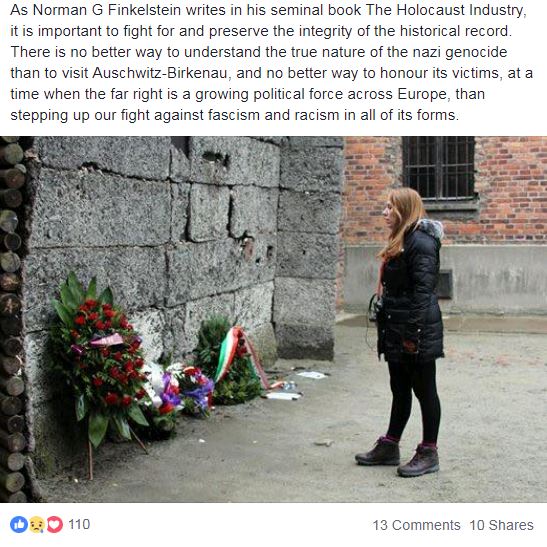
Ms Phillips is understood to have quit the Labour Party during the Blair years over the Iraq War, but chose not to do so in recent years when the Party became a cesspit of antisemitism, though she was only a student at the time and not a sitting MP. That being said, she recently revealed that she had been “quite tempted” to quit the Party over antisemitism, particularly after last year’s broadcast of the Panorama documentary into anti-Jewish hatred in the Party and the naked interference by Mr Corbyn’s office and allies in the disciplinary process. She said that it was after watching the programme that she “wobbled the most” in regard to her Labour membership. However, she apparently steadied herself with the solace that, given she “would have just been replaced by somebody who might not have spoken up” on the issue of antisemitism, it was better that she stayed. But Ms Phillips has yet to demonstrate what her speaking up actually achieved; it appears that she, like her colleagues, attained only the ignominy of having been an MP representing the first political party since the BNP to be investigated by the EHRC for racism.

Ms Phillips has vowed to “implement fully every single recommendation” made by the EHRC when it issues its report on the Labour Party.

Sir Keir Starmer

Sir Keir Starmer has served on Mr Corbyn’s frontbench in the influential position of Shadow Brexit Secretary and has been a vocal advocate of Labour under Mr Corbyn’s leadership. A former Director of Public Prosecutions, he has insisted, contrary to all the evidence, that Labour is not institutionally antisemitic (in an interview, incidentally, in which he conceded that denying Labour antisemitism was itself part of the problem). He has also claimed that Mr Corbyn is not particularly to blame for the antisemitism crisis that has engulfed their Party, but rather that there is collective responsibility, thus by his own admission implicating himself.

When Mr Corbyn’s defence of the antisemitic mural in East London came to light, Sir Keir declined to condemn the Labour leader, advising instead that Mr Corbyn “had given his explanation”. In case there was any doubt as to Sir Keir’s commitment to Mr Corbyn’s leadership of Labour and his effort to become Prime Minister, during the election campaign, Sir Keir reiterated that he was “100% behind Jeremy Corbyn”.

Having now lost the election and apparently recognising the political advantage of disassociating himself from Mr Corbyn’s leadership, Sir Keir has announced that “the handling of antisemitism [in Labour] has been completely unacceptable. It has caused deep distress for the Jewish community, which we must all accept responsibility for and apologise.” Sir Keir is hardly the first politician to offer cheap words; one suspects that there would have been little in the way of apology or responsibility had his ambitions to make Labour the party of government been realised.

Emily Thornberry

Emily Thornberry appears to have scraped through the nominations process thanks, not reassuringly, to the support of those who had previously backed the abortive candidacy of the pro-Corbyn MP, Clive Lewis. Ms Thornberry served as Mr Corbyn’s Shadow Foreign Secretary and was at the forefront of the campaign to make him Prime Minister and bring their institutionally antisemitic party into government.

Ms Thornberry has claimed that she has made interventions in shadow cabinet meetings and other forums on the issue of antisemitism — and she supported the adoption of the International Definition of Antisemitism by the Labour Party while some of her colleagues did not — but evidently she was never sufficiently moved to take more concrete and public action, such as resigning from the front bench or the Party.

She has also previously defended Mr Corbyn’s own record, insisting that “there isn’t a racist or antisemitic bone in Jeremy’s body”, ludicrously opining that the reason that he was failing to act on antisemitism was because he was so upset at being called an antisemite himself, and claiming that the Chief Rabbi was “wrong” to suggest that Mr Corbyn is an antisemite.

Although Ms Thornberry now describes tackling antisemitism in her Party as the “most urgent and immediate priority,” it apparently was not accorded such a lofty status when it was less politically convenient.

On 28th May 2019, the Equality and Human Rights Commission launched a full statutory investigation into antisemitism in the Labour Party following a formal referral and detailed legal representations from Campaign Against Antisemitism, which is the complainant.

In the first release of its Antisemitism in Political Parties research, Campaign Against Antisemitism showed that Labour Party candidates for Parliament in the 2019 general election accounted for 82 percent of all incidents of antisemitic discourse.

Campaign Against Antisemitism’s Antisemitism Barometer 2019 showed that antisemitism on the far-left of British politics has surpassed that of the far-right.

Glyn Secker, who said that Jewish organisations are “in the gutter” and “part of the problem”, will reportedly be addressing a Holocaust Memorial Day event organised by the Socialist Workers Party.

Mr Secker, who is the Secretary of the antisemitism-denial group and sham Jewish representative organisation, Jewish Voice for Labour, is one of three speakers who will participate in the event, titled “Never Again: Lessons of the Holocaust”, scheduled to take place on 27th January in East London. The event has been put together by the Tower Hamlets branch of the controversial organisation, Stand Up to Racism, which is linked to the Socialist Workers Party.

Although the event is intended to “remember the victims of the Holocaust and to commit ourselves to fight racism today,” Mr Secker has spent the last several years campaigning in support for the antisemitic leader of the institutionally antisemitic Labour Party, Jeremy Corbyn.

Mr Secker also has a history of controversial remarks about Jews, including holding American rabbis responsible for fuelling the neo-Nazis behind recent antisemitic terrorism in the United States, including the fatal terrorist attack on a synagogue in Poway, California. Mr Secker claimed that they were “unleashing the extreme-right to win key votes in marginal states which determine the presidency”. He has also called Labour MPs who are “friends of Israel” a “fifth column in the Labour Party.”

“What on earth are Jews doing in the gutter with these rats?” Mr Secker has asked, after claiming that the “Zionist Federation embraces the [far-right] English Defence League”, which is a fabrication. He has also claimed: “Here’s a warning to the [British] Jewish leadership, while you foment your campaign of allegations of antisemitism against Corbyn and the left to silence Israel’s critics, while you cry wolf month after month, year after year in the Labour Party and remain blind to the explosion of the far-right and Islamophobia, you are not part of the solution, you are part of the problem…You serve to protect the poison that would destroy both our freedom and yours. Well brothers and sisters, we are on the side of the Palestinians. We are on the side of the freedom marchers of ghetto Gaza.”

Mr Secker has also defended Ken Livingstone’s conspiratorial remarks about Adolf Hitler’s supposed support for Zionism, and told Labour activists at a Dulwich and West Norwood branch meeting in February 2019 that claims of antisemitism in the Party had been “made up in order to discredit the leadership.”

Mr Secker, who has reportedly admitted to having previously been a member of the Socialist Workers Party, was briefly suspended from the Labour Party, but it was revealed last March that Mr Corbyn’s key aide, Andrew Murray, intervened in the case, reportedly writing an e-mail saying that Mr Corbyn was “interested in this one”. Mr Secker’s suspension was lifted.

Campaign Against Antisemitism’s Antisemitism Barometer 2019 showed that antisemitism on the far-left of British politics has surpassed that of the far-right.

On 28th May 2019, the Equality and Human Rights Commission launched a full statutory investigation into antisemitism in the Labour Party following a formal referral and detailed legal representations from Campaign Against Antisemitism, which is the complainant.

Lord Mann, the Government’s independent advisor on antisemitism, has praised the innate decency of the British people after they rejected “the extremism of antisemitism” in the general election.

He observed that the “true face of this country and the true story of the election is this: in Derby North, Christopher Williamson [the disgraced former Labour MP] got 635 votes and lost his deposit,” while “in West Bromwich East, George Galloway got 489 votes and lost his deposit. This is the innate decency of the British people yet again. Across the entirety of the country, people are saying, very vocally and unequivocally, ‘We reject the extremism of antisemitism.’”

The former Labour MP for Bassetlaw who resigned last year in protest at the Party’s institutional antisemitism and the leadership of Jeremy Corbyn, made the remarks in his debut speech in the House of Lords.

On his new advisory role, Lord Mann said: “I am rightly independent and, as ever, I shall work cross-party, but I will be no bystander in driving out the stench of intolerance from the party that in 1906 my family helped to create in the city of Leeds, in the streets around Holbeck Moor.”

Campaign Against Antisemitism’s Antisemitism Barometer 2019 showed that antisemitism on the far-left of British politics has surpassed that of the far-right.

On 28th May 2019, the Equality and Human Rights Commission launched a full statutory investigation into antisemitism in the Labour Party following a formal referral and detailed legal representations from Campaign Against Antisemitism, which is the complainant.

A Labour MP has described the Party’s antisemitism scandal as a “terrible stain” and admitted that it made her “feel compromised in staying at times”.

Bridget Phillipson, the MP for Houghton and Sunderland South, disclosed to the The House magazine that “it was very difficult and it’s a source of immense regret to me that people like Luciana [Berger] were effectively forced out of the Labour Party.”

However, she believed that “I needed along with many other people to be a part of making the change,” and indeed that “massive change” in the Party is needed.

Her comments come as incidents of Jew-baiting in the Party continue.

Labour International, a group comprising the Party’s overseas members, has published a report titled “General Election Part Two: Why didn’t we win?”, which revealed that “Many of us believe that the row about antisemitism has been stoked by the government of Israel and its helpers in the UK.” The report was drafted by the secretary of the 3,500-strong group, and it claimed that Israel sought to “prevent the election of a Labour government that will recognise a Palestinian state.” It also added that officials from leading Jewish organisations who met with Labour leader Jeremy Corbyn in 2018 “had links to the Conservative Party.”

A co-chair of Labour International was involved in a Facebook group reportedly set up in order to assist Party members subject to internal disciplinary investigations, including over antisemitism, and he has previously claimed that “Antisemitism accusations are a sideshow, a convenient weapon being used on behalf of the Right in British society to derail Corbyn and his supporters.”

Meanwhile, a rally in support of Labour leadership hopeful Rebecca Long-Bailey saw a member of the Unite union  accuse the candidate of “cuddling up to…the Chief Rabbi, a well-known Tory.” In the audience were Gordon Nardell QC, a failed election candidate who previously served as Labour’s first general counsel, brought in to oversee its disciplinary procedures on antisemitism, a post which he left after a year; and Claudia Webb, who has defended Ken Livingstone and and was the Chair of the Labour Party’s Disciplinary Panel. RIchard Burgon, the pro-Corbyn MP who is running for the deputy leadership of the Party, had not yet arrived to the meeting.

The comment was greeted with applause from the audience, although two attendees stood up and called the speaker an antisemite, while the chair instructed an official to have his microphone removed.

Elsewhere, in Ilford South, a motion was reportedly carried declaring that there was “no antisemitism in the Labour Party” and attacking the Board of Deputies of British Jews as a “Tory organisation” that was “illegally interfering in the Labour leadership contest.” Activists who spoke against the motion were apparently labelled “agents of a foreign power”. Attacks on the Board of Deputies have gained steam on Twitter as well.

Campaign Against Antisemitism predicted that Labour’s election defeat would elicit anti-Jewish scapegoating by Party activists and has urged the Jewish community to remain vigilant.

On 28th May 2019, the Equality and Human Rights Commission launched a full statutory investigation into antisemitism in the Labour Party following a formal referral and detailed legal representations from Campaign Against Antisemitism, which is the complainant.

Campaign Against Antisemitism’s Antisemitism Barometer 2019 showed that antisemitism on the far-left of British politics has surpassed that of the far-right.

Labour leadership contender, Jess Phillips, has reportedly suspended her constituency office manager and key aide, Salma Hamid, for posting offensive tweets, including one accusing Israel of “inflicting Holocaust conditions on Palestinians.”

Problematic tweets have been uncovered which Ms Hamid reportedly posted 2014 and 2016, before she joined Ms Phillips’ office. In one exchange, Ms Hamid wrote: “We must show the world that ‘Israel’ is the murderer!” She also claimed that: “Israel IS inflicting Holocaust conditions on Palestinians! Oppressive, racist and violent!”

In another message, Ms Hamid appeared to equate Israel with the Islamic State: “Because Israel obeys human rights/law? Hilarious! Isis are terrible too. So really there is no difference.”

According to the International Definition of Antisemitism adopted by the British Government, “Drawing comparisons of contemporary Israeli policy to that of the Nazis” is antisemtic.

In a statement released on Twitter, Ms Phillips, who is the MP for Birmingham Yardley, said: “Yesterday evening I was shown some completely unacceptable messages posted by a member of my team prior to her employment with me. I have been clear from the outset that we need a zero tolerance approach to antisemitism in the party – and so the person involved was suspended with immediate effect.”

She added: “This is the right thing to do and the only way to start building a bridge again with the Jewish community. I’m unable to comment further now that a disciplinary process is underway.”

It has also emerged that St Paul’s Community Development Trust, a charity based in Balsall Heath of which Ms Hamid was chair of the board of trustees, has also suspended her following the revelations. Ms Hamid was appointed to the role in October of last year. The charity stated that it “aims to create a culture that respects and values people’s differences, that promotes dignity, equality and diversity and that encourages individuals to develop and maximise their true potential.”

On 28th May 2019, the Equality and Human Rights Commission launched a full statutory investigation into antisemitism in the Labour Party following a formal referral and detailed legal representations from Campaign Against Antisemitism, which is the complainant.

The local Labour branch in Liverpool Wavertree, which has been accused of bullying its former Jewish MP, Luciana Berger, is to debate affiliating to Jewish Voice for Labour.

The motion to be debated reads: “Wavertree CLP [Constituency Labour Party] agrees to affiliate to the socialist and anti-racist organisation Jewish Voice For Labour at the earliest opportunity.” It is understood that there will not be a vote at the conclusion of the debate this evening.

Jewish Voice for Labour is a pro-Corbyn antisemitism-denial group and sham Jewish representative organisation within the Labour Party.

Luciana Berger was the target of a sustained campaign of antisemitic harassment and bullying that eventually led her to quit the Labour Party in February 2019 after her local constituency party proposed a motion of no-confidence in her.

It is understood that the constituency Labour party leader, Dr Scott-Samuel, who is reportedly Jewish, appeared on The Richie Allen Show on the radio, on which he promoted a Rothschild conspiracy theory, saying: “The Rothschild family are behind a lot of the neo-liberal influence in the UK and the US”

The Richie Allen Show has featured antisemites such as Alison Chabloz and Gilad Atzmon, conspiracy theorist Kevin Barrett, who believes Israel was behind 9/11, and Holocaust deniers including Nicholas Kollerstrom. The host has himself apparently questioned the number of Jews that were murdered in the Holocaust, telling Mr Kollerstrom that “there’s a big lie there somewhere, I don’t believe the numbers are anywhere near as great as they’re saying, you know…I’m with you with respect to the numbers and the way that it’s been exploited ever since.” Mr Allen is considered to be a protege of David Icke.

Campaign Against Antisemitism’s Antisemitism Barometer 2019 showed that antisemitism on the far-left of British politics has surpassed that of the far-right.

On 28th May 2019, the Equality and Human Rights Commission launched a full statutory investigation into antisemitism in the Labour Party following a formal referral and detailed legal representations from Campaign Against Antisemitism, which is the complainant.

Lord MacDonald QC, the former Director of Public Prosecutions, has revealed that he believes not only that the Crown Prosecution Service (CPS) has had sufficient time to review the cases of the arrested Labour members and should announce its conclusions, but that the evidence suggests that crimes have indeed been committed.

Lord MacDonald, who headed the CPS from 2003 to 2008, made the intervention after the Commissioner of the Metropolitan Police, Cressida Dick, revealed that six arrests were made in connection with a secret dossier compiled by the Labour Party and subsequently leaked and referred to the Met by Campaign Against Antisemitism and the radio channel LBC, and that five of the cases were passed to the CPS in September 2019.

Commissioner Dick explained that the cases represented a “complex crime type” and that the CPS would have to determine whether there is sufficient evidence to bring charges and a public interest in prosecuting.

But Lord MacDonald opined that “these are allegations about the conduct of members of a major political party and so there is obviously a strong public interest in this being resolved, and resolved as quickly as possible.” Moreover, he noted that a long delay fuels “rumours” and “unease” and therefore that “safe conclusions are needed sooner rather than later.”

Lord MacDonald went on to say that “the sensitivity in these cases is that prosecutors have to balance two things: one is the suggestion that these messages, these posts may comprise incitement to racial hatred, or other hate crimes, on the one hand, and then on the other hand, free expression rights,” adding that this “can sometimes be a tricky analysis but I should have thought that three months is plenty of time to come to conclusions in this case.”

He observed that “there is some very extreme material here. There are posts suggesting that a named Jewish Labour politician should be given a ‘good kicking’,” as well as “posts suggesting that Jews should be exterminated. There’s talk about gas chambers, although it is said we shouldn’t use gas chambers in the UK because we need our own gas for our own purposes.”

He concluded: “This is very extreme stuff, which I’d have thought is well capable of comprising a criminal offence. Speech has to be pretty extreme to amount to incitement to racial or religious hatred but some of this speech does look to be very extreme indeed.”

Campaign Against Antisemitism has taken a close interest in these cases since it referred them to the Met live on air in September 2018. Lord MacDonald is right that the CPS has had sufficient time to reach safe conclusions. There must be zero tolerance of antisemitism not only on our streets but also in political parties.
On 28th May 2019, the Equality and Human Rights Commission launched a full statutory investigation into antisemitism in the Labour Party following a formal referral and detailed legal representations from Campaign Against Antisemitism, which is the complainant.

It has been revealed that a former Labour councillor and parliamentary candidate has published numerous social media comments accusing Jewish Labour MP Margaret Hodge of trading on the Holocaust and suggesting former deputy leader Tom Watson and principled Labour defector Ian Austin were in the pay of Israel’s Likud Party.

Bob Pandy, who is still a member of Kensington’s Constituency Labour Party, was Labour’s parliamentary candidate for the seat in 1979. In other posts he also referred to Labour’s antisemitism crisis as a “smear”, worried that leadership hopeful Rebecca Long Bailey might be a “Zionist”, and suggested that Mr Austin might engage in bestiality.

Mr Austin was one of a number of Labour MPs in the previous parliament who resigned from the Labour Party in disgust towards its institutional antisemitism. He is also an honorary patron of Campaign Against Antisemitism.

The revelations were made by a fellow Labour and union activist.

On 28th May 2019, the Equality and Human Rights Commission launched a full statutory investigation into antisemitism in the Labour Party following a formal referral and detailed legal representations from Campaign Against Antisemitism, which is the complainant.

Campaign Against Antisemitism’s Antisemitism Barometer 2019 showed that antisemitism on the far-left of British politics has surpassed that of the far-right.

In the first release of its Antisemitism in Political Parties research, Campaign Against Antisemitism showed that Labour Party candidates for Parliament in the 2019 general election accounted for 82 percent of all incidents of antisemitic discourse.

The former MP for Redcar has revealed that working-class voters in her constituency were outraged by Labour’s antisemitism crisis, even though the area has no Jewish community.

Anna Turley, Labour’s former MP who was defeated in her bid for reelection in the North Yorkshire constituency, disclosed that “[Jeremy] Corbyn was an issue on almost every single door,” and that antisemitism, along with Brexit and concerns about Mr Corbyn’s views on national security, were to blame for her defeat.

Mr Turley observed that her constituency is “an area where we don’t have an ethnic minority population in any way. It’s not an area where people had any Jewish connections. I think there’s only one person who identified as Jewish from the last census, as I understand. But what they said was, ‘My parents or my grandparents – they fought the war over this.’”

In the first release of its Antisemitism in Political Parties research, Campaign Against Antisemitism showed that Jeremy Corbyn is personally responsible for 24 incidents of antisemitic discourse, which was equal to fifteen percent of all recorded incidents involving parliamentary candidates and party leaders in the 2019 general election. Overall, Labour Party candidates for Parliament accounted for 82 percent of all incidents.

Campaign Against Antisemitism’s Antisemitism Barometer 2019 showed that antisemitism on the far-left of British politics has surpassed that of the far-right.

On 28th May 2019, the Equality and Human Rights Commission launched a full statutory investigation into antisemitism in the Labour Party following a formal referral and detailed legal representations from Campaign Against Antisemitism, which is the complainant.

It has emerged that the Labour frontbencher and leadership hopeful Rebecca Long-Bailey addressed an event in Manchester just months after her election as an MP in 2015 in which she showed “very little awareness” of issues important to the Jewish community, dismissed claims that Labour leader Jeremy Corbyn is an antisemite and promised to join Labour Friends of Israel but never made good on that pledge.

The JC has reported that Ms Long-Bailey made the remarks and pledge at a meeting co-hosted by Manchester’s Zionist Central Council and the Jewish Representative Council in a bid to calm fears among the local community about Mr Corbyn.

Ms Long-Bailey was asked for her opinion on the Boycott Divestment and Sanctions (BDS) campaign, which engages in tactics which an overwhelming majority of British Jews consider to be intimidatory according to Campaign Against Antisemitism’s Antsemitism Barometer 2019. It is understood that the audience was disappointed that Ms Long Bailey appeared to be entirely unfamiliar with the boycott campaign, but was reassured by her comments that she “was opposed to such boycotts.”

She was also asked why she had joined Labour Friends of Palestine but not also Labour Friends of Israel. She replied that her first days at Parliament were rather like “freshers’ week” and it seemed like a popular organisation to join, but she accepted that there were two sides to that conflict a gave a “firm promise” to join Labour Friends of Israel. However, it is understood that Ms Long-Bailey has not joined the organisation nor did she make any move to do so in the months following the event.

On 28th May 2019, the Equality and Human Rights Commission launched a full statutory investigation into antisemitism in the Labour Party following a formal referral and detailed legal representations from Campaign Against Antisemitism, which is the complainant.

Cyprus has adopted the International Definition of Antisemitism.

Campaign Against Antisemitism applauds this decision at a time of rising antisemitism in Europe.

The proposal to adopt the International Definition was presented by the Foreign and Education Ministers and was approved by cabinet. A Foreign Ministry statement said: “It reaffirms the commitment of the Republic of Cyprus to promoting and fostering respect and diversity and to combating all forms of discrimination, racism and xenophobia, including antisemitism.” 

The UK was the first country in the world to adopt the International Definition, something for which Campaign Against Antisemitism, Lord Eric Pickles and others worked hard over many meetings with officials at Downing Street. Cyprus joins a growing list of countries to use the International Definition, including France, which recently adopted it.

The contrast could not be starker in the Chanukah messages from Britain’s political leaders.

Countering antisemitism was central in Prime Minister Boris Johnson’s video message. He said: “Today as Britain’s Jews seek to drive back the darkness of resurgent antisemitism, you have every decent person in this country fighting by your side. Britain would not be Britain without its Jewish community.”

Referencing recent fears within the Jewish community over antisemitism, he added: “And we will stand with you and celebrate with you at Chanukah, and all year round.”

However, the antisemitic Labour Party leader, Jeremy Corbyn, failed to even mention Labour’s antisemitism scandal. In a video message lasting over two minutes, Mr Corbyn completely ignored the antisemitism crisis in the Labour Party. He said: “It seems to be the right time to be thinking about the message of hope” but clearly not the right time to be thinking about antisemitism in his Party and its effect on the British Jewish community.

Instead, he attempted to explain to British Jews what Chanukah is and then descended into a political message. He said of lighting the Chanukah candles: “They have been lit in the worst of times” and cited some of the atrocities that befell the Jewish people. In echoes of his Rosh Hashanah message, Mr Corbyn seemed to equate the theme of the festival with the environment. On three occasions he talked about the climate crisis or emergency. He then attacked the Conservative Party and said: “Our communities now face the threat of years of policies that won’t heal divisions or end equality.”

Ed Davey, acting co-Leader of the Liberal Democrats, also focused on antisemitism in his video message, saying: “Regrettably, we still need to fight that antisemitism and religious persecution here in the UK and across the globe. British Jews are an integral part of our national identity.”

Nicola Sturgeon, Leader of the Scottish National Party, posted a short message on Twitter, noting: “Chanukah is a special time of year for Jewish communities to come together and celebrate their faith. I wish all of you celebrating in Scotland and across the world a peaceful and happy Chanukah — Chanukah sameach!”

The Green Party or its leaders have not sent a Chanukah message, and nor has the Brexit Party.